
As Nigeria prepares to host the 5th Global High-Level Ministerial Conference on Antimicrobial Resistance (AMR) this December, the Federal Government has solidified its partnership with the Government of Switzerland. Both nations have reaffirmed their mutual commitment to accelerating global action against AMR through strategic innovation, cross-border collaboration, and sustainable health system reforms.
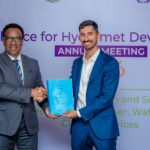
The diplomatic alignment was cemented during a high-profile courtesy visit by Switzerland’s Minister of Health, Federal Councillor Elisabeth Baume-Schneider, and the Swiss Ambassador to Nigeria, Patrick Egloff, to Nigeria’s Coordinating Minister of Health and Social Welfare, Prof. Muhammad Ali Pate, in Abuja. The meeting underscored the urgent need for unified international frameworks to combat the rising tide of drug-resistant infections.
The One Health Strategy and Resource Mobilization
Addressing the delegation, Prof. Pate emphasized that Nigeria’s counter-AMR strategy extends far beyond traditional healthcare boundaries. The nation has actively deployed a One Health approach, an integrated framework that unifies the health, agriculture, livestock, environment, and water resources sectors to effectively mitigate the mutation and spread of resistant pathogens.
Prof. Pate pointed out that while AMR remains a universal crisis, the socio-economic realities governing the threat vary by region. For low- and middle-income nations, he noted, the primary battle involves expanding access to high-quality antimicrobials, scaling up aggressive disease prevention protocols, and reinforcing fragile health infrastructure.
Breaking Dependence on External Financing
A major focal point of the bilateral talks was Africa’s long-term health sovereignty. Prof. Pate boldly asserted that sustainable health security on the continent cannot rely indefinitely on international aid, outlining aggressive domestic reforms currently underway in Nigeria to bridge the financial gap.

“Our objective is not to replace international partnerships, but to ensure they complement, rather than substitute for, nationally owned systems. Sustainable health security will ultimately depend on stronger domestic institutions, financing and manufacturing capacity,” Prof. Pate stated.
To achieve this self-reliance, the Federal Government is actively expanding health insurance coverage, boosting domestic resource mobilization, and prioritizing local pharmaceutical and vaccine manufacturing. This strategic shift is designed to secure essential medicines, stimulate job creation, and shield the country from future supply chain vulnerabilities during global health emergencies.
Fostering Regional Innovation and Education
Echoing the need for global solidarity, Swiss Health Minister Elisabeth Baume-Schneider categorized antimicrobial resistance as a borderless menace that threatens modern medicine entirely. She pledged Switzerland’s continued support for multilateral cooperation, pioneering scientific research, and health workforce development.
Moving forward, both nations agreed that long-term victory over AMR requires a heavy investment in human capital. The ministers called on universities and academic institutions to revamp their medical and scientific curricula, ensuring the next generation of researchers, manufacturers, and public health practitioners are fully equipped to sustain these critical health reforms.
Share this