
In a significant move to insulate Nigeria’s livestock industry from the volatility of climate change, the Livestock Productivity and Resilience Support Project (L-PRES) has formalised a strategic partnership with the Nigerian Meteorological Agency (NiMet).
The collaboration, marked by the handover of critical meteorological infrastructure, aims to integrate data-driven weather monitoring into the heart of livestock management across the federation.
Infrastructure for Resilience
The partnership reached a milestone during a high-level meeting where the National Coordinator of L-PRES, Mr. Sanusi Abubakar, officially handed over four Automatic Weather Observation Systems (AWOS) to the Director General of NiMet, Professor Charles Anosike.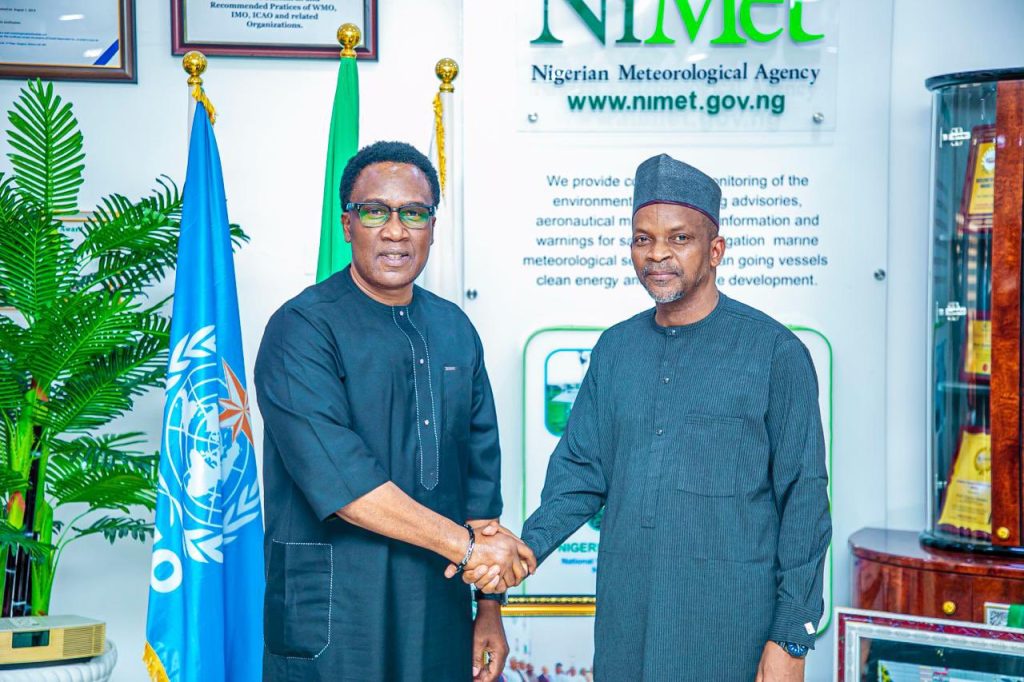
These systems are designed to provide real-time, localized climate data, filling a critical information gap for pastoralists and commercial ranchers who have long struggled with unpredictable weather patterns and shifting grazing conditions.
Boosting Productivity through Precision
Speaking on the importance of the synergy, Mr. Sanusi Abubakar highlighted that the success of the L-PRES initiative is tethered to the quality of climate intelligence available to farmers.
“Partnering with NiMet is essential for L-PRES to achieve its goal of building resilience across Nigeria’s livestock sector. We are committed to providing farmers with the resources and information necessary to adapt to unpredictable conditions and boost overall productivity,” Abubakar stated.
Deployment to Grazing Reserves
Receiving the equipment, Professor Charles Anosike lauded the donation as a “vital investment” in the nation’s meteorological network. He revealed that the new AWOS units would be strategically deployed to rehabilitated grazing reserves nationwide.
This localized approach ensures that data is not just general, but specific to the environments where livestock are raised. According to Anosike, this will enable farmers to make informed decisions regarding water management, feed security, and disease prevention, which are often exacerbated by heat stress and flooding.
A Sustainable Outlook
The alliance comes on the heels of the recently released 2026 Seasonal Climate Prediction, a document Abubakar described as pivotal for agricultural planning.
By leveraging innovative technology and shared expertise, both agencies are looking toward a future where Nigeria’s livestock industry is no longer a victim of climate variability, but a model for sustainable agricultural growth and improved rural livelihoods.
Share this