

The Chairman of the Independent National Electoral Commission (INEC), Prof. Joash O. Amupitan, SAN, says the commission must be physically, psychologically, materially and infrastructurally ready for the 2027 General Election.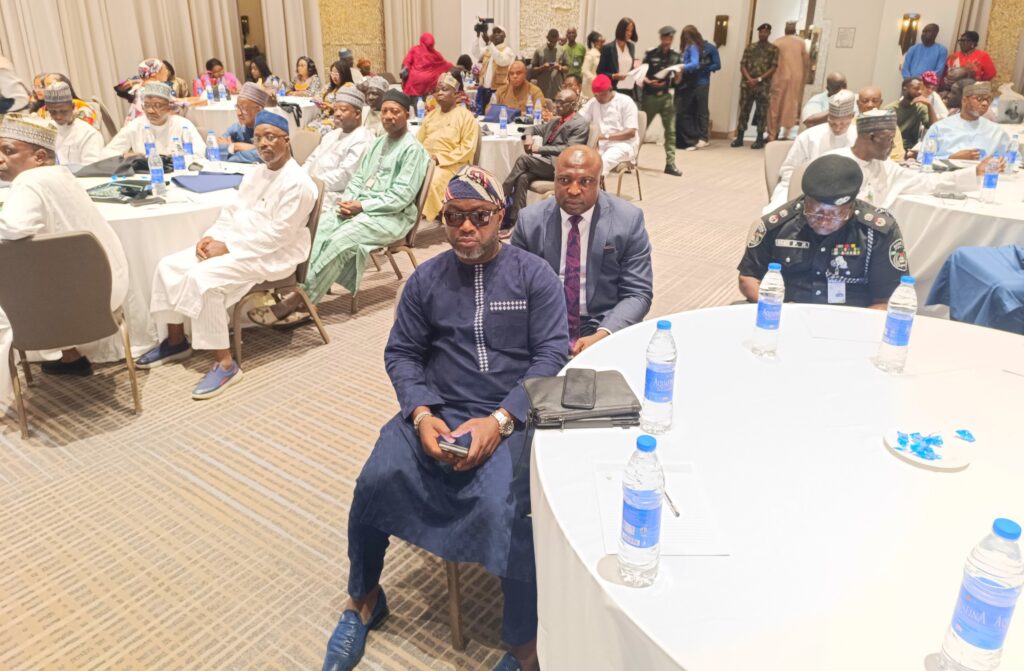
Amupitan made the remarks in an interview during his ongoing engagement with INEC officials in the Southwest as the commission steps up preparations for the elections.
“It is very critical for me to go and see for myself and be sure that we are physically, psychologically, materially and infrastructurally ready for the 2027 General Election,” the INEC Chairman said.
His comments came as the commission began a six-zone readiness assessment aimed at examining its operations and identifying gaps that could affect the conduct of the 2027 elections.
The Presidential and National Assembly elections are scheduled for January 16, 2027, while the Governorship and State Houses of Assembly elections are to hold on February 6, 2027.
‘We Must Confront the Election Frontally’
Speaking to Electoral Officers, Heads of Department and other officials from the six states of the Southwest at the Southwest Zonal Interaction Meeting and Readiness Assessment in Lagos, Amupitan said the commission could no longer afford to approach preparations for 2027 as business as usual.
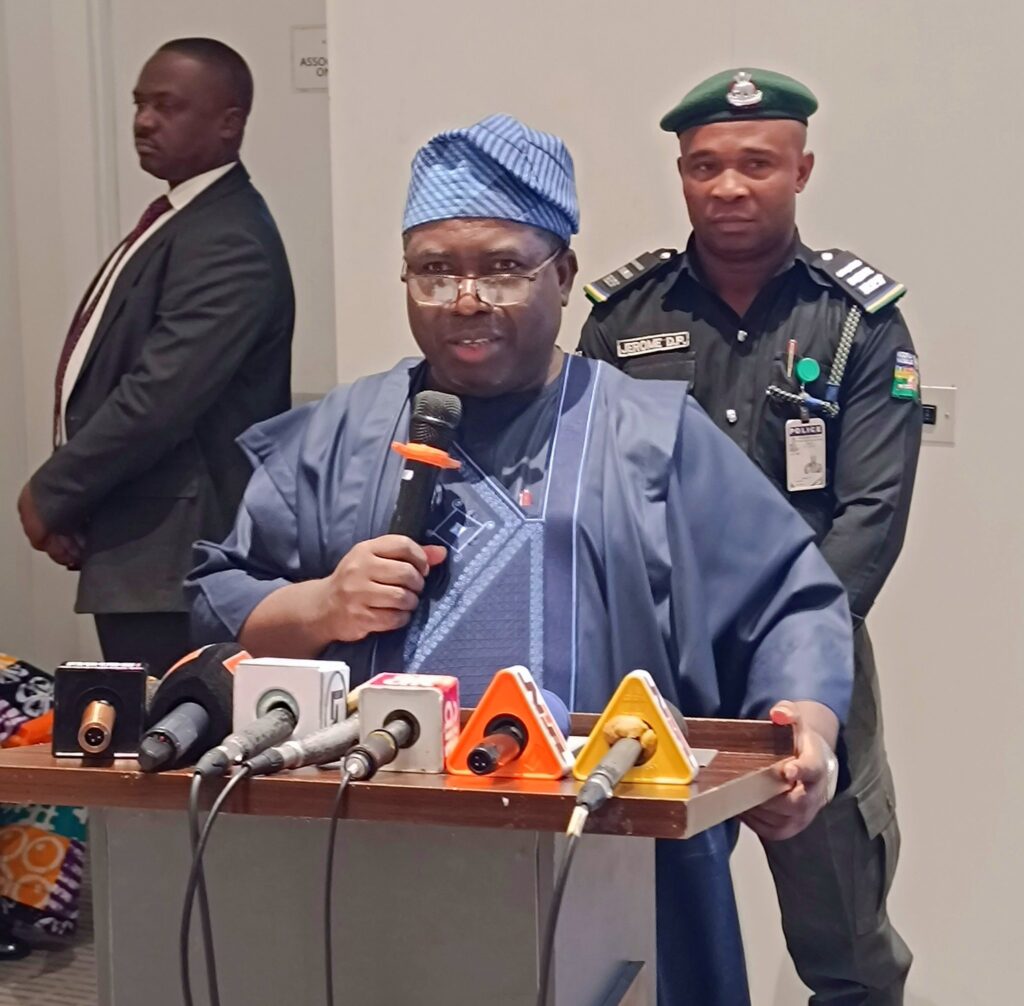
“The 2027 General Election is here,” he told the officials, charging them to confront the challenges ahead with greater commitment, discipline and preparedness.
He said the recently concluded off-cycle elections should provide lessons for the commission as it prepares for a much larger national election.
According to him, the Anambra State Governorship Election, FCT Area Council Election and Osun State Governorship Election, among others, offered INEC opportunities to identify weaknesses and improve its processes.
“Those off-cycle elections have provided us with the mirror through which we can see into the 2027 elections,” he said.
Amupitan said his decision to meet directly with Electoral Officers and other field-level officials was deliberate because election success was not determined only at the commission’s headquarters in Abuja.
“The true success of any election is not decided solely in the meeting rooms of our headquarters in Abuja. It is indeed decided in the field,” he said.
He urged the officials to use the engagement to speak openly about the problems they face, identify gaps and suggest practical ways of addressing them before the elections.
INEC Focuses on the Operational Chain
The Chairman also highlighted the role of Electoral Officers at the local government level, describing them as the commission’s “foot soldiers.”
He said they are responsible for translating decisions taken at the national level into action on the ground.
Amupitan noted that the administrative side of election management had not always received enough attention, despite its importance to the overall process.
“Their role has always not been emphasised before now. But we know that if the chain is broken, then the election will run into crisis,” he said.
He said the commission’s readiness exercise would therefore look at the different parts of election administration, from personnel and logistics to infrastructure and the implementation of INEC decisions.
The Resident Electoral Commissioner for Lagos State, Prof. Ayobami Salami, also stressed the need for early preparation.
Salami said election credibility was built long before Election Day through effective coordination, competent personnel, adequate logistics and continuous assessment.
He urged Electoral Officers and Heads of Department to be frank about the challenges they face and share practices that could improve preparations across the Southwest.
Administrative Secretaries Get New Directive
The readiness push also extended to INEC’s Administrative Secretaries across the 36 states and the Federal Capital Territory.
At a two-day Strategic Operational Workshop for Administrative Secretaries in Lagos, Amupitan directed them to close operational gaps, improve coordination and work with a unified national approach ahead of 2027.
He said the commission could no longer afford different interpretations of administrative responsibilities or different operational practices from state to state.
“We can no longer afford fragmented interpretations of administrative duties or disjointed operational practices from state to state,” he said.
The Chairman described the workshop as an election-focused “operational boot camp”, saying it was designed to test the commission’s preparedness and strengthen the capacity of those managing its operations at state level.
Five Areas Under Review
Amupitan said the workshop would focus on five key areas: Continuous Voter Registration and Permanent Voter’s Card distribution; logistics and election materials; electoral technology; human resources and ad-hoc staff; and administration and financial compliance.
The commission is also reviewing its use of technologies including the Bimodal Voter Accreditation System (BVAS), INEC Result Viewing Portal (IReV), eEC&A, Election Monitoring and Support Centre (EMSC), CROMS, IOMIS and PFRAS.
According to Amupitan, the experience from recent off-cycle elections, particularly Osun, should help INEC develop operational models that can work on a national scale.
He, however, noted that a nationwide election would present a much bigger challenge than a single-state election.
New Tracker to Monitor Readiness
One of the measures announced at the workshop is an Administrative Secretary Master Operational Tracker, which the Chairman said would provide a real-time picture of the level of preparedness across states.
The Excel-based tracker is expected to be linked to the commission’s EMSC dashboard and Election Project Plan.
It will monitor areas including election-material distribution, training of ad-hoc staff and other state-level preparations.
The aim, Amupitan said, is to move the commission away from a reactive approach and ensure that potential problems are identified early.
He also said the tracker could serve as a reference for future Administrative Secretaries beyond the 2027 elections.
‘If You Tolerate Shortcuts, Shortcuts Will Multiply’
Amupitan told the Administrative Secretaries that their leadership would have a direct bearing on how INEC offices operate at the state level.
“If you tolerate shortcuts, shortcuts will multiply. If you tolerate political interference, neutrality will deteriorate,” he said.
He urged them to insist on documentation, punctuality, preparedness and compliance, while encouraging them to report problems early instead of allowing them to grow into larger operational challenges.
The Secretary to the Commission, Dr Rose Oriaran-Anthony, also raised concerns about the relationship between Administrative Secretaries and Resident Electoral Commissioners.
She said complaints about strained working relationships between the two levels of leadership continued to reach the commission.
“We will not allow that to continue because where we do not have harmony, the Commission’s work will suffer,” she said.
Oriaran-Anthony urged the Administrative Secretaries to use the workshop to openly discuss institutional challenges and find solutions that would improve the commission’s work.
From Recent Elections to 2027
Amupitan said the commission’s preparations for 2027 would be guided by lessons from previous elections rather than waiting until problems emerged.
He also commended INEC officials who worked during the recent Osun State Governorship Election, saying the positive feedback received by the commission was largely due to the staff who worked on the ground.
For the INEC Chairman, the message from the current readiness exercises is straightforward: every part of the electoral system must work before the country goes to the polls in 2027.
“We want to address every chain, every aspect of the election, and ensure that we have a seamless general election in 2027,” Amupitan said.
Share this


