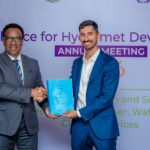

A new initiative is mobilizing young people to tackle the city’s persistent environmental challenges. The Citizens-Led Accountability Mechanism (CLAIM), implemented by the Lagos Civil Society Participation for Development (LACSOP) with support from Bread for the World (BfdW), is empowering youth and communities in Lagos Island and Apapa to confront critical issues like flooding and plastic pollution.
A City at Risk
Lagos, one of the world’s fastest-growing cities, is home to an estimated 30 million people. This rapid growth, while driving the economy, has also made the city highly vulnerable to climate change. Despite government efforts, such as the Lagos State Climate Change Adaptation Strategy (LASCCAS), inconsistent policy enforcement and a lack of public awareness have hindered progress. A key problem is the widespread practice of indiscriminate waste disposal, which clogs drainage systems and worsens flooding.
CLAIM aims to bridge this gap by strengthening the link between policy and community action. The project focuses on urban-poor and informal settlements, which are often the hardest hit by environmental crises.
When the rains fall in Lagos, they bring more than just water; they bring an annual crisis of flooding, disease, and damage. However, a new citizen-led initiative is empowering young people to confront these challenges head-on.
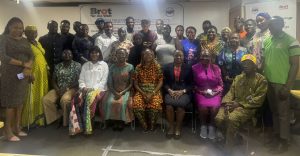 At a recent workshop for the Citizens-Led Accountability Mechanism (CLAIM), civic leaders, government officials, and youth gathered to validate a new approach: empowering communities to act on their own behalf. The project, implemented by the Lagos Civil Society Participation for Development (LACSOP), is designed to turn research into concrete action led by young people aged 18-35 in two of the city’s most flood-prone areas: Apapa and Lagos Island.
“This gathering marks a significant milestone in our collective efforts to enhance accountability and mitigate climate change impacts,” said Barrister Ayo Adebusoye, Chairman of LACSOP.
The Problem and the Plan
Lagos, with a population approaching 30 million, is one of the world’s fastest-growing cities. Project manager Omolara Olusaiye explained that this rapid growth has outpaced essential services, and a lack of awareness about climate change—combined with ingrained habits like indiscriminate waste disposal—has worsened the problem.
The CLAIM project is based on a simple, interconnected idea:
- Poor waste management, especially plastic, clogs drains and makes flooding worse.
- Flooding damages homes and triggers health crises.
- Informed, organized citizens can disrupt this cycle while advocating for better government investment in infrastructure.
The project’s three main goals are to:
- Increase awareness about the link between plastic waste and urban flooding.
- Promote community participation in climate-related policy discussions.
- Foster youth-led innovations that build local resilience.
The Call for a Mindset Shift
Omobola Magbagbeola, Deputy Director and Head of Research and Development at the Ministry of the Environment, underscored the critical role of citizens. She acknowledged that while the state government is working on drainage projects, their success depends on community action. “If they are saying don’t dump refuse in our drainage channels, it is not for the government. It is for that community,” she stated.
She emphasized that flooded homes lead directly to health issues, and a mindset shift is essential for lasting change. She recommended sending the project’s validated reports to relevant agencies, strengthening local advocacy, and reviving climate education in schools to encourage behavior change from a young age.
The health consequences are stark. Flooded homes and blocked drains create breeding grounds for diseases like cholera and malaria, straining household budgets and public health facilities. By promoting community-led prevention, CLAIM offers a path to both better health and financial relief for residents.
From Pilot to Progress
The workshop’s participants agreed that the project’s success hinges on a few key steps:
- Sustained community education to change long-held behaviors.
- Strong institutional links to ensure local findings influence state-level planning and budgets.
- Adequate resources to help youth-led innovations scale beyond the pilot phase.
As Olusaiye put it, “It is them that will plan the project and carry it out, while we will support them,” highlighting that true sustainability comes from community ownership. The hope is that by empowering young people, CLAIM will create a virtuous cycle that leads to fewer floods, less plastic pollution, and more resilient, healthier communities across Lagos.
Since 2007, LACSOP has worked to promote good governance and citizen engagement in Lagos State. With over 200 civil society organizations as members, the group adopts a partnership model to ensure community voices are heard in government decision-making. Through CLAIM, LACSOP hopes to build more sustainable and resilient communities, better prepared to adapt to the impacts of climate change.
Share this