

The Federal Government has intensified efforts to position Nigeria’s livestock sector to access global climate finance. The initiative is part of a broader national strategy to drive sustainable livestock development, enhance food security, create jobs, and mitigate the sharp impacts of climate change across the country.
The Honourable Minister of Livestock Development, Idi Mukhtar Maiha, disclosed this on Wednesday, June 3, 2026, during a strategic meeting in Abuja. The Minister received a joint delegation from the African Group of Negotiators Experts Support (AGNES) and the Deutsche Gesellschaft für Internationale Zusammenarbeit (GIZ) to discuss funding mechanisms for sustainable agriculture.
Addressing the Reality of Climate Threats
Minister Mukhtar stated that climate change remains one of the greatest threats to livestock production and rural livelihoods. He stressed that Nigeria must take deliberate steps to build resilience within the sector while aggressively taking advantage of available international climate funding opportunities.
Drawing from over two decades of firsthand experience as a livestock farmer, Mukhtar noted that environmental degradation is already visibly impacting the country, pointing to declining water availability, erratic rainfall patterns, increased heat stress on animals, and shrinking pasture resources.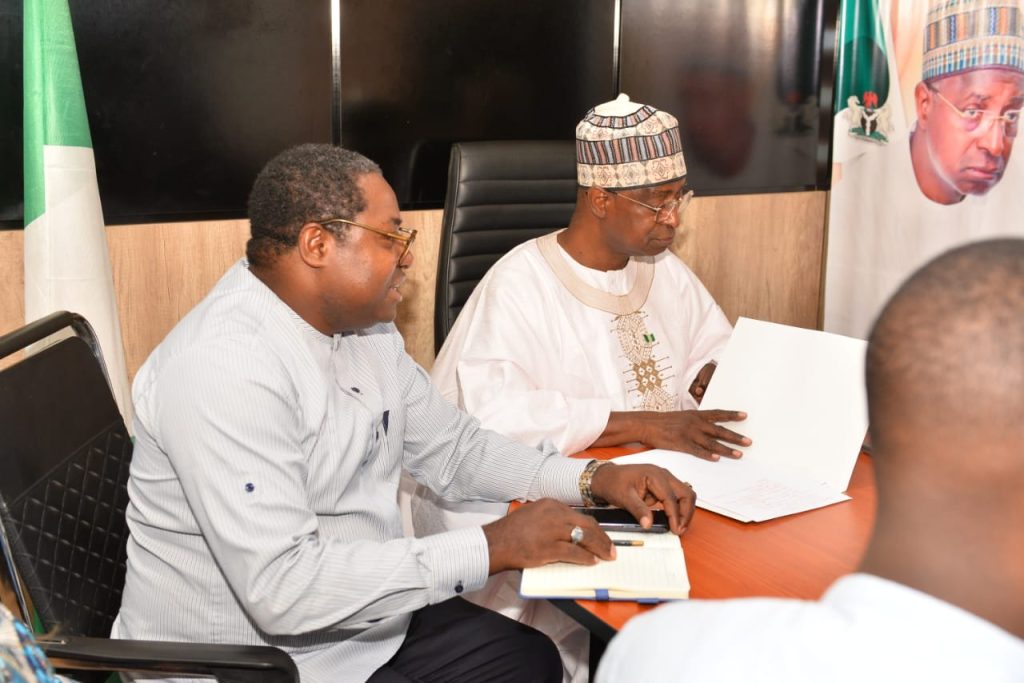
“There is no doubt that climate change is real. The changes are visible in our rivers, grazing lands, water tables, and livestock production systems. As a nation, we must act responsibly to protect the environment while transforming our livestock sector into a modern, climate-smart industry,” Mukhtar said.
A Blueprint for Climate-Smart Agriculture
To counteract these environmental challenges, the Minister explained that the Ministry is actively pursuing the rehabilitation of grazing reserves, expansion of fodder cultivation, improved rangeland management, adoption of renewable energy solutions, and the promotion of settled livestock production systems. These interventions are designed to simultaneously reduce environmental degradation and boost economic productivity.
Furthermore, Mukhtar reiterated the Ministry’s commitment to collaborating with both local and international partners to develop bankable, high-impact projects capable of attracting significant green capital.
Developing Investment-Ready Proposals
Speaking earlier at the meeting, the Director of Technical Services at AGNES, Dr. David Olufemi Awolala, informed the Minister that AGNES, with technical support from GIZ, is currently working alongside the Ministry’s Technical Working Group on Climate Change. The collaborative team is developing investment-ready proposals focusing on feeds and fodder development, livestock value chain enhancement, and animal health systems.
According to Dr. Awolala, these proposals are specifically targeted at attracting funding from major international climate financing windows, including the Green Climate Fund (GCF), the African Development Bank (AfDB), and other global climate investment facilities.
The visiting delegation also briefed the Minister on upcoming plans to strengthen the Ministry’s internal capacity to access these funds, ensuring that future livestock initiatives align seamlessly with Nigeria’s broader climate commitments and national development priorities.
The high-level meeting concluded with technical alignment sessions involving senior officials of the Ministry, representatives of AGNES, Mr. Adeoye Adekunle Afees of GIZ, and members of the Ministry’s Technical Working Group on Climate Change, led by Dr. Peter Alike.
Share this


