
By Jerome Kalu & Michael Omotosho |
CSACEFA Oyo State Chapter and Educare Trust Nigeria have raised fresh concerns over the state of basic education in Oyo State, highlighting critical gaps in infrastructure, teaching quality, and student welfare.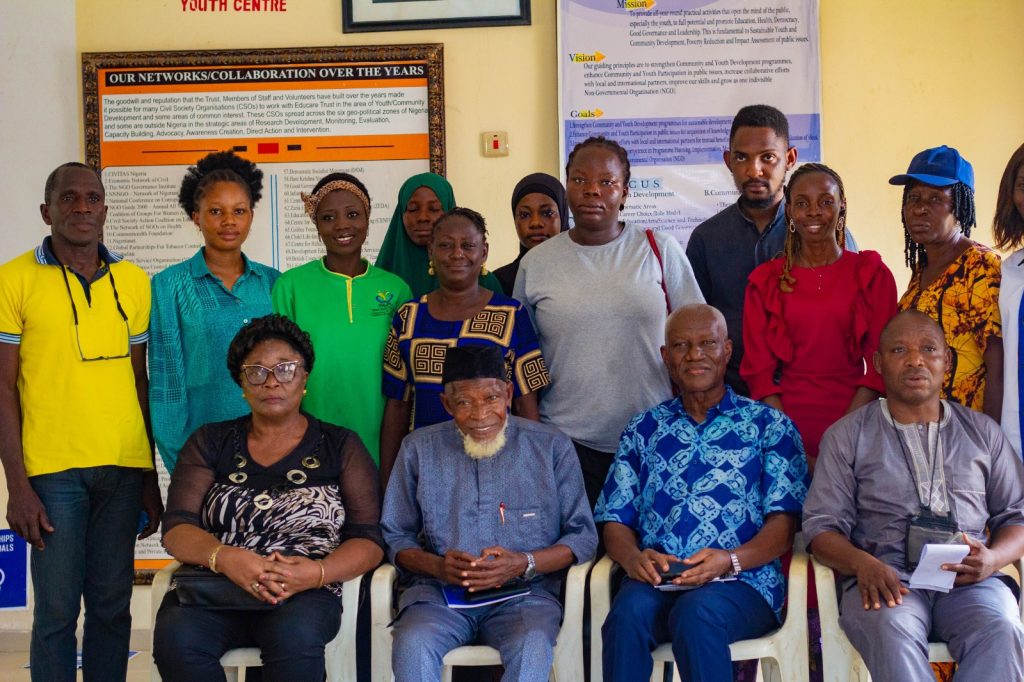
The concerns were made known during a media chat, which focused on “The Current State of Basic Education in Oyo State- Progress and Challenges,” held on Thursday, March 26, 2026, in the state.
Speaking at the event, a representative of CSACEFA in Oyo State, Iskil Yusuf, noted that while the state has recorded some progress, significant challenges persist.
Oyo State has made strides in expanding access to basic education and modernizing classrooms, yet faces a learning crisis and high exclusion rates,” says Iskil Yusuf. “Addressing these issues requires not only government action but also collective efforts from communities and civil society to ensure every child has the opportunity to thrive.”
The data from the 2022/2023 Annual School Census (ACS) shows that Oyo State has over 2,503 public primary schools, 602 public junior secondary schools, 585 public secondary schools, and 7,283 private schools, serving about two million pupils in public schools and over 568,000 in private institutions.
He added that all public primary schools in the state now have pre-primary sections, in compliance with the Universal Basic Education Act and the Oyo State SUBEB Law of 2005.
Despite these gains, Yusuf expressed concern that Oyo still records the highest number of out-of-school children in South-West Nigeria, with about 20.1 percent—estimated at over 674,000 children—currently not enrolled in school. He attributed this to poverty, long distances to schools, and lack of interest in formal education.
Infrastructure, Teacher Shortage, Others Identified
Participants at the media chat identified poor infrastructure as a major challenge affecting learning outcomes across the state. Many schools reportedly lack adequate classrooms, furniture, toilets, and water, sanitation, and hygiene (WASH) facilities.
The report also revealed that only 2.1 percent of public schools in the state have access to computers and internet facilities, raising concerns about the integration of Information and Communication Technology (ICT) in teaching and learning.
In addition, stakeholders pointed to a shortage of qualified teachers and uneven distribution of available teaching staff as key issues. In some cases, teachers were said to be handling subjects outside their areas of specialization, leading to poor instructional delivery.
Transportation, Learning Materials Affect Attendance
Distance to school and lack of reliable transportation were also highlighted as barriers to education. Many students reportedly travel long distances daily, resulting in lateness, fatigue, and absenteeism.
The shortage of instructional materials further compounds the problem. Schools were said to rely heavily on outdated and reused learning resources, with limited access to essential materials such as textbooks, teaching aids, and English dictionaries.
Concerns Over Student Welfare and Guidance
Stakeholders also raised concerns about student welfare, particularly for female students, citing inadequate access to clean water and proper sanitation facilities in many schools.
Child rights advocates at the event stressed that some students are forced into formal education paths that do not align with their interests or talents, contributing to dropout rates. They called for the inclusion of vocational and skill-based alternatives within the school system.
They also emphasized the need for improved career guidance, urging authorities to provide additional training for school counselors to better guide junior secondary school students in subject selection and career choices.
Calls for Stronger Government Action
While acknowledging efforts by the state government—such as the reported return of 60,000 out-of-school children to classrooms in February 2025—participants called for more sustained and coordinated interventions.
They also noted that initiatives by the National Commission on Almajiri and Out-of-School Children Education have recorded limited progress, with only about 29 percent of targeted children captured so far.
Development partners such as UNICEF were commended for their investment in education, healthcare, and child protection, with over $16 million reportedly committed to improving child welfare in the state.
Stalled National Initiatives: The Trust Gap
A significant portion of the report addresses the National Commission on Almajiri and Out-Of-School Children Education (NCAOOSCE) initiative. While a mop-up exercise in mid-2025 captured the data of 7,768 children in Oyo State, the second phase actual enrollment has failed to commence.
The Programme Director, Educare Trust and Coordinator, CSACEFA Care Taker Committee, Mr. Folorunsho Moshood notes that this delay has destroyed the fragile trust between field officers and skeptical parents.
Community members who were promised educational placement for their children in September 2025 are still waiting, leaving civil society advocates in a difficult position within the communities they serve.
Way Forward
Stakeholders unanimously called for increased funding, improved teacher training—especially in ICT—better infrastructure, and enhanced monitoring of schools.
They also urged the government to address issues of illegal charges in schools and ensure that education policies are effectively implemented to guarantee access to quality education for all children.
Share this