More than 1.02 million voters in Ekiti State are eligible to cast their ballots in today’s highly anticipated off-cycle governorship election. Figures released by the Independent National Electoral Commission (INEC) reveal that this electorate represents roughly 97 per cent of all registered voters in the state who successfully collected their Permanent Voter Cards (PVCs).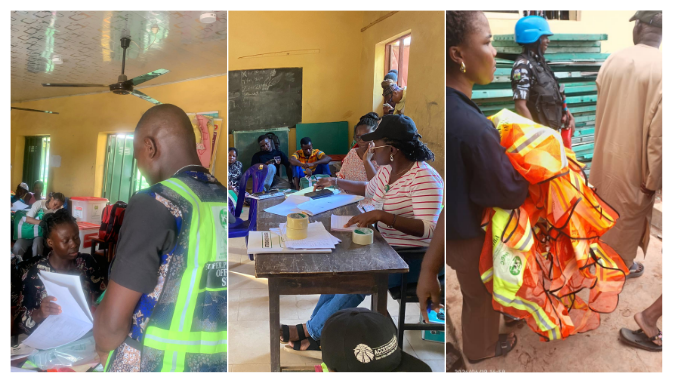
The official data shows that 1,028,929 PVCs were collected out of a total pool of 1,059,360 registered voters. This mark represents a notable 4 per cent increase translating to 41,282 additional cards compared to the 987,647 PVCs collected ahead of the 2023 general elections. The late-stage distribution drive officially closed on June 14, just six days before the opening of the polls.
Highlighting the mechanics behind the voter registration surge, INEC National Commissioner and Chairman of the Information and Voter Education Committee, Mohammed Haruna, explained the operational shift.
“The increase was driven by the collection of more than 41,000 additional Permanent Voter Cards (PVCs) following the suspension of the Continuous Voter Registration (CVR) exercise on May 15 and the subsequent clean-up of the voters’ register.”
Logistics and the Historical Turnout Gap
The high card collection rate stands against a backdrop of historical voter apathy in the state. Data tracking past outcomes shows a persistent gap between registration metrics and actual participation, with more than half of registered voters traditionally staying away from polling stations on election day.
To manage today’s logistically complex environment, INEC has scaled its field infrastructure. The commission confirmed it has deployed 9,780 ad hoc personnel alongside 2,400 Bimodal Voter Accreditation System (BVAS) devices to facilitate fast track verification. A total of 96 independent observer groups have been accredited to watch over activities across the state’s 16 local government areas, 177 registration zones, and 2,445 separate polling units. On the ground, field observers have already confirmed that essential voting materials reached multiple registration centers ahead of schedule.
Massive Security Wall Shielding the Polls
Law enforcement agencies have blanketed the state to secure the process against disruption. The Nigeria Police Force finalized a wide-ranging operational plan that places armed and unarmed personnel at all polling locations, critical infrastructure hubs, border communities, and transport choke points.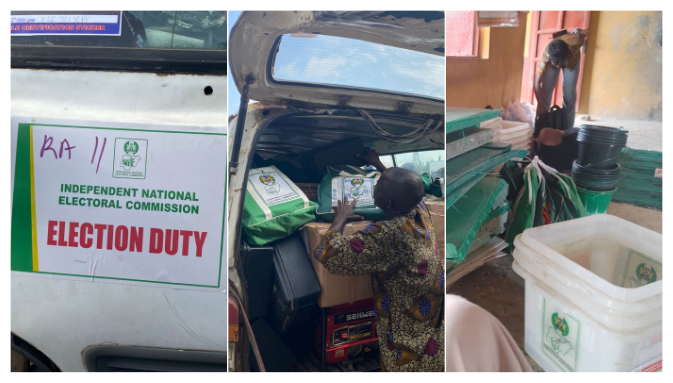
The Commissioner of Police in charge of Election Security, Shogule Abayomi, outlined the strategic framework behind the heavy deployment.
“A comprehensive, multi-layered security architecture has been put in place to ensure a peaceful, credible, and orderly electoral process.”
In tandem with the police strategy, the Nigeria Security and Civil Defence Corps (NSCDC) announced a deployment of 10,000 officers distributed across key hot spots to reinforce a zero-tolerance stance on electoral violence.
Inducement Controversies and Historical Stakes
Despite the high security presence, early concerns regarding electoral integrity emerged online. Social media users raised flags over a viral video showing an All Progressives Congress (APC) campaign vehicle distributing loaves of bread to residents on the roadside. The vehicle bore the Hope 2026 campaign slogan and images of the incumbent, Governor Biodun Oyebanji, prompting immediate public debate over potential voter inducement.
The election holds significant historical weight for the state’s political landscape. If Governor Oyebanji secures a victory today under the APC banner against the 13 opposing political parties, he will achieve an unprecedented milestone. He would become the first governor since the creation of Ekiti State in 1996 to win a second consecutive term without an administrative break.
Share this