In a significant move to bolster international stability, Nigeria and the United States have reaffirmed their commitment to a deepened strategic partnership focused on counterterrorism, regional security, and intelligence sharing.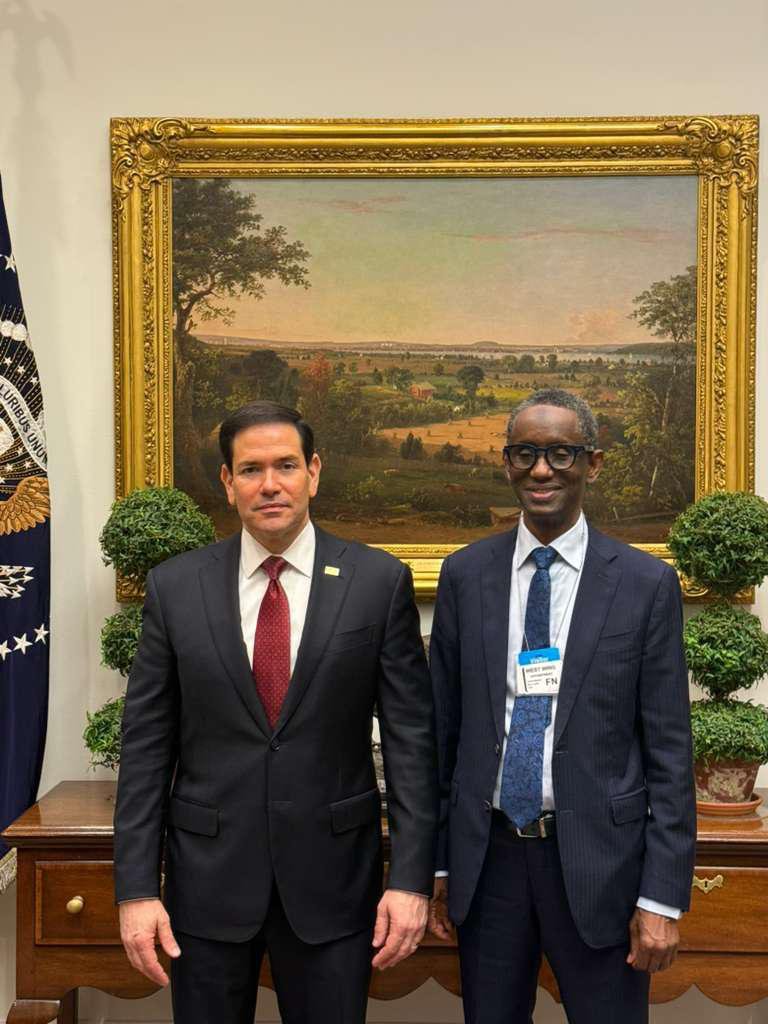
The commitment follows a high-level three-day working visit to the United States by Nigeria’s National Security Adviser (NSA), Mallam Nuhu Ribadu, who held extensive talks with top-tier American officials to align the security agendas of both nations.
Strengthening the Transatlantic Shield
During his visit, Ribadu engaged in pivotal discussions with U.S. Vice President J.D. Vance and Secretary of State Marco Rubio. The meetings served as a platform to review the current state of bilateral relations and explore new avenues for defense cooperation amidst a shifting global security landscape.
Ribadu conveyed President Bola Ahmed Tinubu’s unwavering dedication to the longstanding alliance, emphasizing that Nigeria remains a frontline state in the battle against extremism. The talks specifically addressed the rising threats of transnational organized crime and cyber warfare, which increasingly target infrastructure in both West Africa and the West.
A Roadmap for Regional Stability
A central theme of the diplomatic mission was the deteriorating security situation in the Sahel and Lake Chad Basin. Ribadu highlighted the necessity of a unified front to combat violent extremism and restore democratic governance to volatile regions.
“Nigeria remains fully committed to working with international partners in promoting peace, stability, and economic development across Africa,” Mallam Nuhu Ribadu stated during the delegation. “Our role as a regional leader necessitates sustained cooperation to address the asymmetric threats that challenge our collective security.”
Operationalizing the Joint Working Group
At the U.S. Department of State, Ribadu met with Under Secretary for Political Affairs Allison Hooker to refine the Nigeria–U.S. Joint Working Group (JWG) roadmap. This structured framework is designed to accelerate military capacity building and streamline intelligence sharing protocols.
The discussions focused on practical implementation, including:
-
Enhanced border security measures.
-
Advanced strategic communications to rival extremist propaganda.
-
Technical support for Nigerian security institutions.
The Whole-of-Government Approach
Ribadu briefed U.S. officials on Nigeria’s internal reforms, showcasing a whole-of-government strategy that balances military action with social intervention. This dual-track approach utilizes kinetic operations alongside deradicalization programs and community-based economic development to address the root causes of insurgency.
U.S. officials commended Nigeria’s leadership role in African peace operations, acknowledging the nation as an indispensable partner. The visit concluded with both parties reaffirming their shared devotion to democratic values and a joint pledge to foster economic resilience as a primary defense against regional instability.
Share this