

Esther Effiong |
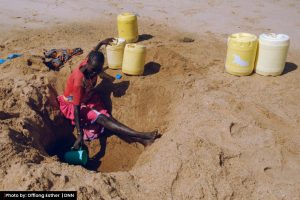
The land is thirsty. The skies, unyielding. In Southern Africa, farmers looked up, waiting for clouds that never broke, for drops that never kissed the soil. Instead, silence. Dust. And another season slipping away.
 This isn’t just “a drought.” It’s one of the harshest dry spells the region has seen in years, shaped by the restless force of El Niño—a climate phenomenon that doesn’t knock politely. Sometimes it floods, sometimes it scorches. This time, it chose fire over water. And what happens when the rain disappears at the very moment seeds need it most? The answer is heartbreak: cornfields shriveled, livestock wandering in search of water, families staring at empty granaries.
Over 70% of the people here depend on farming for survival. That’s not just numbers on a spreadsheet—that’s grandparents tending small plots, mothers balancing a baby on one hip while hoeing the earth, children who walk to school with a roasted maize cob in their pockets because it’s the family’s only food for the day. When crops fail, so do these lives.
The 2023/2024 planting season was brutal. Rainfall patterns betrayed the rhythm that communities had trusted for generations. What should have been green months turned into cracked earth and sunburned stalks. By the end of the season, the damage was undeniable. Cattle collapsed. Harvest dreams shrank into dust storms.
Now, here’s the twist of the knife: El Niño has technically ended. The weather event itself has moved on. But the hunger it unleashed? That doesn’t leave so quickly. The soil may feel relief later, but empty stomachs do not wait on weather cycles. The scars will stretch into 2025, with April or May marking the earliest possible reprieve—when, hopefully, a new harvest might arrive. Until then, the situation only tightens.
The numbers are relentless. Already five countries—Lesotho, Malawi, Namibia, Zambia, and Zimbabwe—have declared drought emergencies. Mozambique and Angola are barely holding on, grappling with their own shortages. What this adds up to is a regional food gap on a frightening scale. The consequences ripple out: malnutrition rates climb higher, vitamin and mineral deficiencies spread wider, disease finds cracks in weakened bodies. Food insecurity is not just empty bowls; it’s stunted growth, it’s fragile immunity, it’s whole futures slowing down before they’ve begun.
In boardrooms and dusty village squares alike, the World Food Programme (WFP) is sounding the alarm. They’re not alone, of course. WFP is working side by side with the Southern African Development Community, national governments, a patchwork of partners—everyone trying to stretch limited resources across a vast hunger map. The goal is simple, but immense: get food and cash assistance directly into the hands of 7.2 million people.
 Here’s the math: $147 million. That’s the funding WFP says is urgently needed to keep families afloat until March 2025. To outsiders, the figure might sound like abstract finance talk. But on the ground, that money translates into cooking oil, a bag of maize meal, beans simmering in a battered pot, the calories that transform despair into another day of hope.
And there’s more than food at stake. Livelihoods too. Without support, smallholder farmers may be forced to sell off the very tools of their resilience—livestock, seeds, equipment—just to survive. Each animal lost, each rundown plough gone, makes recovery harder when the rain does choose to return.
This is not a story of far-off tragedy. It’s the story of climate volatility pressing heavily on people who already live close to the margins, who cannot simply “buy imported food” at supermarket shelves. To put it plainly: Southern Africa is holding its breath, waiting for mercy from the clouds, while aid workers scrape together solutions from strained budgets.
And yet, resilience pulses here too. Across villages, people share what little they have. Elders teach drought-resistant farming tricks. Communities gather to store water in jars and buckets, saving every drop. The fight is not just about enduring a dry season—it’s about refusing to surrender to it.
The skies betrayed them this time. But hearts? Unbroken.
Share this