
The National Council on Climate Change (NCCC), in a landmark partnership with the Initiative for Climate Action Transparency (ICAT), has successfully convened the Final Validation and Close-out Workshop of the ICAT Nigeria Phase II Project.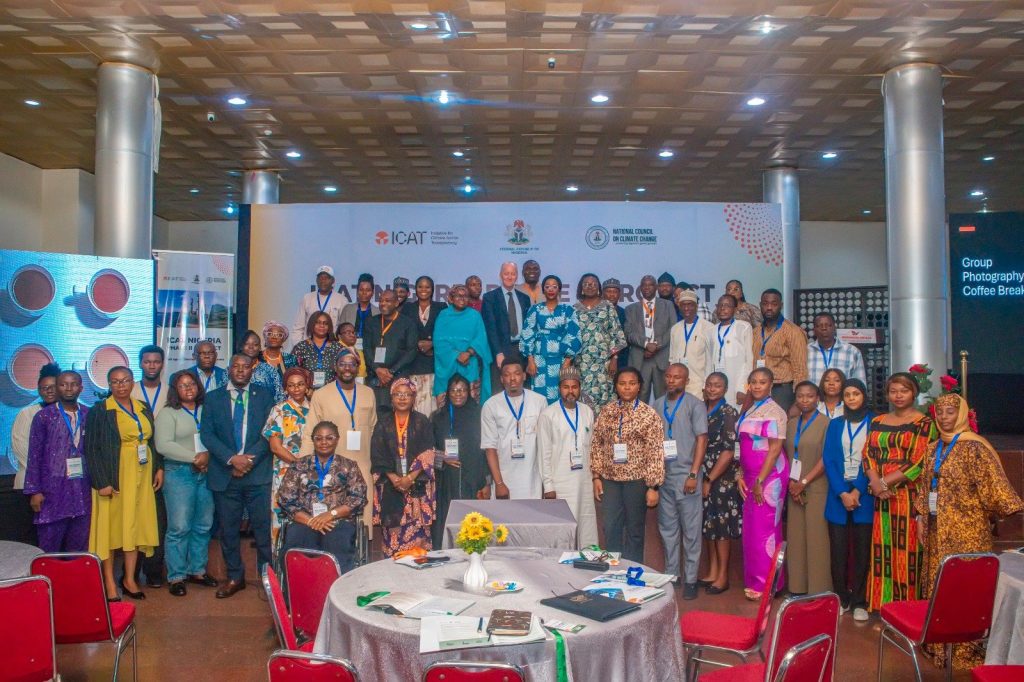
This critical initiative focuses on the establishment of Sectoral Measurement, Reporting, and Verification (MRV) systems, marks a major milestone in the nation’s environmental governance, and sets a new benchmark for tracking climate progress.
Climate Transparency as a Strategic Asset
During her keynote address at the workshop, the Director-General of the NCCC, Dr. Tenioye Majekodunmi, emphasized that tracking environmental data is no longer just a regulatory requirement but a powerful tool for national advancement.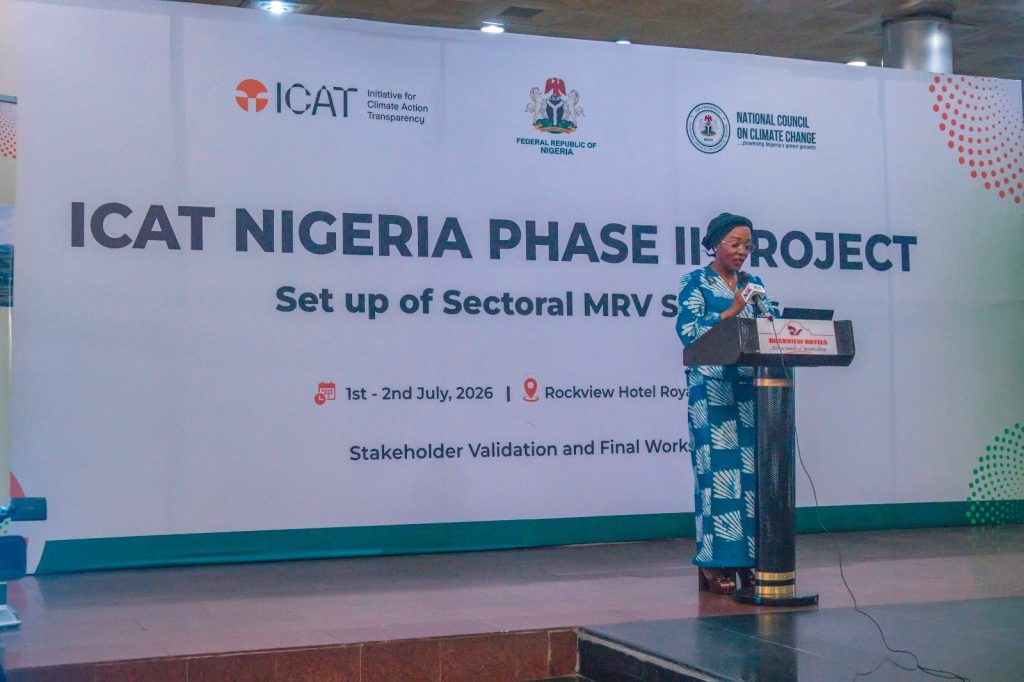
“Climate transparency is a strategic national asset for evidence-based decision-making, climate finance, carbon markets, and the implementation of Nigeria’s NDC 3.0 and Net-Zero ambition,” Dr. Majekodunmi stated.
Strengthening Investor Confidence
The international community has taken note of Nigeria’s proactive steps. Dr. Henning Wuester, the Director of ICAT, highly commended the country’s rapid progress in fortifying its climate reporting frameworks. He reaffirmed that establishing robust MRV systems is absolutely essential for driving effective climate action, boosting investor confidence, and unlocking lucrative funding opportunities under Article 6 of the Paris Agreement.
Validating Key Tools for Green Growth
The close-out workshop successfully validated a suite of critical ICAT Phase II outputs designed to institutionalize the nation’s transparency infrastructure. Among the key tools finalized were the NDC Sectoral GHG Inventory Guidelines, the Industrial Processes and Product Use (IPPU) Sector Review Report, and the National Inventory Data Flow Systems and Architecture. Additionally, stakeholders approved the GHG Emissions Projections Report, the Renewable Feed-in Tariff GHG Impact Assessment, and the National GHG Inventory Management System Guidebook.
Aligning with the Renewed Hope Agenda
These technical achievements directly support the climate and sustainable development priorities outlined in President Bola Ahmed Tinubu’s Renewed Hope Agenda. By formalizing these sectoral institutional arrangements, Nigeria is strategically positioning itself for accelerated green growth, enhanced climate governance, and a significant influx of international green investment.
Share this