

More than a decade after its adoption, the Malabo Protocol remains one of Africa’s most ambitious but deeply contested legal instruments. Designed to expand the continent’s judicial architecture into a full-fledged criminal justice system, the protocol continues to divide opinion over how far Africa should go in balancing accountability with political stability.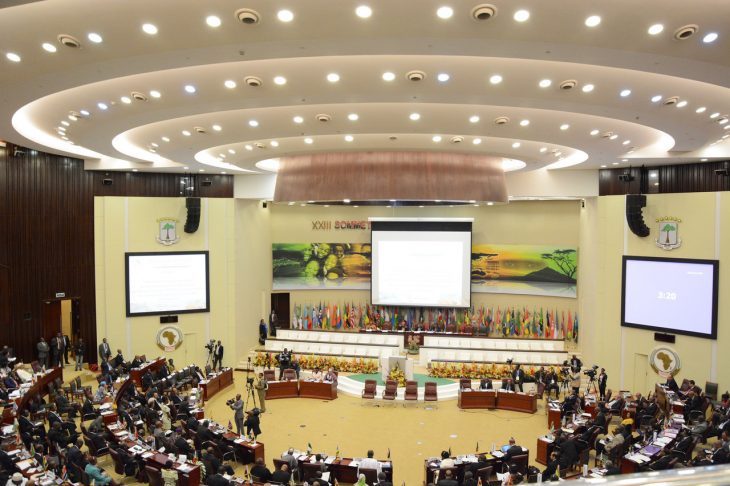
The debate has resurfaced following a press release issued in Abuja on May 7, 2026, by the Tap Initiative for Citizens’ Development, which urged the Federal Government of Nigeria to ratify the protocol. The organisation described the agreement as a “practical and urgent tool for justice” in addressing terrorism, trafficking, corruption, and other transnational crimes affecting African states.
According to the statement, pressure is mounting on the Federal Government of Nigeria to reconsider its position on the protocol, which the organisation described as a landmark African Union legal instrument designed to strengthen justice, accountability, and responses to serious crimes across the continent.
The Malabo Protocol, adopted in 2014 by the African Union in Malabo, Equatorial Guinea, seeks to expand the jurisdiction of the African Court of Justice and Human Rights to include international and transnational crimes such as genocide, war crimes, crimes against humanity, terrorism, trafficking in persons, drug trafficking, and unconstitutional changes of government.
Speaking in Abuja, the Executive Director of Tap Initiative, Martin Obono, said Nigeria’s ratification of the protocol is both timely and necessary.
“For Nigeria, the Malabo Protocol is not an abstract legal framework; it is a practical and urgent tool for justice,” he said. “The country continues to grapple with terrorism, trafficking, and transnational crimes that demand stronger and more coordinated judicial responses beyond national borders.”
The organisation noted that the protocol requires 15 ratifications to enter into force, but only Angola has ratified it so far. It added that Nigeria is well positioned to play a leading role in advancing the protocol, given its long-standing involvement in shaping governance and legal frameworks within Africa.
“This is not about surrendering sovereignty; it is about reinforcing justice,” Obono added. “A regional criminal jurisdiction provides the independence, security, and institutional strength required to ensure that perpetrators of grave crimes are held accountable.”
The group also pointed to rising cases of human trafficking, drug trafficking, and illegal cross-border activities as part of the growing need for a stronger regional legal framework.
Tap Initiative said it has submitted formal memoranda to the Federal Ministries of Justice and Foreign Affairs, engaged government stakeholders in Abuja, and convened civil society and legal experts to build support for the ratification process. It is also working with Atrocities Watch Africa to mobilise wider continental backing aimed at securing the protocol’s entry into force by 2028.
At the centre of the discussion is the question of whether Africa can build a credible criminal justice system that holds perpetrators accountable while also accommodating the political realities of governance across member states of the African Union.
Africa’s Attempt to Build a Unified Court System
The Malabo Protocol sits within a broader effort by the African Union to consolidate and strengthen its judicial institutions.
Initially, the continent operated two separate courts: the African Court on Human and Peoples’ Rights, which handled human rights violations, and the Court of Justice of the African Union, which dealt with disputes relating to AU treaties and member states.
To streamline these functions, the AU established the African Court of Justice and Human Rights through a merger of the two institutions. The court was designed as the continent’s principal judicial organ, responsible for interpreting AU treaties, resolving interstate disputes, and adjudicating human rights cases.
The structure included two main divisions, a General Affairs Section and a Human Rights Section with judges drawn from across AU member states.
However, the Malabo Protocol fundamentally expanded this framework by introducing criminal jurisdiction into the court’s mandate.
Expanding Justice: The Malabo Protocol’s Criminal Mandate
Adopted in 2014 in Malabo, Equatorial Guinea, the protocol proposed transforming the court into a regional criminal justice institution with jurisdiction over 14 categories of international and transnational crimes.
These include genocide, war crimes, crimes against humanity, terrorism, corruption, money laundering, piracy, human trafficking, and unconstitutional changes of government.
The expansion was driven by growing calls among African states for stronger regional responses to security and governance challenges, as well as increasing frustration with the International Criminal Court, which some African leaders have accused of disproportionate focus on the continent.
For supporters, the protocol represents an attempt to assert judicial independence and ensure that Africa develops its own mechanisms for addressing serious crimes.
The Immunity Clause at the Centre of Debate
Despite its ambitions, the most controversial feature of the Malabo Protocol remains Article 46A bis, which grants immunity from prosecution to serving heads of state, heads of government, and senior officials.
Supporters of the provision argue that it is necessary to protect political stability and prevent judicial processes from being used as tools of political interference. They maintain that without such safeguards, sitting leaders could become vulnerable to destabilising prosecutions that affect governance and national security.
However, the clause continues to shape how the protocol is perceived, particularly in discussions around accountability and institutional credibility.
Capacity, Structure, and Institutional Concerns
Questions have also been raised about whether the proposed court has the capacity to effectively manage its expanded mandate.
The court is expected to operate with 16 judges overseeing a broad jurisdiction that now includes general legal disputes, human rights cases, and complex international crimes.
Analysts have pointed out that this workload could stretch institutional capacity, particularly given the complexity of investigating and prosecuting crimes such as terrorism financing, corruption networks, and cross-border trafficking.
There are also concerns about the administrative demands of running a continental criminal justice system, including witness protection, prosecutorial independence, and enforcement mechanisms across multiple jurisdictions.
Funding and Political Commitment
Financing remains another key challenge. International criminal justice systems are resource-intensive, requiring sustained funding for investigations, legal proceedings, detention infrastructure, and cross-border cooperation.
The African Union has historically relied on a mix of member contributions and external support for its programmes, raising questions about long-term sustainability.
Political commitment has also been slow. Although the protocol was adopted in 2014, it requires at least 15 ratifications to enter into force. As of 2026, only Angola has ratified the agreement, reflecting continued hesitation among member states.
Nigeria, Advocacy, and Renewed Pressure
Nigeria has emerged as a key focus in the renewed debate over the protocol.
In its May 7, 2026 press release, Tap Initiative for Citizens’ Development urged the Nigerian government to ratify the agreement, arguing that it would strengthen the country’s ability to respond to terrorism, trafficking, and other transnational crimes.
The group’s Executive Director, Martin Obono, said Nigeria’s ratification would demonstrate leadership in advancing justice and accountability across the continent.
The organisation also noted that it is working with Atrocities Watch Africa to build a broader coalition aimed at securing the protocol’s entry into force by 2028.
For Nigeria, however, the issue is not only legal but also diplomatic. As a state party to the ICC system, it faces complex considerations regarding overlapping jurisdiction, cooperation mechanisms, and potential conflicts between regional and international legal obligations.
Justice, Sovereignty, and Africa’s Legal Future
At its core, the Malabo Protocol reflects a long-standing tension in African governance — the balance between sovereignty and accountability.
Supporters view it as a step toward strengthening Africa’s legal independence and building institutions capable of responding to the continent’s evolving security challenges.
The protocol’s critics, however, point to structural and legal contradictions that continue to shape its trajectory, particularly around immunity, capacity, and enforcement.
More than ten years after its adoption, the Malabo Protocol remains suspended between ambition and uncertainty. Its future will depend on whether African states can reconcile competing visions of justice — one rooted in political protection, the other in universal accountability.
Share this


