
By Mayowa Adeniran & Peter Emmanuel |
The Lagos State Health Management Agency (LASHMA) has commenced full enforcement of the Lagos State Health Scheme, marking a significant policy transition from voluntary enrolment to compulsory compliance across Lagos State.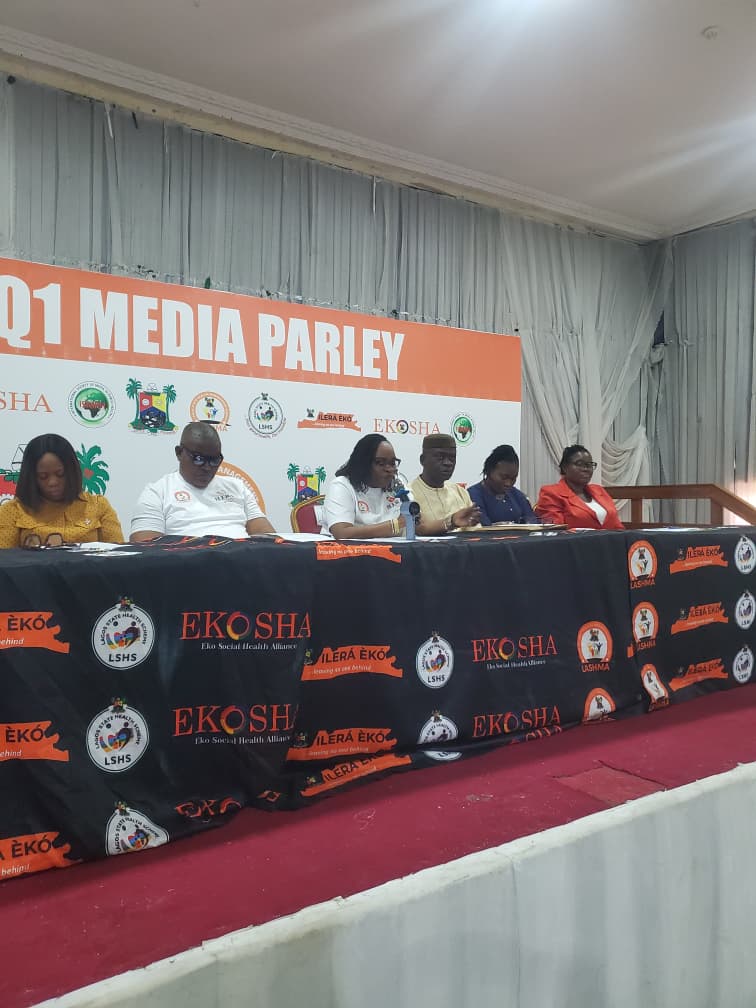
The move represents one of the most far-reaching steps yet in the state’s push to institutionalise health insurance as a core pillar of its healthcare system. Officials say the enforcement drive is designed to deepen access to healthcare, reduce out-of-pocket spending, and ensure that no resident is excluded from essential medical services due to financial constraints.
The policy shift also reflects Lagos State’s broader ambition to achieve Universal Health Coverage (UHC). The announcement was made during the Y2026 first-quarter media parley held at the Lagos Chamber of Commerce and Industry (LCCI) in Ikeja. The engagement brought together government officials, health stakeholders, and media representatives.
LASHMA said the new enforcement phase is not a sudden policy change but the continuation of a structured health financing reform that has been gradually implemented over time. The agency described the current stage as the “implementation and compliance phase” of the Lagos State Health Scheme. Officials added that the enforcement would be accompanied by digital innovations and expanded grassroots structures to ensure residents are properly captured within the system.
From Voluntary Policy Scheme to Mandatory Enforcement
The Permanent Secretary of Lagos State Health Management Agency (LASHMA), Emmanuella Zamba, noted that “the agency is now fully implementing Executive Order EO/BOS/01 of 2024,” which makes health insurance enrolment compulsory for all residents and workers in Lagos State.”
She explained that the enforcement marks a deliberate shift from awareness campaigns to structured compliance, aimed at strengthening the sustainability of the state’s health financing model. According to her, the goal is to ensure that healthcare access is not dependent on income level or employment status.
Zamba noted that the policy is “corrective rather than punitive,” stressing that it is designed to close existing gaps in enrollment and expand coverage across all socio-economic groups. She added that the reform is necessary to prevent avoidable health-related financial hardship among households.
She further explained that health insurance remains a key instrument for reducing catastrophic health spending, particularly in emergencies where families are often forced into debt or asset liquidation to cover medical bills.
The Permanent Secretary also assured that LASHMA will continue to engage the public through quarterly media briefings, ensuring transparency in implementation and consistent updates on progress.
Three-Phase Enforcement Across Lagos State
Technical Assistant on the Executive Order, Nifesimi Akinnagbe, provided a detailed breakdown of the enforcement strategy, which is structured into three phases.
He said the “first phase targets the public sector, including Ministries, Departments, and Agencies (MDAs).” According to him, compliance assessments in this category have already been concluded under the supervision of the Head of Service, Olabode Agoro.
Akinnagbe explained that government institutions will serve as the foundation for enforcement, helping to establish compliance standards before the policy expands further. He said this step is important for ensuring accountability within the public sector.
The second phase focuses on the informal sector, including traders, artisans, transport operators, and other grassroots economic actors who form a significant part of Lagos’ working population.
He added that local government authorities will play a central role in identifying, registering, and tracking residents within this category to ensure effective implementation.
The third phase will extend enforcement to corporate organisations and private sector operators, including Health Maintenance Organisations (HMOs), to ensure full compliance across the formal economy. Officials said the phased structure is designed to allow gradual but comprehensive coverage across all segments of society.
Strengthening Institutional Reach and Grassroots Structures
To support enforcement, LASHMA has restructured its operational system to improve reach and efficiency across all local government areas in Lagos State. The agency introduced Cluster Managers and Area Commanders to strengthen field operations and ensure closer engagement with communities. These officers will be responsible for overseeing enrolment, compliance monitoring, and local coordination.
Officials explained that the restructuring is aimed at improving accessibility, reducing bureaucratic delays, and ensuring that residents can easily register for the health insurance scheme. The new structure is also expected to improve data collection and real-time tracking of enrolment across different communities, helping the agency identify gaps and respond more effectively.
LASHMA further stated that collaboration with local governments and LCDAs will be intensified to ensure enforcement is properly implemented at the grassroots level.
Digital Reform in ‘ILERA EKO Easy Pay’ for Inclusive Coverage
LASHMA also introduced “ILERA EKO Easy Pay” as part of its digital reform strategy to improve accessibility and affordability of health insurance in the state.
Head of Business Development, Rotimi Olatunji, said the initiative was designed specifically to address financial barriers that prevent many residents from enrolling in the scheme. He explained that the platform allows residents to make flexible, incremental payments rather than paying a lump sum, making it easier for low-income earners to participate.
The model, described as “save small, pay complete,” allows users to contribute small amounts over a three-month period until full payment is completed. Once completed, coverage under the scheme is automatically activated.
Officials said the innovation is expected to significantly improve enrolment rates, particularly among informal sector workers who often lack steady income streams. They added that the system also promotes financial discipline while ensuring continuous participation in the health insurance programme.
Political Health Reform and System Pressure in Lagos
The enforcement of mandatory health insurance reflects a broader governance and policy shift within Lagos State’s healthcare system. Health policy observers say the move places Lagos at the forefront of subnational health insurance reforms in Nigeria, especially in terms of enforcement and digital integration.
The policy is also seen as a response to the persistent strain on public hospitals caused by high out-of-pocket healthcare expenditure among residents. Officials argue that expanding insurance coverage will help reduce overcrowding in public facilities and improve the efficiency of healthcare delivery.
However, challenges remain, particularly in the informal sector where income patterns are irregular and compliance enforcement is more complex. LASHMA maintains that its phased implementation strategy is designed to address these realities gradually while ensuring sustainability.
12 Students Named ‘Ilera Eko Advocates’
LASHMA also recognised 12 outstanding students as winners of the ILERA EKO Essay Competition, which recorded 731 entries from across primary, secondary, and tertiary institutions in Lagos State. The competition was structured to encourage early awareness of health insurance and promote civic responsibility among young people.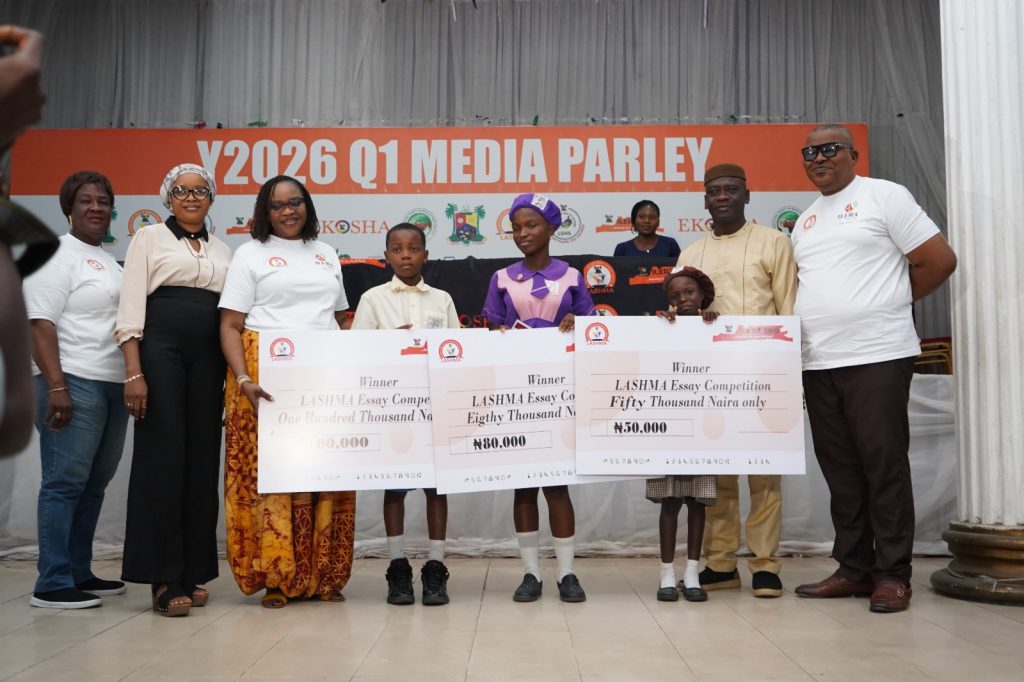
Entries were assessed using a WAEC and NECO-aligned marking framework based on Content, Organisation, Expression, and Mechanical Accuracy (COEMA), ensuring academic fairness and consistency. Officials said the competition is part of a broader strategy to integrate health education into youth development initiatives across the state. Winners received cash prizes ranging from ₦50,000 to ₦250,000 in recognition of their performance and creativity.
They were also formally named “Ilera Eko Advocates,” giving them the responsibility of promoting health insurance awareness within their schools and communities.
Grassroots Enforcement and Emergency Response
LASHMA said it will intensify enforcement activities across all local government areas as implementation moves deeper into communities.
The agency will work closely with local government and LCDA chairmen to ensure broader penetration of the health insurance scheme at the grassroots level. It also plans to collaborate with the Health Facility Monitoring and Accreditation Agency to ensure that healthcare providers verify insurance status before offering medical services.
Officials said this measure will strengthen compliance at the point of care and reduce system loopholes in service delivery.
In addition, LASHMA will fully operationalise its LASHMA-AID emergency response system, supported by Close User Group (CUG) communication lines to improve coordination and reduce response time during emergencies.
Stakeholders and Institutional Collaboration
The media parley brought together senior government officials, health administrators, and sector stakeholders who expressed support for the enforcement drive.
Participants commended LASHMA for combining enforcement with innovation, particularly the introduction of digital payment systems and grassroots restructuring.
Officials stressed that inter-agency collaboration will be critical to ensuring effective implementation of the health insurance scheme across Lagos State. They also emphasised the importance of continuous public engagement to improve understanding and compliance among residents. The engagement was described as part of a wider effort to align policy direction, institutional capacity, and public awareness.
However, LASHMA further disclosed that the enforcement of mandatory health insurance represents a major milestone in Lagos State’s healthcare reform agenda.
Officials stressed that the policy is central to achieving Universal Health Coverage and building a more equitable healthcare system. They added that health insurance is now both a legal requirement and a key social protection mechanism for all residents of Lagos State.
Share this