

By Michael Omotosho |
The Lagos State AIDS Control Agency (LSACA) has launched its 2025–2027 Strategic Plan on HIV, as Nigeria continues to face challenges in sustaining HIV prevention, testing and treatment services.
The plan was presented on September 1 at BWC Hotel, Victoria Island, Lagos, with government officials, development partners, civil society organisations, healthcare workers and other stakeholders in attendance.
Lagos Targets Gaps in HIV Response
Speaking at the event, the Chief Executive Officer of LSACA, Dr. Folakemi Animashaun, said the new plan would provide a framework for aligning HIV programmes, resources and partnerships towards measurable targets across Lagos State.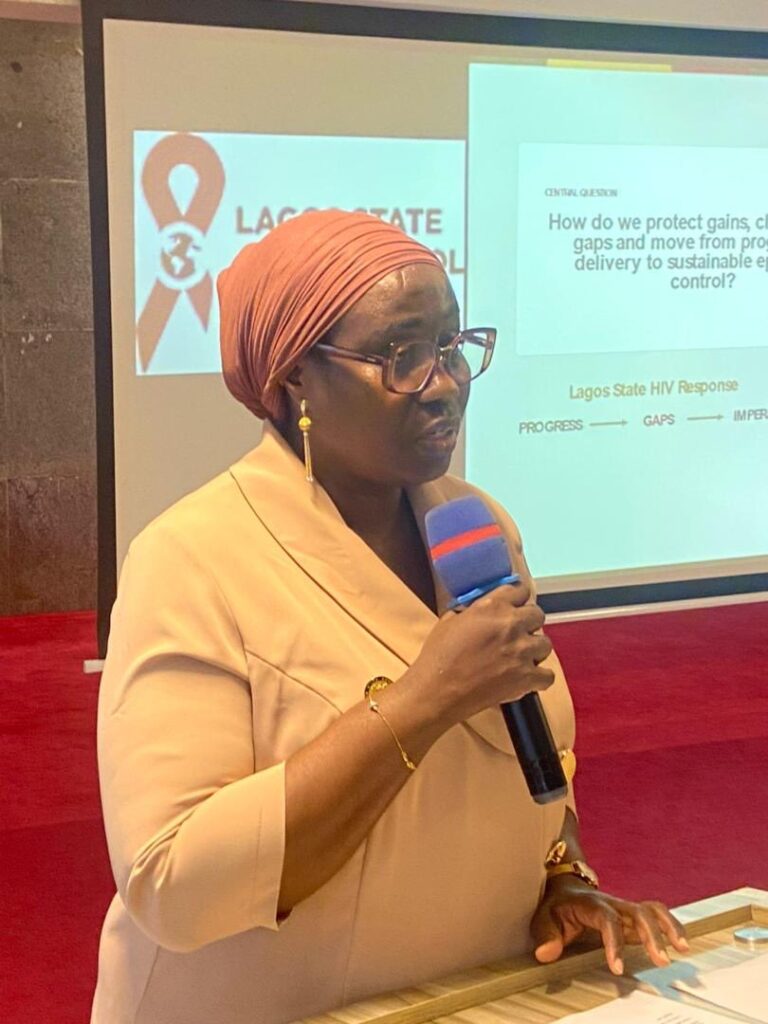
She said Lagos had recorded progress in HIV prevention, testing, treatment and community-based interventions, but noted that gaps remained, particularly among underserved populations.
Animashaun identified HIV prevention and testing, timely linkage to treatment, retention in care and viral suppression as areas requiring sustained attention.
“The Strategic Plan provides a common framework for aligning HIV programmes, resources and partnerships towards agreed targets and measurable results across the State,” Animashaun said.
Nigeria’s HIV Response Under Pressure
The development comes against the backdrop of wider challenges affecting Nigeria’s HIV response.
While Nigeria’s official HIV prevalence among adults aged 15–49 remains at 1.3 per cent, NACA’s programme review reported that the estimated number of people living with HIV had risen to more than 2 million by 2023.
The pressure has also extended to prevention and testing. A Reuters report in March found that more than one million fewer people were tested for HIV in Nigeria in 2025 than in 2024, while prevention services were affected by disruptions in funding. Condom distribution also fell significantly during the period.
The situation has raised concerns about the ability to identify new infections early and keep people connected to prevention and treatment services.
For Lagos, the new strategic plan therefore comes at a time when strengthening prevention and early testing remains critical to controlling transmission and ensuring people living with HIV remain in care.
Focus on Resources and Collaboration
Animashaun said the dissemination of the plan was an opportunity for stakeholders to assess progress, identify implementation gaps and determine where available resources could have the greatest impact.
She reaffirmed LSACA’s commitment to coordination, resource mobilisation, implementation monitoring and evidence-based decision-making in the state’s HIV response.
The agency also acknowledged the contributions of the National Agency for the Control of AIDS (NACA), government ministries and agencies, development partners, civil society groups, communities and healthcare workers.
Animashaun said achieving the plan’s targets would depend on sustained collaboration, adequate resources and effective coordination among stakeholders.
The state’s strategy is expected to guide its HIV response through 2027, with particular attention to closing gaps in prevention, testing, treatment and care.
Share this