
Lagos and Kano State governments have been urged to take full ownership of the BOOST immunisation programme and make adequate budgetary provisions to sustain its achievements ahead of its expected close-out in 2027.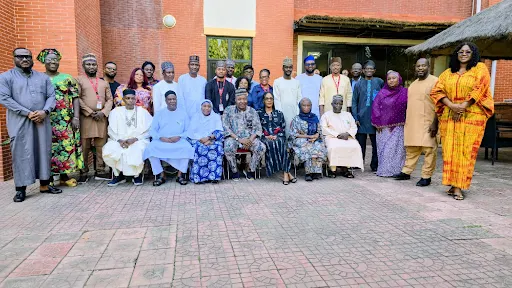
The call was made during a Lessons Learning and Transition Planning Workshop organised by Save the Children International (SCI), with support from GlaxoSmithKline (GSK), in Abuja.
The workshop brought together government officials and civil society organisations from both states to review the programme’s achievements, share experiences and develop strategies for sustaining successful interventions after the project ends.
The Better Opportunities for Optimal Services and Targeted Immunisation for Zero-Dose and Under-Immunised Children (BOOST) is a four-year initiative funded by GSK and implemented by Save the Children International in Lagos and Kano.
The project aims to reduce the number of children who have never received routine vaccines or have missed important doses in their immunisation schedules.
Stakeholders at the workshop stressed that sustaining improvements in immunisation coverage would require stronger government ownership, increased domestic funding, effective partnerships with civil society organisations and continued community engagement.
BOOST Records Improvements in Immunisation Coverage
The Policy and Advocacy Coordinator of the GSK-supported BOOST Project in Lagos State, Dr Itunu Dave-Agboola, said the programme had recorded significant improvements in immunisation coverage and acceptance across its intervention local government areas.
“I would say the project has been successful because, looking at data coming in from the intervention LGAs, there’s a significant improvement in immunisation coverage and acceptance. We have enjoyed effective collaboration from the governments of both states, both at the level of the Ministry of Health and Primary Health Care Board. They have been very supportive and collaborative. We supported them to implement a lot of their activities.
“The collaboration is a strong one such that we see sustainability even beyond the life of the BOOST project, because that is the most important thing, sustainability, so that the gains of this project will not be lost in transit,” she said.
Dave-Agboola explained that the four-year intervention focused on three thematic areas: service delivery, social and behaviour change communication, and advocacy.
According to her, participants reviewed activities under the three areas and identified approaches that could be replicated or sustained after the programme ends.
She added that civil society organisations would need to establish independent institutional structures and mobilise resources to maintain their contributions beyond the project’s lifespan.
CSOs Push for Stronger Institutional Structures
The Secretary of the Advocacy Subcommittee of LASAM, Revd Bola Nuga, described the workshop as an opportunity to learn from Kano’s experiences and identify approaches that could strengthen advocacy efforts in Lagos.
He said the engagement provided useful insights into how both states had implemented BOOST interventions and how their experiences could shape future immunisation advocacy strategies.
Nuga disclosed that Save the Children was considering additional support for the advocacy subcommittees in Lagos and the Kano Community of Practice to help them become formally registered and institutionalised.
“Formal registration would strengthen capacity to access funding from local and international sources and sustain their activities beyond direct support from Save the Children. They plan to provide more support to the subcommittees of LASAM and the Kano Community of Practice to see how they can be institutionalised in terms of registration so that they can access funds, which is key,” he said.
He noted that formal registration would strengthen the organisations’ ability to engage governments, access funding and sustain advocacy activities after the project’s conclusion.
Government, Community Leaders Urged to Address Vaccine Hesitancy
Also speaking, the Project Manager of the Community of Practice (CoP), Save the Children, Kano, Ablai Magama, said the workshop allowed stakeholders to review the programme’s implementation, identify challenges and propose solutions.
He emphasised that eliminating zero-dose and under-immunisation would require collective responsibility involving government institutions, traditional and religious leaders, caregivers, communities, the media and relevant ministries and agencies.
“The governments must ensure consistent vaccine availability while working with traditional and religious leaders to address myths and misconceptions that contribute to vaccine hesitancy. The experiences shared by Lagos and Kano demonstrated that sustained collaboration between government and civil society organisations could help reduce the number of children missing essential vaccines,” he said.
Magama added that ministries responsible for economic planning and budgeting, youth and social development, women’s affairs and poverty alleviation also had important roles to play in sustaining immunisation programmes.
“A major gap in vaccine acceptance has to do with the caregivers, and we need to identify the issues that promote hesitancy. Once we can identify those barriers and overcome them, there will be greater acceptance. So we move closer to the eradication of zero-dose and under-immunisation,” he stated.
Lagos Calls for BOOST Interventions in 2027 Budget
The Chairman of the Evidence Subcommittee of LASAM, Mr Basit Baruwa, said the partnership had helped Lagos identify and reach zero-dose children in underserved communities, particularly in areas where access to routine immunisation services had remained difficult.
He noted that the programme’s technical and financial support had contributed to improvements in maternal and child health outcomes, particularly immunisation coverage in local government areas such as Ikorodu and Alimosho.
“The BOOST programme in Lagos State has been a successful partnership. Through it, we have been able to identify and reach many zero-dose children in some of our local government areas and communities where reaching them would otherwise have been difficult.
“The improvements recorded over the past two to three years underscore the value of sustained collaboration between government and development partners, but the gains could be undermined if the state fails to establish a clear sustainability plan before the project winds down.
“Since the BOOST project is expected to end next year, we feel that the state government should take full ownership by ensuring that all the interventions and resources currently available through the project are sustained and captured in the state’s budget for 2027,” he said.
Baruwa also advocated increased local resource mobilisation, urging the state to engage more organisations and private-sector partners in supporting immunisation and other primary healthcare interventions.
He said expanding local partnerships would reduce dependence on external funding and help maintain services in communities currently benefiting from the programme.
Describing the workshop as a valuable peer-learning opportunity, Baruwa said both states had exchanged practical experiences on reaching underserved populations.
“There were several things we in Lagos had done that our colleagues could learn from, and we also gained valuable lessons from Kano. It was a mutually beneficial experience,” he said.
He further advocated expanding the programme to more local government areas, noting that government and development partners needed to work together to extend immunisation services to additional communities.
Workshop Recommends Increased Government Funding
At the end of the workshop, participants recommended that both state governments take full ownership of the programme’s interventions by ensuring that activities and resources currently supported by BOOST were sustained and captured in their respective budgets.
They also recommended expanded resource mobilisation to attract local organisations and private-sector partners to support routine immunisation and other primary healthcare services.
The stakeholders stressed that continued collaboration, sustainable financing and stronger community participation would be essential to protecting the gains recorded under BOOST and ensuring that children in underserved communities are not left behind when the project closes in 2027.
Share this


