
The Lagos State Government, through its Health District III, has officially pledged to strengthen environmental health, upscale infection control, and guarantee water safety across local communities. As part of this commitment, the government has launched a strategic distribution of disinfection, vector control, and water testing equipment to primary healthcare centres and public places.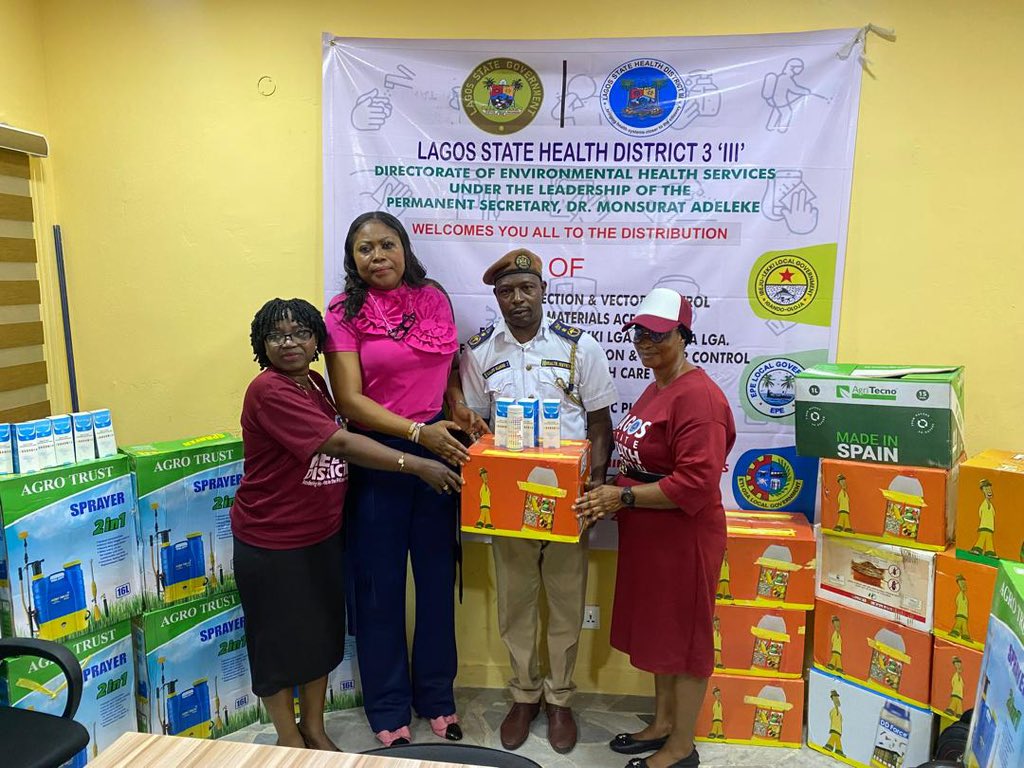
This intervention targets vulnerable areas within the Ibeju-Lekki, Eti-Osa, and Epe local government areas. The initiative is designed to build a highly resilient healthcare defense system at the grassroots level.
Strategic Intervention Against Vector-Borne Diseases
The dual-focused deployment aims to tackle separate but interconnected public health threats simultaneously. The newly distributed disinfection and vector control materials are specifically earmarked to enhance environmental hygiene. These tools will play a critical role in preventing the spread of vector-borne illnesses, including malaria and dengue fever, which heavily impact local communities during peak seasonal shifts.
While presenting the materials at the District III Headquarters in Ikoyi, the Permanent Secretary of Health District III, Dr. Monsurat Adeleke, emphasized the structural importance of the rollout.
“Environmental health remains a critical component of public health practice. As such, the provision of these materials is a strategic, dual-focused intervention aimed at strengthening both environmental sanitation and water quality within our health district. We started with an example of testing the water at the district, and we found out that it was portable,” Dr. Adeleke stated.
Securing Water Sources and Boosting Epidemic Preparedness
In addition to pest and vector control, the water testing kits will allow local clinics to run periodic microbiological and chemical analyses. This continuous oversight is vital to curb outbreaks of dangerous waterborne diseases such as cholera and typhoid fever. The state confirmed that the arrival of these materials matches a broader, proactive campaign to ramp up institutional preparedness against severe infectious pathogens, including the Ebola Virus Disease.
The Permanent Secretary urged all recipient healthcare centers to ensure strict compliance, appropriate deployment, and absolute accountability in utilizing the new gear.
Closing Infinitesimal Gaps in Grassroots Healthcare
The decision to supply these specialized machines arose directly from field data collected during internal quality assessments. Healthcare administrators identified specific equipment deficits that required immediate state government intervention.
According to the Director of Environmental Health Services, Sanitarian Mary Akinola, a noticeable operational gap was discovered during the district’s routine quarterly monitoring exercises.
“The government decided to empower them with the presentation of these materials. The machines can work for about seven hours when fully charged,” Akinola noted, while strongly urging all community beneficiaries to take full responsibility for the maintenance and daily utility of the equipment.
Share this


