
The Lagos State Government has stepped up its public health defenses at the Murtala Muhammed International Airport (MMIA) to prevent the importation of the Ebola Virus Disease (EVD) into Nigeria. This proactive measure follows a heightening wave of Ebola outbreaks across East and Central Africa, prompting immediate state and federal interventions at the nation’s primary gateway.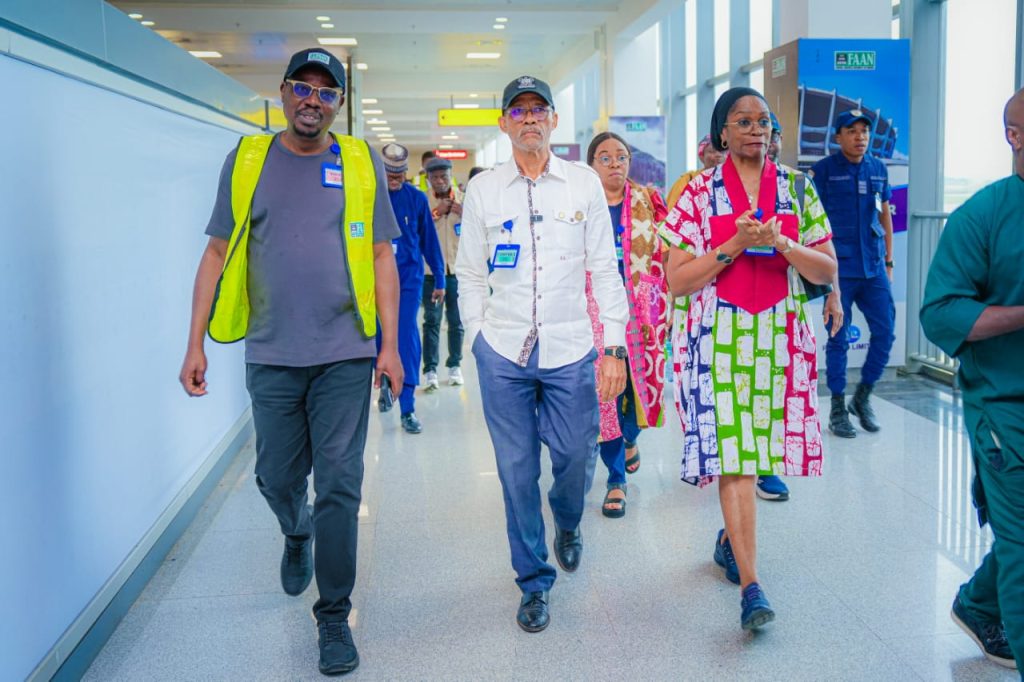
The Lagos State Commissioner for Health, Prof. Akin Abayomi, led a high-powered delegation to assess the facility’s preparedness. The inspection team included top state health officials, such as the Special Adviser to the Governor on Health, Dr. Kemi Ogunyemi, and the Permanent Secretary of the Ministry of Health, Dr. Dayo Lajide, who met with the Regional General Manager of MMIA, Mr. Olatokunbo Arewa, along with key federal aviation health authorities.
Echoes of the 2014 Response and Current Risks
During the high-level assessment, officials thoroughly reviewed existing operational frameworks, passenger movement logistics, and infection prevention protocols. Prof. Abayomi emphasized that the MMIA accounts for roughly 70 percent of Nigeria’s international passenger traffic, making it the most critical point of entry and the primary frontier for intercepting imported infectious diseases.

Reflecting on Nigeria’s historical triumph over the disease, Prof. Abayomi stated, “Almost eleven years ago, we experienced the importation of Ebola into Lagos from Liberia during the largest Ebola outbreak in recorded history. We were able to contain what became a relatively small outbreak in Lagos, thanks to the sacrifices of dedicated healthcare workers, including the late Dr. Ameyo Adadevoh.”
The Commissioner warned that global interconnectedness keeps threats like Ebola, COVID-19, and Lassa fever constant. “The primary purpose of our visit is to understand how we can support your efforts, identify existing gaps and jointly develop practical solutions. Our objective is to create a bottleneck for the virus, not for passengers,” Abayomi added.
Strategic Interventions and Frontline Support

To minimize potential cross-contamination, the state is looking into specialized protocols that isolate passenger streams coming from designated high-risk regions without interrupting general airport efficiency. This approach relies heavily on the physical and digital monitoring infrastructure managed by frontline border staff.
Dr. Kemi Ogunyemi emphasized that safeguarding national health security requires joint responsibility, assuring airport workers of the state’s full support. “The frontline actually begins here at our ports of entry. As passengers arrive, you are among the very first people to interact with them, making your role critical in our disease surveillance and response efforts,” Ogunyemi remarked, noting that Governor Babajide Sanwo-Olu views health security with the same gravity as conventional national security.
Reinforcing this message, Dr. Dayo Lajide urged strict adherence to Infection Prevention and Control (IPC) protocols to protect both the workers and the public. “As frontline responders, your safety is paramount. Continue to follow all IPC measures diligently because while you are protecting Nigeria from potential health threats, you must also ensure that you are protected from exposure and risk,” Lajide stated.
Upgraded Airport Infrastructure and Flight Controls
In response to the rising regional threat, the airport management has already begun deploying hardware updates. MMIA Regional General Manager, Mr. Olatokunbo Arewa, revealed that the facility is integrating touchless hand-sanitizer dispensing systems and advanced temperature-detection equipment to catch symptomatic travelers seamlessly.
Arewa affirmed the airport’s commitment to stopping the virus at the border, stating, “We would like this collaboration to continue, particularly in emergency response. Ebola is a highly dangerous disease and any suspected case must be isolated quickly and professionally to prevent transmission.” He added that authorities are currently mapping out dedicated arrival channels exclusively for travelers originating from high-risk countries.
The federal medical apparatus at the airport has been preparing for this contingency for months. The Head of Port Health Services at MMIA, Dr. Lawal Abdullahi, disclosed that his department updated its Public Health Emergency Contingency Plan on March 18, 2026, anticipating regional escalation. Abdullahi confirmed that passenger screening data is already being shared dynamically with Lagos State epidemiologists to ensure rigorous contact tracing if a threat emerges.
To cement these border controls, Dr. Abayomi Asunbo of the Nigeria Civil Aviation Authority (NCAA) announced that strict directives have been issued to international airlines. Carriers operating routes from affected areas must now fully comply with and enforce pre-boarding public health protocols before any passengers are permitted to disembark on Nigerian soil.
Share this


