
The Lagos State Government has taken a significant step toward transforming its landscape through a strategic partnership with the European Union (EU).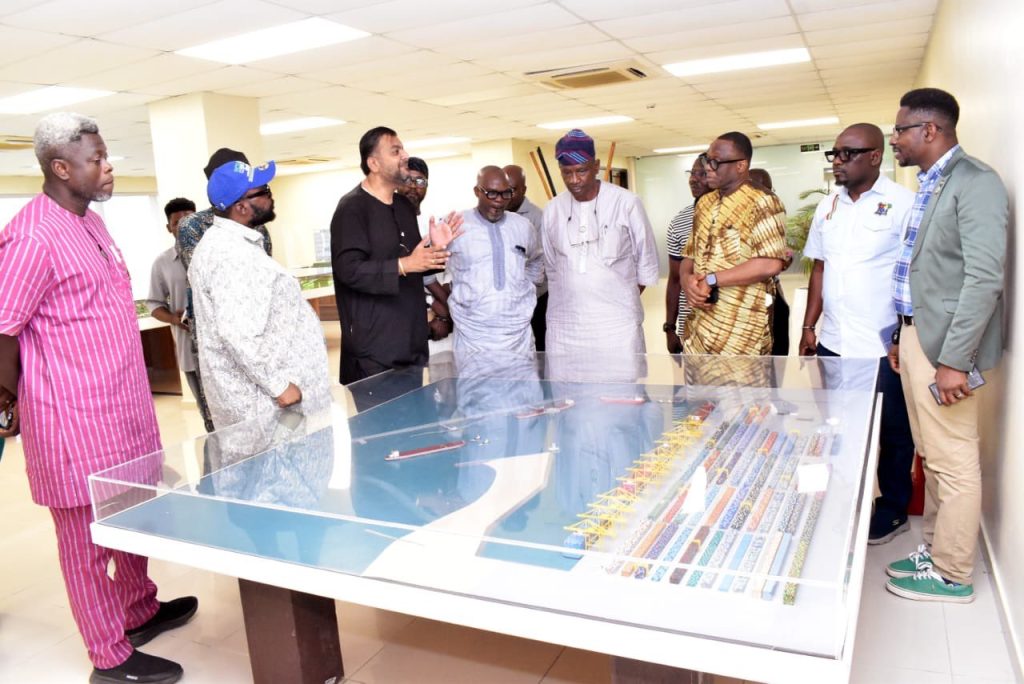
This collaboration aims to harmonize physical planning with integrated transport systems to tackle the challenges of rapid urbanization in Africa’s largest megacity.
A Strategic Vision for Sustainable Growth
On Wednesday, officials from the Ministry of Physical Planning and Urban Development hosted an EU delegation at the Alausa Secretariat. The high-level meeting focused on Transport Corridor Development, Urban Mobility, and the implementation of resilient infrastructure designed to bolster connectivity across the state.
The Honourable Commissioner for Physical Planning and Urban Development, Dr. Oluyinka Olumide, underscored the importance of this international alliance. He called for intensified technical cooperation and investment-driven initiatives to ensure Lagos remains a competitive global hub.
“You will agree with me that Lagos is a key economic hub in West Africa, and we are confident in our strategic direction towards sustainable physical planning transformation,” Dr. Olumide stated during the engagement.
Strengthening Technical and Institutional Capacity
The Permanent Secretary of the Office of Physical Planning, Engr. Oluwole Sotire, expressed appreciation for the EU’s continued support. He noted that for a megacity expanding at the rate of Lagos, forward-thinking partnerships are essential to delivering efficient land-use systems and modern transportation networks.
According to Engr. Sotire, the state remains dedicated to policies that reduce congestion and improve the quality of life for all residents through orderly development.
In response, EU Team Lead Celihe Lhoste reaffirmed the Union’s dedication to fostering sustainable cities. She highlighted that the EU is keen on strengthening ties in areas such as smart physical planning and institutional capacity development.
The Push for a Unified Planning Framework
The delegation emphasized that the future of Lagos hinges on a coordinated approach. Jacques Remy, a member of the EU team, pointed out that success lies in bringing land use, transportation, and environmental considerations under one umbrella.
This sentiment was echoed by the Director of the Regional and Masterplan Department, Tpl. Adeshina Shobowale, who advocated for a unified planning framework. While acknowledging existing strategic plans, Shobowale called for a comprehensive, layered document to address the state’s evolving urban needs more effectively.
On-Site Assessment of Landmark Projects
To gain a first-hand perspective of the state’s progress, the meeting was followed by a tour of several landmark project sites. The delegation visited:
-
The Marina Train Station (a core hub for integrated rail transport).
-
The Lagos-Calabar Coastal Road.
-
The Lekki Free Trade Zone and Àlaro City.
These visits highlighted the scale of ongoing investments and the potential for the Lagos-EU partnership to set a new global standard for urban resilience and mobility.
Share this


