

On April 1, 2026, an aircraft carrying eight deportees from the United States landed at Entebbe, a windswept peninsula on the northern shore of Lake Victoria, after a 16-hour journey to Uganda, a landlocked country in East Africa.
On the day of their arrival, mild sunshine and light showers beat a gentle rhythm across the town, which bears the lasting vestiges of the colonial administration and hosts the official residence of the President’s family, squatting atop the lush green hill adjacent to the airport.
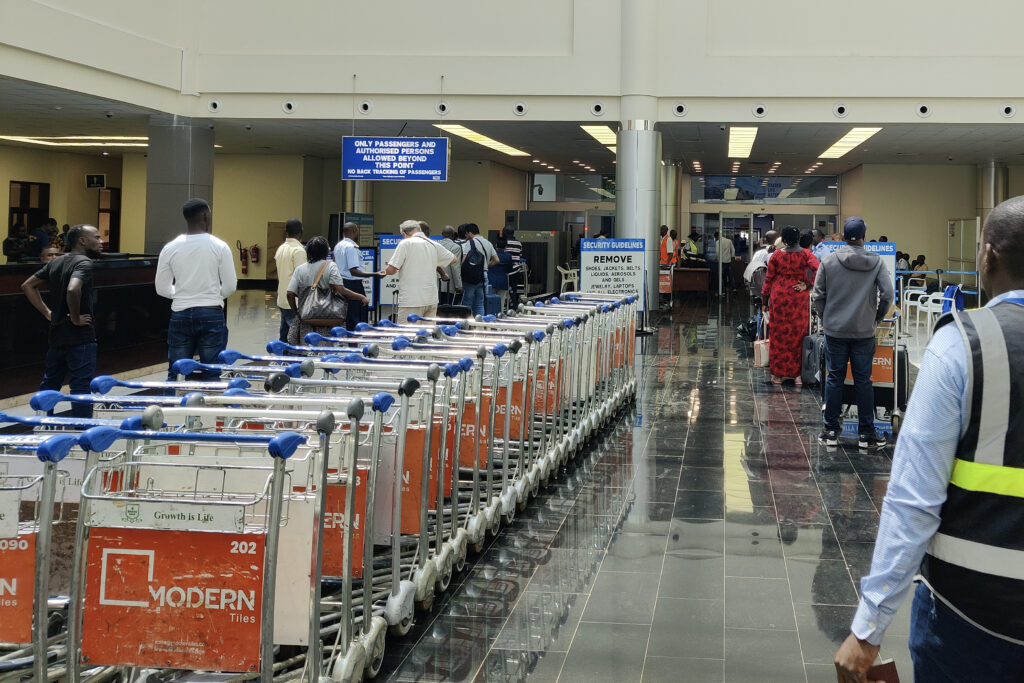
The eight people, including a woman and seven men, barely knew each other beyond their shared harrowing experience of having been expelled from the US and placed on a flight to an unknown destination after being held for days in American detention centers.
Most of the deportees hardly understood English, the official language in Uganda. They wore filthy clothes and had no cash or means to communicate with their loved ones.
When they disembarked from the plane, the men, who were in handcuffs and leg chains like common criminals, were unshackled before being driven to a hotel in Mengo, a hilly suburb overlooking Kampala city.
Human rights lawyer Robert Okot spoke extensively with the deportees at the hotel premises. “They had not been told what they were being taken for and had no idea where they were and did not have means of communication and cash to spend,” he said, adding that they looked gaunt and haggard.
Most of the deportees were French-speaking, except for one who spoke passable English. Okot relied on him for interpretation. “Bringing them to a country like Uganda, where people are struggling to find decent work and where they are depending on handouts from people for a meal, was quite traumatic,” he said.
AGREEMENTS’ PROMISES NOT MET BY REALITY
The deportation and resulting trauma were the result of an Asylum Cooperative Agreement (ACA) the Ugandan government signed with the United States in July 2025.
The ACA seeks to ensure the “dignified, safe, and timely transfer from the United States of America to the Republic of Uganda of third country nationals present in the United States of America who may seek protection against the return to their home country or country of former habitual residence,” according to agreement language from the United States’ Federal Register.
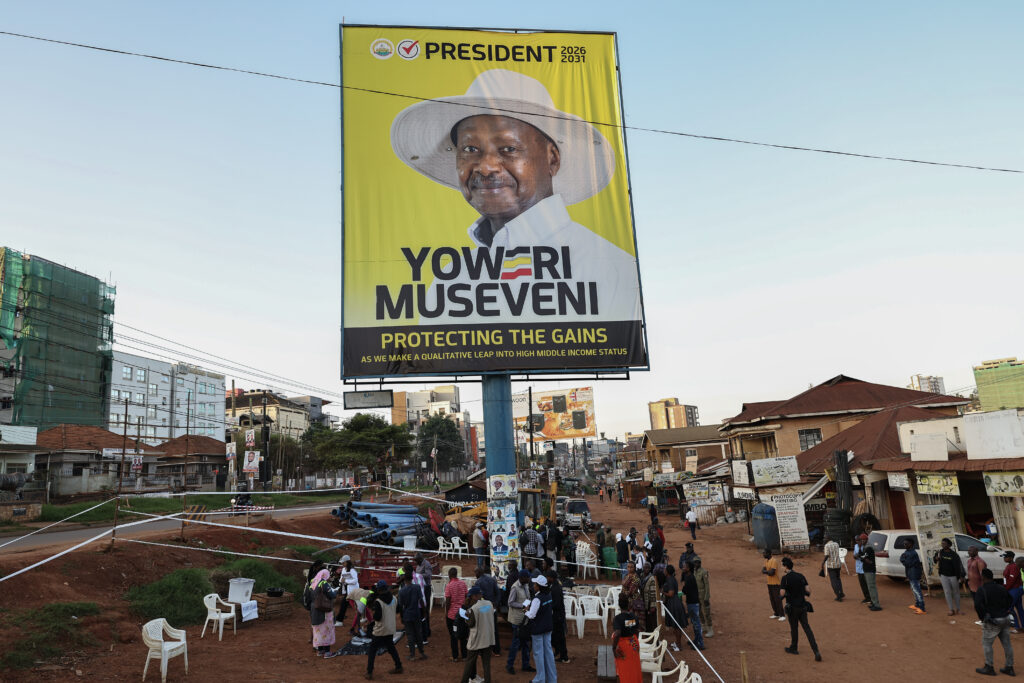
But the agreement’s execution appears to have breached democratic commitments made by both governments and international law, while illustrating the transactional approach to foreign policy adopted by the Trump administration and bolstering the Museveni government’s attempts to maintain its hold on power, according to some observers of the Ugandan scene.
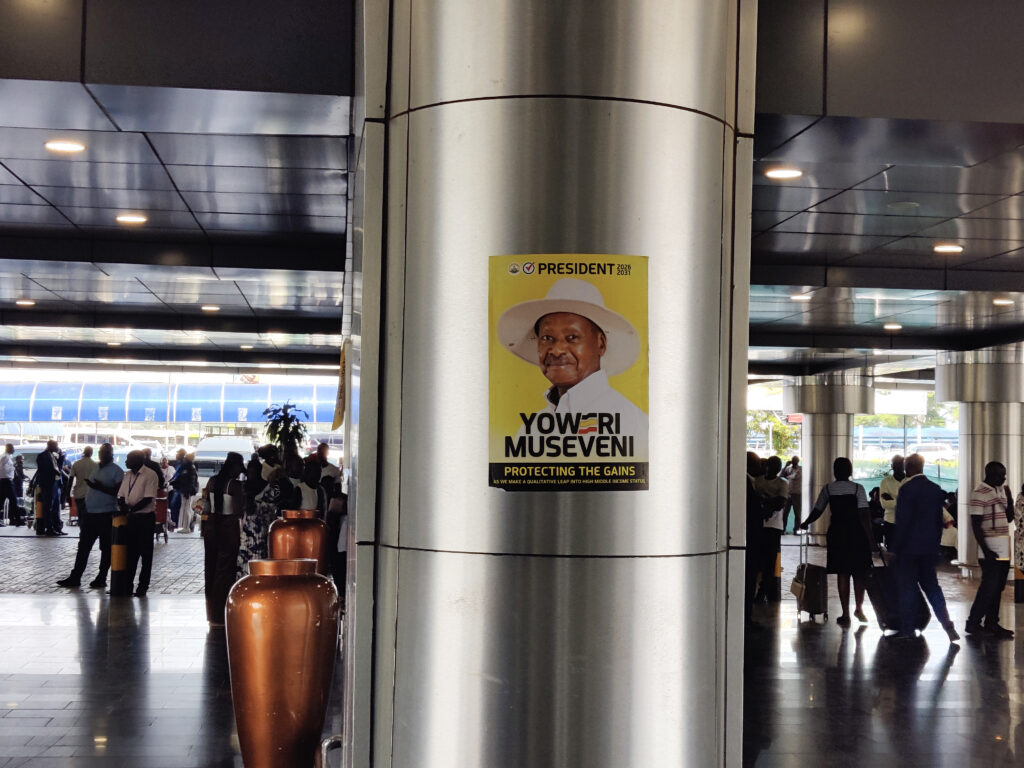
“This is needed in the present moment with Uganda’s global standing waning and democratic credentials crashed as the country has become more autocratic, with state abuses more egregious,” said Moses Khisa, a Ugandan academic and associate professor of political science at North Carolina State University in the United States. “On its part, the Trump administration appears least interested in pressing for respect of political rights and civic freedoms around the world, the kind of posture not previously associated with the Obama and Biden administrations.”
DEAL’S ALLEGED DEMOCRATIC VIOLATIONS
The Uganda Law Society and the East African Law Society filed a suit in the High Court in April 2026 seeking to nullify the agreement.
“The admission into Uganda of third-country nationals under the agreement, without a publicly disclosed rights-compliant framework for individualized refugee status determination violates several articles of the Constitution, the Refugees Act, and Uganda’s obligations under international human rights and refugee law,” the suit said.
Relevant provisions from the Bill of Rights include equality and freedom from discrimination, the protection of personal liberty, which protects from inhumane treatment, the right to a fair hearing and the requirement that Parliament approve treaties, according to Article 123 (2) of the Uganda Constitution.
Uganda Law Society President Isaac Ssemakadde expressed concern that, in another potential democratic offense, Ugandan courts will not entertain the matter. “As I understand it, it [case] is considered to be highly politically sensitive,” said Ssemakadde, who fled into exile. “No court wants to put it on the cause list. I think if I were in the country, I would suffer immediate retaliation for having authorized the filing of this litigation.”
On the American side, the decision to forcefully send deportees to far-away lands with a different culture and language raises questions about potential violations of US obligations under the 1967 Protocol on the Status of Refugees, which the US Senate ratified in 1968.
Jurisprudence on mass deportations has evolved after the Nuremberg Nazi trials held between 1945 and 1949, which categorized the forced deportations of Jews as crimes against humanity.
The International Criminal Court (ICC) categorizes mass deportations as crimes against humanity, and the International Criminal Tribunal for the Former Yugoslavia and the Rome Statute of the International Criminal Court have outlawed forced deportations.
Unlike the United States, Uganda ratified the Rome Statute, binding it to comply with the provision that makes deportation or forcible transfer of a population a crime against humanity.
MIXED MESSAGES ABOUT AGREEMENT’S EXISTENCE
In August 2025, Uganda’s junior foreign affairs minister, Henry Oryem-Okello, denied that the government had signed the accord with the United States. “To the best of my knowledge, we have not reached such an agreement,” Oryem-Okello said. Uganda, he added, lacked “the facilities and infrastructure to accommodate” people deported under such an arrangement.
Permanent Secretary Vincent Waiswa Bagiire confirmed almost a year later that Uganda had entered an agreement with the United States. Bagiire said the arrangement included a condition that no one be sent to a country where they could face torture or other cruel, inhuman, or degrading treatment because of their migration status.
Ugandan officials said the agreement was limited to deportees from other African countries and unaccompanied minors.
But when asked for details about the April flight, Bagiire referred questions to Uganda’s Office of the Prime Minister, which he said had handled the asylum requests of the two deportees who were eventually integrated into Ugandan society. The Office of the Prime Minister did not respond to repeated requests for comment. At the same time, Zoe Brennan, who is the Strategic Communications Advisor at the International Organization for Migration, said, “I have been able to confirm that IOM has not been involved in any asylum proceedings or settlement in Uganda. UNHCR would be in the lead here.”
President Yoweri Museveni removed Oryem-Okello from government in a cabinet reshuffle nearly a year later. CCIJ has not established whether his removal was connected to his public comments about the agreement.
DEPORTEES’ EXPERIENCE: DIRE CONSEQUENCES
The deportees experienced dire consequences under the agreement.
Before their deportation, the eight faced several hurdles, including lacking access to a lawyer, English interpreters, and their families during detention. Okot said it took a while to trace the deportees: “They did not have access to information; we did not know where they were being kept, and they did not know whether they had any rights. They were at the mercy of two governments that chose to execute a secretive agreement.”
Amongst the deportees was a young man from Ethiopia who had escaped the brutal claws of a repressive government at home. After fleeing to the United States, he was later arrested and spent nine months at a detention center before being flown to Uganda.
He endured sexual abuse and was not provided with adequate interpretation in immigration court or at medical appointments while waiting for an immigration judge to decide his asylum case, according to a report by U.S.-based non-profit organization Human Rights First.
Despite a ‘severe decline’ in the man’s mental health, U.S. Immigration and Customs Enforcement (ICE) moved to omit his case under the ACA at his final hearing.
Even though a Human Rights First attorney presented evidence that sending him to Uganda would place him at risk of being returned to Ethiopia, the immigration judge ordered him removed to Uganda, the report said.
Okot said the deportee from Ethiopia, who had earlier expressed the desire to seek asylum in Uganda, later fled to a neighboring country, Kenya. “During one of our conversations, he revealed that he was running out of funds and wanted to get a cell phone where he could receive money,” Okot said, adding that he and the deportees who remained in Uganda have lost contact with the man.
Okot revealed that the deportees who had been granted asylum were under immense pressure to leave the hotel because the Office of the Prime Minister had instructed the hotel management to eject them after two months’ stay. He speculated that the potential ejection may have prompted the Ethiopian man to leave for Kenya.
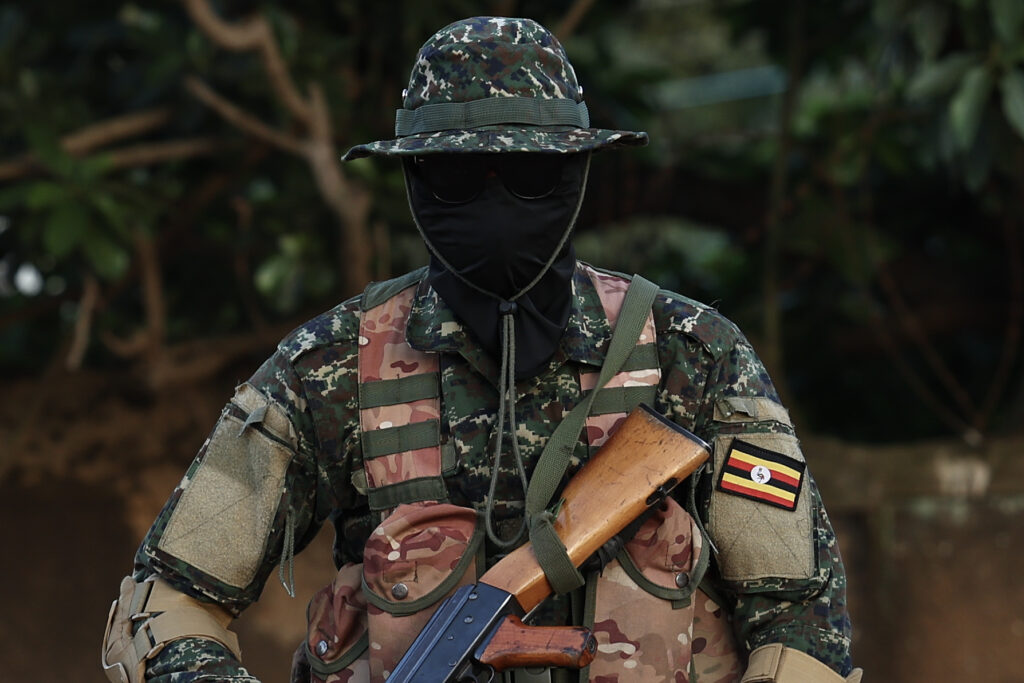
Two out of the eight deportees were granted asylum in Uganda, which hosts one of the largest refugee communities in Africa.
They faced dim economic prospects.
Uganda has the second-youngest population in the world, with about 75 percent below the age of 35, according to the United Nations Population Fund (UNFPA), and a soaring youth unemployment rate, above 70 percent. This makes it nearly impossible for an asylum seeker to find employment in Uganda.
Five were voluntarily repatriated to their respective countries, including a woman unsure whether to be sent to DRC or Cameroon.
“They went through a lot; some of them had been under detention for some time in the US,” says Okot, the lawyer who was offering legal services to the deportees. “From their narration, you realize that there were quite some procedural irregularities in their deportation, and of course it really shows how these individuals were very vulnerable to human rights violations.”
These violations are not limited to Uganda. Of the 14 African countries selected to host third-country nationals, South Sudan and the Democratic Republic of Congo are listed as failed states. In contrast, the World Bank lists Cameroon and Libya as fragile states. The rest, including Uganda, are experiencing declining democracy and the rule of law.
Uganda Law Society (ULS) President Isaac Ssemakadde argues that this means that Uganda is not an appropriate destination for the deportees: “People are running away from the worst autocracies, the worst persecution. You can’t send them to Uganda to negotiate their fates here. Uganda doesn’t provide minimum conditions of security.”
UGANDA SIGNS HEALTH DEAL WITH US; OTHER AFRICAN COUNTRIES DECLINE
The Ugandan government received a measure of financial security in September 2026, when it signed an agreement with the United States for $1.7 billion until 2030 to bolster the nation’s ailing health sector.
Speaking at the signing ceremony at the Finance Ministry, Finance Minister Henry Musasizi described the agreement as “another significant milestone” in Uganda’s longstanding partnership with the United States. Musasizi said the support was part of the long-term US contribution to the health sector, particularly in the prevention and treatment of HIV/AIDS, tuberculosis, and malaria; the management of disease outbreaks; public health surveillance; and the strengthening of health commodity supply chains.
But other African countries, including the repressive Zimbabwe regime of Emmerson Mnangagwa, rejected a similar deal. “Zimbabwe was being asked to share its biological resources and data over an extended period, with no corresponding guarantee of access to any medical innovations—such as vaccines, diagnostics, or treatments—that might result from that shared data,” said Nick Mangwana, a government spokesman.
Zambia also rejected a potential health agreement with the United States. The deal required Zambia to provide pathogen data and undertake a “bilateral compact” granting the US government access to critical minerals such as copper and cobalt.
UGANDAN DEALS HELP PRESERVE MUSEVENI’S RULE
The Ugandan government did not grant mineral access to the United States, but in June 2026 it did authorize the purchase of eight Boeing planes, including four 737-8 and four 787-9 airplanes, to ‘grow and modernize its Uganda Airlines fleet.’ The $985 million purchase from the largest American commercial aircraft manufacturer signals a shift away from European rival Airbus and Canadian manufacturer Bombardier. During the revival of the defunct Uganda Airlines, Bombardier supplied four CRJ900 planes in 2019, and Airbus supplied two A330-800neos in 2020.
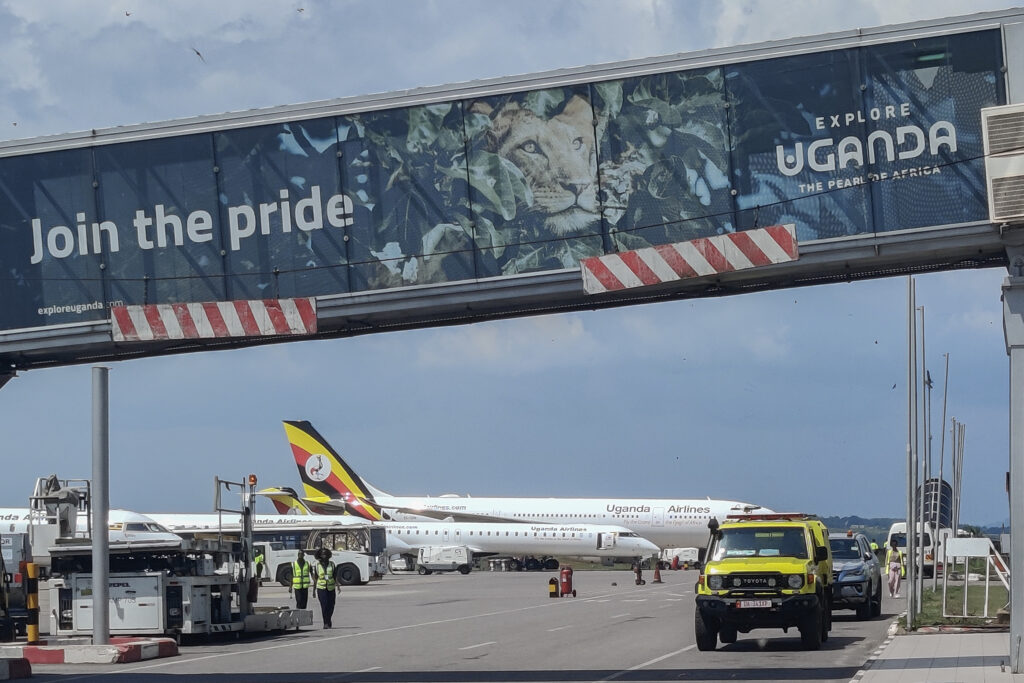
Such a deal could extend the lifespan of President Museveni’s ethno-military dynasty, which has courted the United States over the past two decades as part of a broader strategy for regime survival.
The Ugandan government’s inner-sanctum comprises his brother, General Salim Saleh; the First Lady and the Minister of Education, Janet Kataha Museveni; and his son, the Chief of Defence Forces, General Muhoozi Kainerugaba, the heir apparent to the throne.
The trio is part of what the British academic, Prof Nic Cheeseman, describes as the powerful shadow state—an informal network of domestic and international actors, most of whom are unelected or are not operating in their official capacity, who collude to assert and maintain political, social and economic control for their own benefit.
MUSEVENI’S COMPLEX RELATIONSHIP WITH UNITED STATES, EUROPE
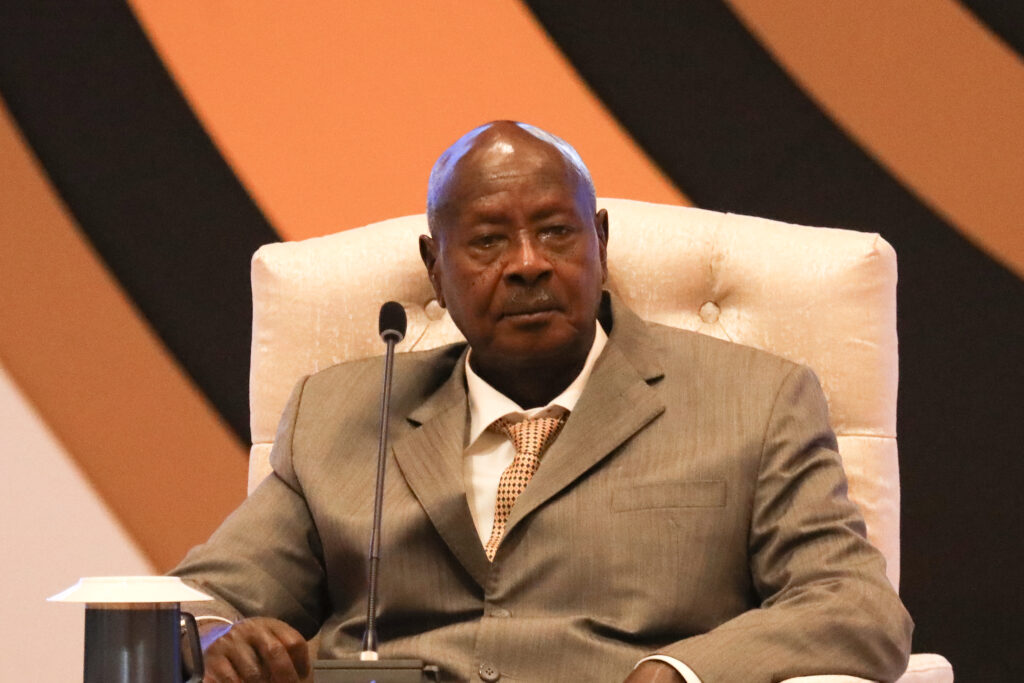
Museveni has a long history of currying favor with the United States. In 2007, he was the first African Head of State to embrace the George Bush US-government-led war on terror when he deployed the Ugandan army to fight Al-Shabaab insurgents in 2007.
The deployment came shortly after he won a disputed election against the opposition candidate, Kizza Besigye, in 2006. Canadian author Helen C. Epstein, in her book titled ‘Another Fine Mess: America, Uganda, and the War on Terror,’ postulates that ‘Museveni positioned himself as a vital democratic ally and a bulwark against Islamic extremism in East Africa.’
In exchange, Uganda has received billions of dollars in military and development aid from the U.S. and other Western powers. In 2018, Uganda was the seventh-highest recipient of US aid after Israel, Egypt, Jordan, Afghanistan, Kenya and Tanzania. Epstein argues that President Museveni used the war chest to ‘fund political patronage, suppress domestic opposition and maintain his grip on power.’
But the Museveni-led government has run into headwinds when the European Union and the Democratic-led American governments under Presidents Barack Obama and Joe Biden began demanding answers about gross human rights abuses, corruption, and the decline of democracy and the rule of law in Uganda.
In July 2015, President Barack Obama warned African leaders against clinging to power. “Nobody should be president for life,” he warned at the African Union headquarters in Addis Ababa. The message was interpreted as a salvo at leaders such as Museveni.
The Uganda government was rattled during President Joe Biden’s tenure in office between 2021 and 2024 when senior army, police, and prison officers were sanctioned. Those sanctioned included the former Deputy Chief of Defence Forces, Lt Gen Peter Elwelu; the former head of Military Intelligence, Maj Gen. Abel Kandiho; and the Commissioner General of Prisons, Johnson Byabashaija, who were accused of torture and gross human rights violations. The sanctions also targeted politicians accused of graft, including the former Speaker of Parliament, Annet Anita Among.
TRUMP APPROACH ALIGNS WITH MUSEVENI PRIORITIES
Donald Trump’s Republican-led government returned to power in January 2025, introducing a new phase of transactional politics that appears to align well with the Ugandan government’s priorities.
In 2025, U.S. Secretary of State Marco Rubio instructed U.S. diplomats worldwide not to comment on the fairness or integrity of elections conducted by foreign countries. The order, sent to all U.S. diplomatic posts in a July 17 internal State Department cable, says the Department will no longer issue election-related statements or social media posts from Washington unless there is a “clear and compelling” foreign policy interest.
In February 2026, the EU Parliament called for an independent probe into crimes against humanity committed by the military and political elite during the January 2026 presidential elections. The lawmakers questioned the credibility of the election, which was marred by ‘violence, widespread intimidation, fraud and a nationwide internet blackout.’
Despite U.S. Senator Jim Risch, the Republican chairman of the Senate Foreign Relations Committee, calling the election a “hollow exercise,” and Democratic Senators Jeanne Shaheen and Cory Booker urging the Trump administration to take action against the Museveni government following the election, the American government did not comment on the election’s legitimacy.
In this context, the asylum and health agreements offer Museveni’s presidency a new lease of life and the chance to placate the Trump-led administration, some maintain. The deals give the octogenarian the advantage of keeping a tight grip on power away from the prying eyes of the US State Department, according to political analyst Nicholas Sengoba.
“The American government, which is an illiberal democracy, is playing to the gallery of the MAGA base and is less concerned about the fate of the deportees after they leave American soil,” Sengoba said.


