
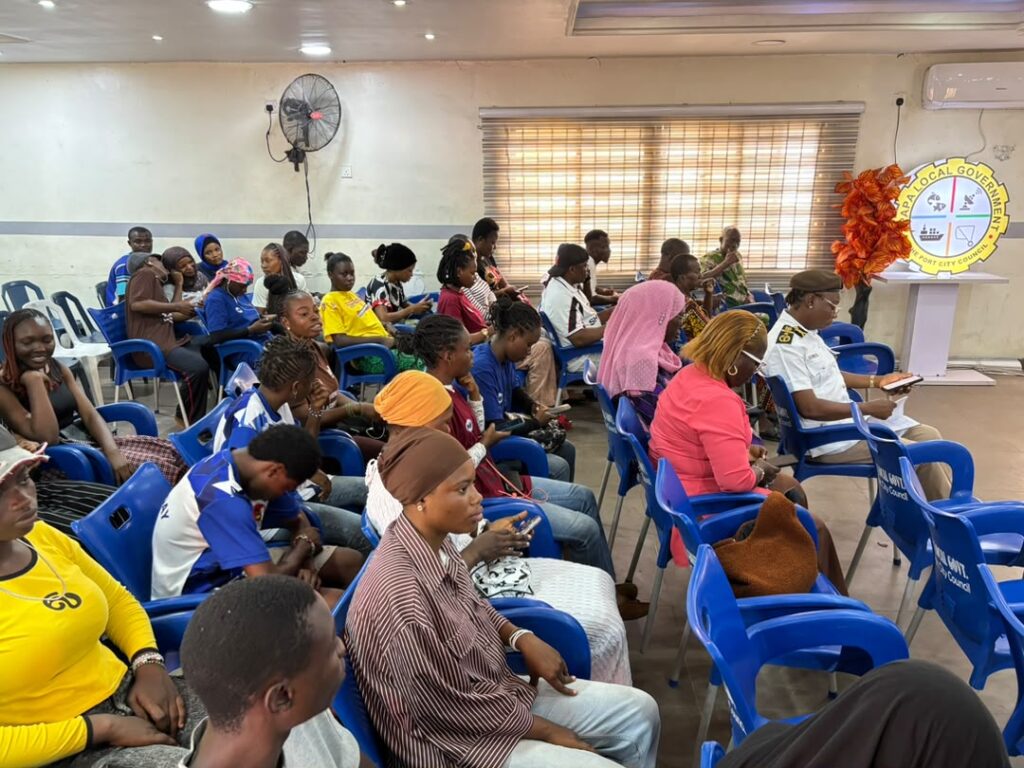
The event, held under the Citizens-Led Accountability Mechanism (CLAIM) for Mitigating Climate Change Impact Project focused on some of the environmental problems affecting Apapa, particularly flooding, poor waste disposal, blocked drainage and plastic waste, while encouraging residents to play a more active role in finding solutions.. The gathering was moderated by Ms. Omolara Olusaiye, Project Manager, who guided discussions on transitioning residents from passive victims of environmental hazards into active drivers of community solutions.
Empowering Grassroots Climate Champions
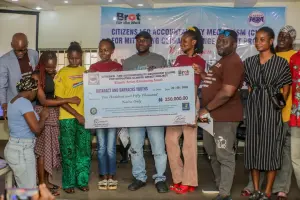

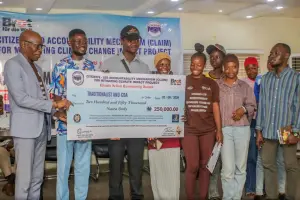
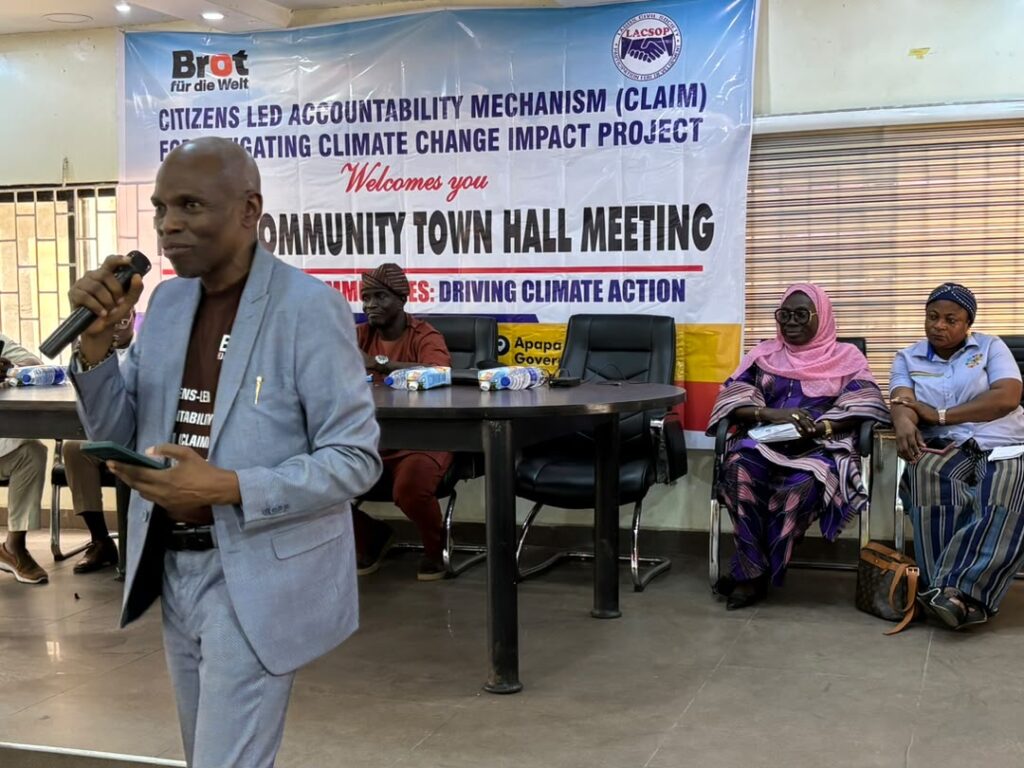
Adebusoye challenged every attendee, including market associations and municipal leaders, to take direct personal responsibility for their environment, asking, “What will I do differently after today?”
From Waste to Wealth
Waste management was a major part of the discussions, especially the impact of plastics and other discarded materials on drainage channels and waterways.
Barrister explained that waste dumped on streets and in drains can eventually find its way into canals and waterways, worsening flooding when heavy rains occur.
The CLAIM project is therefore encouraging residents to see waste differently by promoting separation, recovery, reuse and recycling.
The initiative also introduced young people to opportunities around waste-to-wealth, showing how materials that are often thrown away can be reused or transformed into products while creating income and green jobs.
During the event, participants discussed practical ways of reusing materials such as old tyres, timber and plastics rather than allowing them to end up in drainage channels.
The discussions also stressed the need for households to begin separating waste at the point where it is generated, including plastics, paper, organic waste and other recyclable materials.
LACSOP to Launch Digital App for Citizen Reporting
In an interview held on the sidelines of the town hall, Barrister Ayo Adebusoye revealed that LACSOP is preparing to launch a civic-tech mobile application designed to improve citizen reporting and engagement on environmental issues.
“To truly bridge the gap between residents and government interventions, we are launching a civic-tech mobile application,” Adebusoye disclosed during the interview. “This app will allow residents across Lagos to report clogged drains, track localized flooding in real time, and hold public authorities accountable. Tech-driven civic participation is the future of urban climate resilience.”
He said the platform will provide residents with a channel to report problems such as blocked drains and localised flooding while also helping communities track how public institutions respond to such concerns, and hold authorities accountable.
Data-Driven Solutions and the Digital Museum
Addressing the technical strategies behind the initiative experts and co-authors of the CLAIM Manual, explained that the project’s blueprint was co-created directly from field data gathered across Apapa.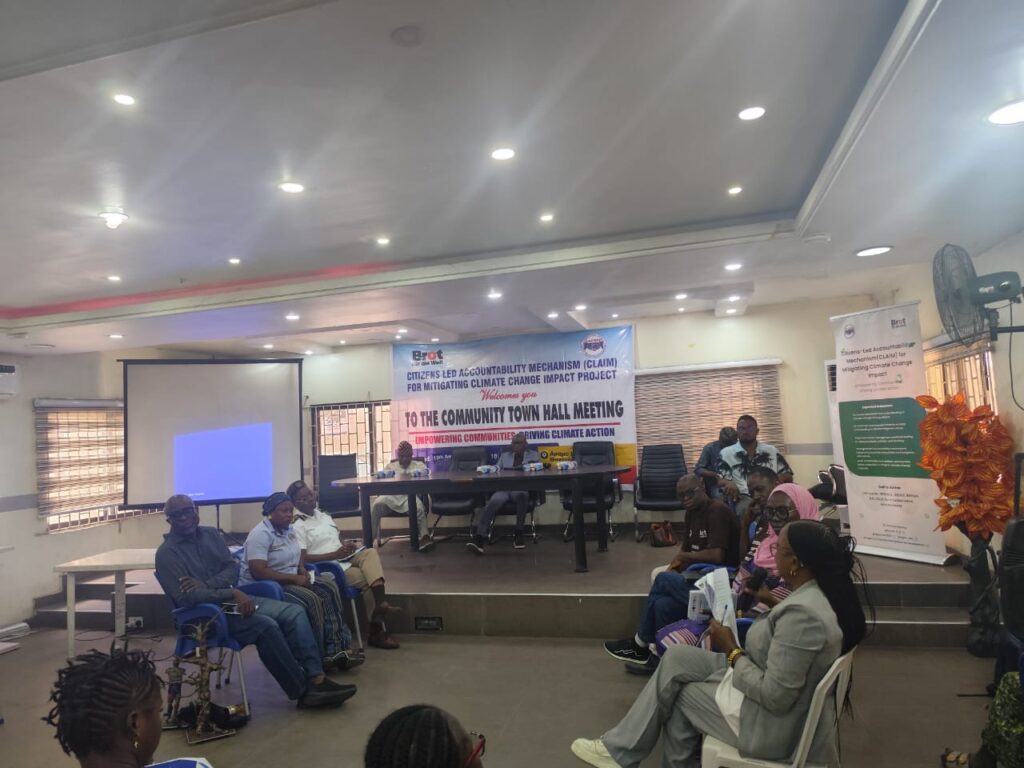
They emphasized that addressing urban flooding requires leveraging modern technology alongside community action.
“In an era driven by digital transformation and AI, local data collection is essential for evidence-based policy and municipal planning,” Dr. Adekoya noted. “By building a digital archive, we ensure our climate resilience strategies are grounded in real, historical evidence.”
Turning Urban Waste into Value
Focusing on household-level solutions, entrepreneurial consultant also demonstrated practical upcycling methods capable of diverting municipal waste from local drainage channels. He advocated for mandatory household waste segregation, separating plastics, paper, bio-waste, and discarded tires at the source.
It was pointed out that discarded materials, such as old tires and abandoned timber, can be converted into durable, high-value furniture rather than being left to choke local canals. Joining the discussion, multidisciplinary researcher Dr. Aisha emphasized the importance of merging environmental science with social research to foster active civic participation among vulnerable coastal populations.
Taking Climate Information to Communities
During the town hall meetings and training sessions, CLAIM took the climate information directly to communities through accessible communication.
The project has developed animated climate-change awareness materials in English, Yoruba and Nigerian Pidgin to make the information easier for different groups, particularly young people, to understand and share, which was presented by the Communication Manager, Akin Akinlolu.
According to him, the approach is aimed to help residents connect climate change with everyday activities such as waste disposal, drainage blockage, flooding and environmental sanitation.
Young people involved in the project have also received training and are being encouraged to train and engage others within their communities.
Institutional Commitment and Community Feedback
Another focus of the CLAIM-CC project is strengthening the relationship between communities and government institutions.
The project is not only encouraging residents to demand action from authorities but also asking citizens to take responsibility for their own environmental behaviour.
This means communities identifying problems, reporting them through available channels and following up with relevant institutions, while government authorities are expected to respond to legitimate concerns and commitments.
Speaking on behalf of the local administration, Mr. John Bamidele the Secretary to the Apapa Local Government representing the Executive Chairman of the Apapa Local Government, reaffirmed the municipal authority’s commitment to sustaining its partnership with LACSOP and civil society organizations.
He said efforts to clear drainage structures, improve infrastructure and support youth-led environmental initiatives remain important to the local administration.
Beyond Apapa
The organisers said the long-term goal of CLAIM is to build a model of citizen-led environmental action that can be sustained in Apapa and eventually replicated in other communities.
The project hopes to see more young people involved in recycling initiatives, households adopting better waste-management practices, community groups monitoring environmental challenges and residents having effective ways to communicate with public institutions.
For LACSOP, the success of the project will ultimately depend on whether the lessons from the programme translate into cleaner communities, better waste practices, stronger citizen participation and improved responses to climate-related challenges.
The town hall therefore served not only as a platform for discussing the problems facing Apapa but also as a call for residents, government and civil society organisations to take shared responsibility for building communities that are better prepared for the effects of climate change.