

The Federal Government has intensified its efforts to overhaul Nigeria’s livestock industry, reaffirming its commitment to grassroots transformation following a comprehensive three-day training of 100 small-scale dairy farmers in Oyo State. 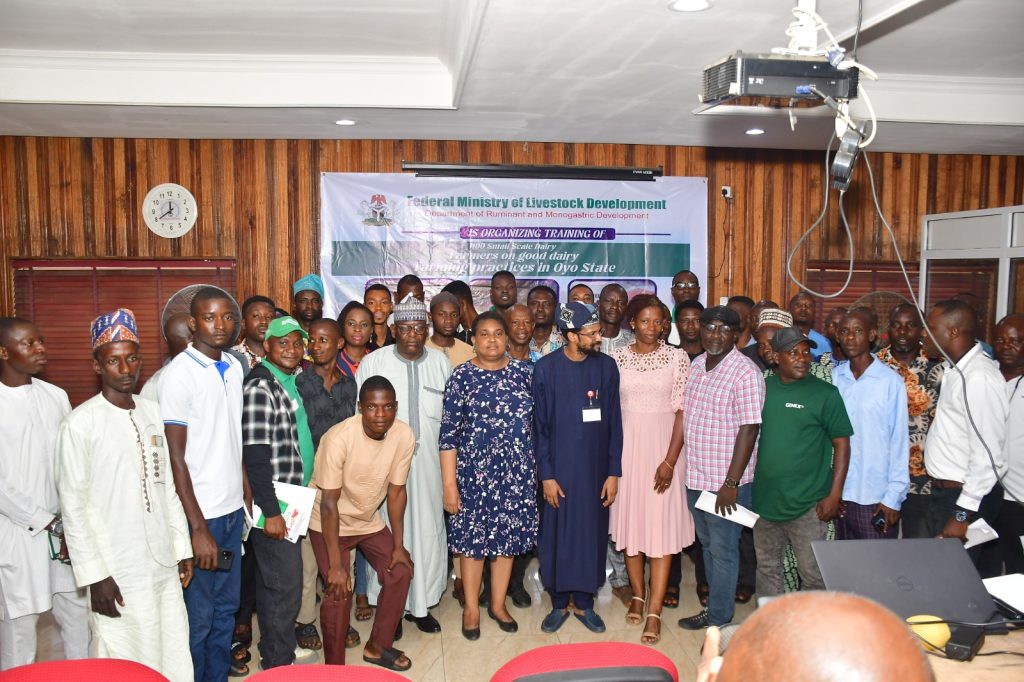
The capacity-building program, held from May 4th to 6th, 2026, was organized by the Federal Ministry of Livestock Development. It aimed to bridge the gap between traditional methods and modern best practices, focusing on improved husbandry techniques, sustainable milk collection, and high-standard processing methods to boost national output.
Grassroots Empowerment as a Catalyst for Growth
Speaking at the conclusion of the workshop, the Senior Special Assistant to the President on Livestock Development, Idris Ajimobi, emphasized that the administration’s goal of self-sufficiency rests on the shoulders of local producers.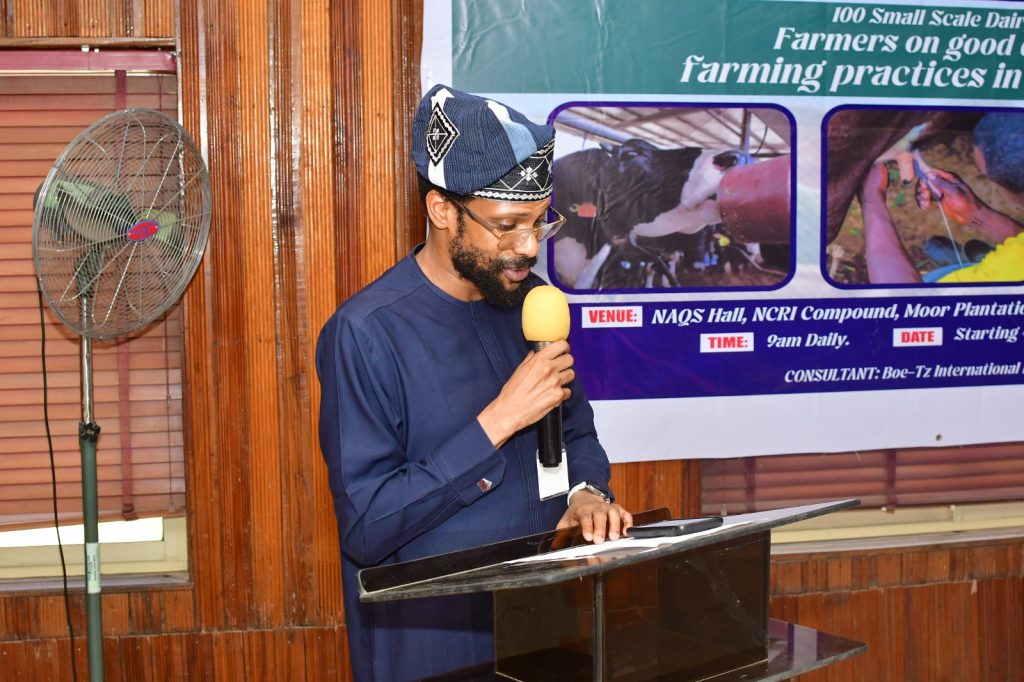
“As we continue to push for self-sufficiency in livestock production, initiatives like this remind us that real transformation begins with empowering farmers at the grassroots,” Ajimobi stated.“This training is essential to improving productivity, ensuring quality, and building a sustainable dairy value chain that benefits rural communities and the nation at large.”
Ajimobi further urged the participants to act as change agents, utilizing their new skills to unlock the economic potential of the sector through the government’s targeted policies and strategic partnerships.
Addressing Systemic Challenges
The Oyo State Coordinator of the Ministry, Dr. Florence Kalulu, highlighted the vital role of smallholders, describing them as the backbone of local milk production. However, she noted that the sector still grapples with significant hurdles, including low productivity, poor animal health management, and inadequate hygiene practices.
According to Dr. Kalulu, the training is a direct intervention under the National Livestock Growth Acceleration Strategy (NL-GAS). The strategy is designed to reduce Nigeria’s dependence on dairy imports, enhance farmer livelihoods, and strengthen national food security.
The curriculum provided a deep dive into pasture development, breed improvement, herd health management, and the technicalities of safe milk handling to ensure profitability and safety.
Calls for Inclusion and Youth Participation
The event also served as a platform for advocacy within the industry. Mrs. Racheal Eyitayo-Ariori, President of the Women in Dairy Production Association (WIDPA), lauded the government’s renewed focus but stressed the need for greater gender inclusion. She noted that supporting small-scale farmers particularly women creates a ripple effect of economic benefits across the South-West region.
Echoing the need for evolution, Moyosore Olatunde, a veteran farmer of over ten years, called for a generational shift in the trade.
“We need more young people to come into dairy farming with innovative ideas,” Olatunde remarked, adding that such a shift is only possible when the government provides the necessary technical and financial support.
The program concluded with a blend of interactive sessions and practical demonstrations, leaving participants equipped to modernize an industry at the heart of Nigeria’s agricultural future.
Share this


