
The Federal Government of Nigeria has announced a sweeping expansion of the nation’s emergency healthcare infrastructure, aimed at reducing preventable deaths and securing sustainable financing for intensive care nationwide. Speaking in Abuja on July 9, 2026, the Honourable Minister of State for Health and Social Welfare, Dr. Iziaq Adekunle Salako, revealed that the National Emergency Medical Service and Ambulance System (NEMSAS) has successfully scaled up from its initial pilot phase in the Federal Capital Territory to 34 states across the federation, bringing Nigeria closer to universal emergency medical coverage.
Digital Revolution in Emergency Response
To support this massive expansion, the Federal Government is developing an advanced digital emergency dispatch platform. This new system is designed to seamlessly link emergency callers, ambulance services, and treatment centres in real time. Once fully deployed, the digital architecture will manage patient tracking, hospital referrals, and insurance claims within a single, unified system, drastically reducing response times for critical medical emergencies.
Prioritising Affordable and Equitable Intensive Care
Delivering his keynote address at the 11th Annual Scientific Conference and Annual General Meeting of the Intensive and Critical Care Society of Nigeria (I-CCSN), Dr. Salako emphasised that access to life-saving medical interventions must not depend on economic status.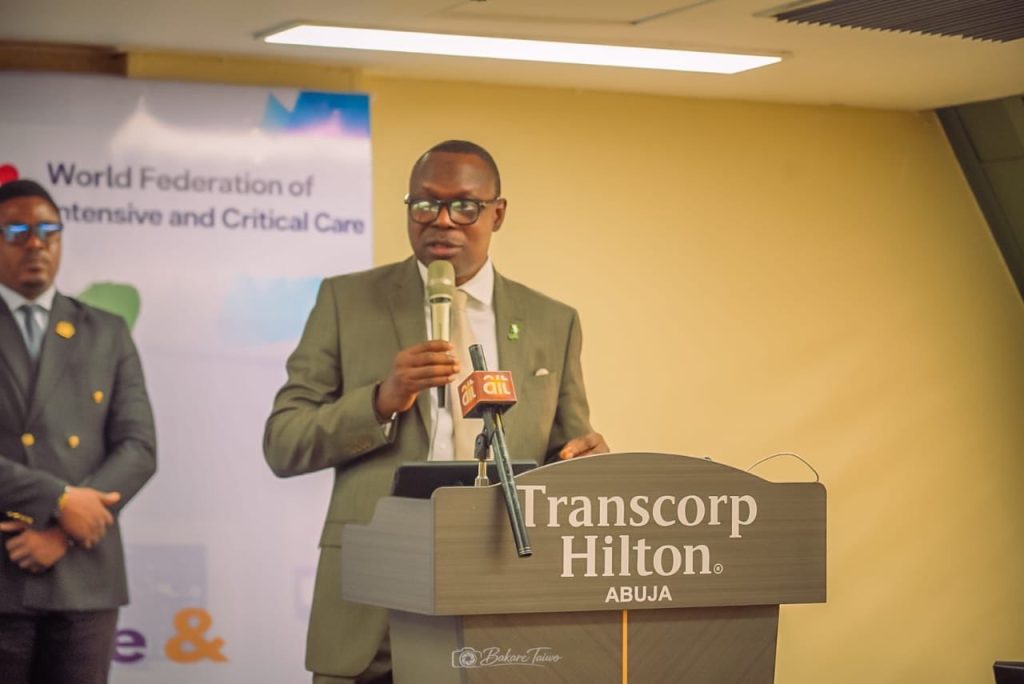
“Critical illness does not discriminate. No Nigerian family should be forced to choose between financial ruin and access to life-saving healthcare. We must develop sustainable financing mechanisms that strengthen our public hospitals, improve financial protection for citizens, and ensure that access to critical care is determined primarily by clinical need rather than the ability to pay.”
Boosting Infrastructure and Medical Oxygen Supply
The Minister noted that true critical care relies on an interconnected ecosystem, linking ambulances, High Dependency Units (HDUs), health insurance, and workforce development. As part of these physical upgrades, the Federal Government has accelerated the installation of Pressure Swing Adsorption (PSA) Oxygen Plants in public health facilities nationwide to guarantee a steady, reliable supply of medical oxygen.
Investing in the Healthcare Workforce
Addressing the severe human resource challenges facing the sector, Dr. Salako called for sustained investment in specialist education, fellowship programmes, and continuous professional development. This strategy will target the entire multidisciplinary critical care team, including physicians, specialized nurses, and biomedical engineers, to ensure Nigerian hospitals are equipped to handle complex medical emergencies. The Minister closed by urging immediate collaboration between state governments, private sector actors, and development partners to convert these policy frameworks into practical, equitable healthcare realities for all Nigerians.
Share this


