
By Michael Omotosho |
The Federal Government, in partnership with the European Union and the World Health Organization, has launched a €4.2 million EU Support to Public Health Institutes in Nigeria (EU-SPIN) project aimed at strengthening Nigeria’s capacity to prevent, detect and respond to disease outbreaks and other public health emergencies.
The four-year programme, launched on Monday in Abuja, is designed to reinforce national and subnational public health institutions through improved coordination, workforce development, digital transformation, and institutional strengthening.
Speaking at the launch, the WHO Representative in Nigeria, Dr. Pavel Ursu, described the initiative as a timely and strategic intervention coming at a critical period for Nigeria’s health sector.
According to him, Nigeria continues to grapple with a complex mix of public health challenges, including infectious disease outbreaks, climate-related health risks, and a growing burden of non-communicable diseases.

“By improving coordination, skills, and digital tools, the project will help protect lives and keep communities healthier,” Ursu stated.
Nigeria Battling Multiple Disease Outbreaks
Dr. Ursu disclosed that Nigeria currently has four active infectious disease outbreaks with Incident Management Systems activated Lassa fever, diphtheria, cholera, and meningitis while diseases such as Dengue fever, measles, Mpox, and yellow fever remain under intensive surveillance.
He also highlighted Nigeria’s progress in polio eradication, noting that cases of circulating vaccine-derived poliovirus type 2 (cVDPV2) had dropped significantly from over 700 cases in 2021 to 117 cases in 2025.
However, he warned that outbreaks of cVDPV2 and cVDPV3 continue to persist in parts of the North-East and North-West regions, adding that 27 cVDPV2 cases were reported in 2026, including seven orphan virus isolates.
Low Immunisation Coverage Remains a Concern
The WHO official cited findings from the 2024 Demographic and Health Survey, which showed that only 39 per cent of children aged 12 to 23 months were fully immunised with basic antigens, while 31 per cent received no vaccinations at all.
He further noted that Nigeria recorded a 57 per cent International Health Regulation States Parties Self-Assessment Annual Report (SPAR) score, surpassing the regional average.
According to him, the country’s 7:1:7 emergency response framework has already expanded to 13 states.
Rising Burden of Non-Communicable Diseases
Health authorities also raised concerns over the increasing burden of non-communicable diseases in the country.
The WHO stated that non-communicable diseases now account for 27 per cent of deaths in Nigeria, while the country also contributes 30 per cent of global malaria deaths.
Recurring outbreaks of diseases including cholera, diphtheria, Lassa fever, meningitis, and Mpox were also identified as major causes of illness and mortality nationwide.
Project to Strengthen Workforce and Digital Health Systems
The EU-SPIN initiative will focus on improving how public health institutions coordinate and share responsibilities across federal, state and local levels.
The programme will support real-time data sharing systems, improve emergency preparedness, strengthen public health workforce capacity, and integrate public health functions into primary healthcare delivery.
Project officials said the initiative targets 75 per cent training coverage for public health workers involved in prevention and emergency response systems.
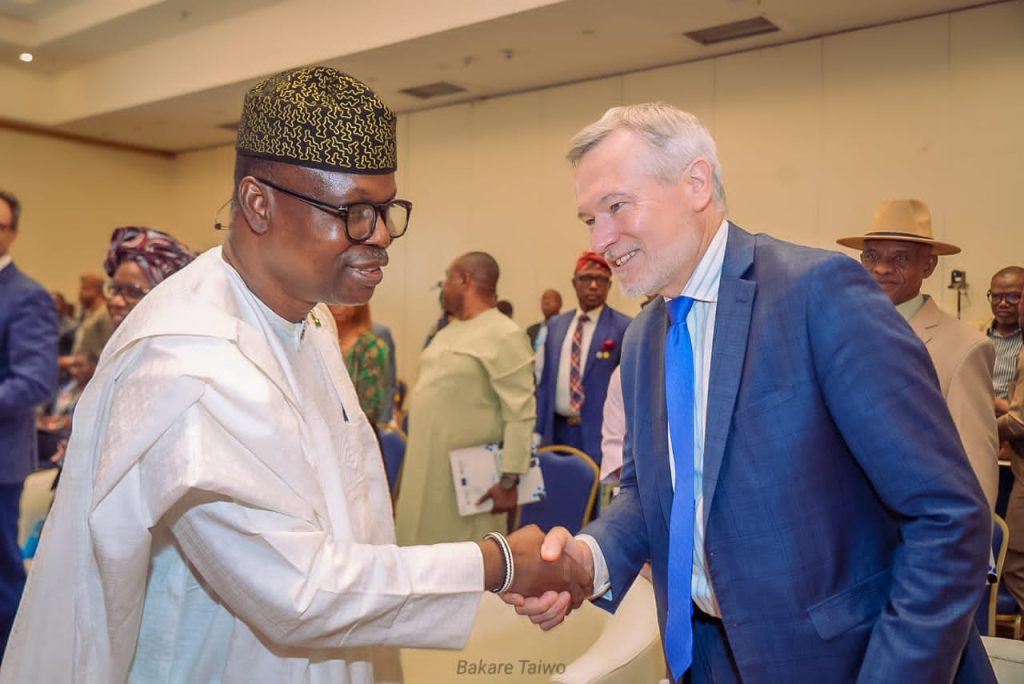
Speaking at the event, Dr. Iziaq Adekunle Salako said the initiative aligned with the Federal Government’s healthcare reform agenda.
“This initiative is designed to strengthen our health institutions, and it is truly a welcome development. It will improve the well-being of Nigerians, especially our vulnerable populations,” Salako said.
He added that the government appreciated the support of the European Union and WHO, noting that the programme aligns with President Bola Tinubu’s Renewed Hope Agenda on healthcare and social development.
EU Reaffirms Commitment to Nigeria’s Health Security
The European Union Ambassador to Nigeria, Gautier Mignot, said the initiative reflects the EU’s commitment to supporting sustainable health systems in Nigeria.
“Through EU SPIN, the European Union is investing in strong, digitally enabled public health institutions in Nigeria. This partnership reflects our shared commitment to health security and sustainable systems strengthening,” Mignot stated.
The EU-SPIN project forms part of the EU’s broader Global Gateway Africa-Europe Investment Package, under which approximately €150 billion has been earmarked to strengthen partnerships with Africa, including health infrastructure and systems development.
Civil Society Groups Back Initiative
Founder of the Wellbeing Foundation Africa, Toyin Saraki, also pledged civil society support for the initiative.
Saraki said public health institutions remain central to protecting the health of one in four Africans, stressing that effective governance, digital transformation, workforce development, and institutional strengthening were critical to healthcare delivery.
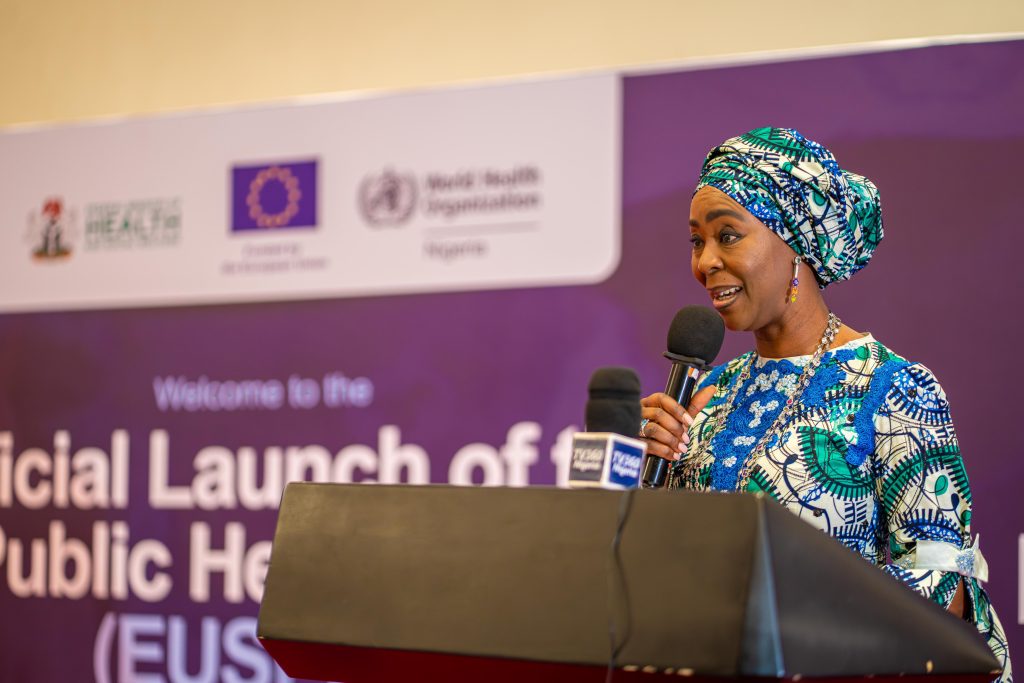
She noted that the foundation had already contributed to healthcare workforce development, digital maternal health services, and institutional support programmes across Nigeria.
According to her, the organisation’s Digital MamaCare360 platform currently provides health education and counselling to over 12,329 mothers across 31 WhatsApp groups nationwide.
Programme Targets Improved Coordination by 2028
By 2028, stakeholders expect the EU-SPIN programme to improve inter-institutional coordination, establish clearer operational roles, and strengthen the reliability of public health data systems across Nigeria.
The project will be implemented by the WHO in collaboration with the Federal Ministry of Health and Social Welfare and supported by development partners and public health institutions nationwide.
Officials said progress would be monitored through agreed national review systems involving federal and state governments, development agencies, and implementing partners.
Share this


