
The Federal Government has intensified the implementation of the National Cancer Control Plan (NCCP) 2026–2030, aiming for a 30 per cent reduction in Nigeria’s cancer burden by 2030. Alongside this aggressive national strategy, the government is calling for a unified continental front through “Cancer Care Pan-Africanism”to rapidly scale up prevention, research, and specialized treatment across Africa.
Nigeria’s Position in the Continental Crisis
Speaking at the African Organisation for Research and Training in Cancer (AORTIC) Best of ASCO Africa 2026 meeting in Abuja, the Honourable Minister of State for Health and Social Welfare, Dr. Iziaq Adekunle Salako, laid bare the staggering reality of the disease. He revealed that Africa witnessed over 1.18 million new cancer cases and more than 721,000 deaths in 2024 alone, meaning the disease now claims more lives on the continent than AIDS, malaria, and tuberculosis combined.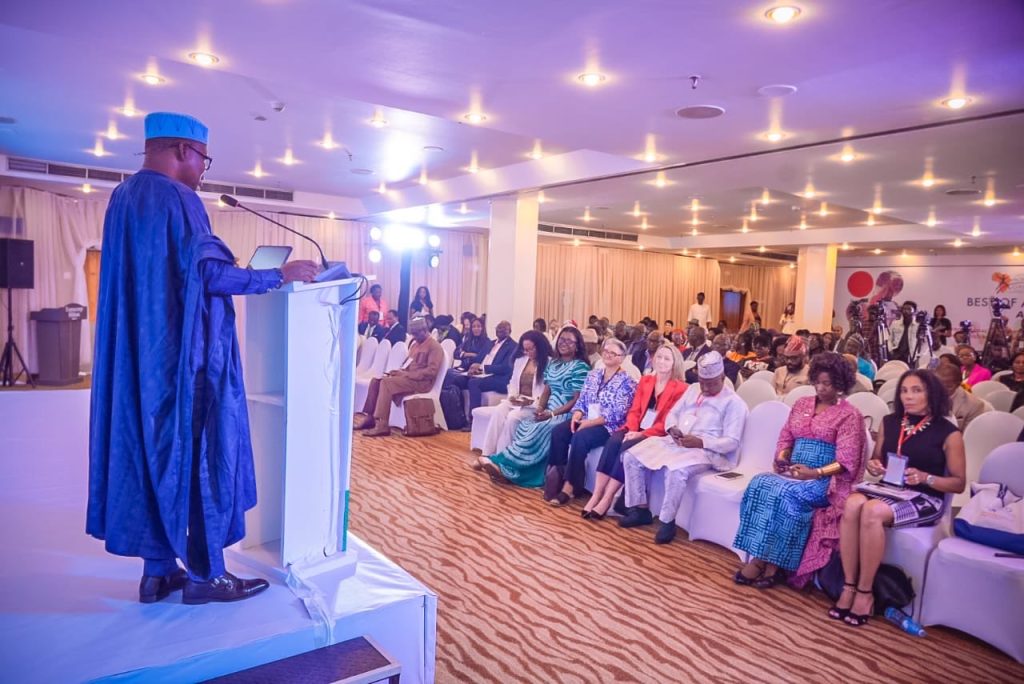
“Nigeria currently accounts for about 10.5 per cent of Africa’s total cancer burden, placing us among the three hardest-hit nations alongside Egypt and South Africa,” Dr. Salako stated. He emphasized that reversing this trend is an absolute priority under President Bola Tinubu’s Renewed Hope Agenda, which places a high premium on tackling non-communicable diseases.
A Roadmap Driven by Local Evidence and AI
The newly deployed NCCP 2026–2030 serves as a comprehensive framework covering early detection, diagnosis, survivorship, and the integration of artificial intelligence and advanced data systems. To guarantee measurable results, the government has inaugurated a multi-sectoral National Technical Working Group featuring clinicians, researchers, cancer survivors, and private sector partners who will use an implementation science approach to translate the policy into real-world patient outcomes.
Dr. Salako challenged African scientists to stop merely copying global oncology trends and instead focus on generating and validating research within African populations. This shift ensures that emerging medical breakthroughs are properly contextualized for local health realities rather than blindly imported.
Elevating Healthcare in Continental Politics
In a strong push for regional solidarity, the Minister urged African leaders to reposition health at the center of continental diplomacy, noting that issues like trade, politics, and security have historically overshadowed critical healthcare deficits.
“The time has come for healthcare to assume a more central place in continental cooperation through what we must champion as Cancer Care Pan-Africanism,” Dr. Salako declared. “Nigeria stands fully ready to provide the necessary leadership in advancing oncology education, advocacy, and strategic partnerships that will ultimately save lives and build resilient health infrastructure across Africa.”
Share this


