
By Michael Omotosho|
Nigeria’s preparations for the 2027 general elections must include stronger measures to tackle misinformation and disinformation, particularly as political actors, social media users increasingly exploit digital platforms and local languages to influence public opinion.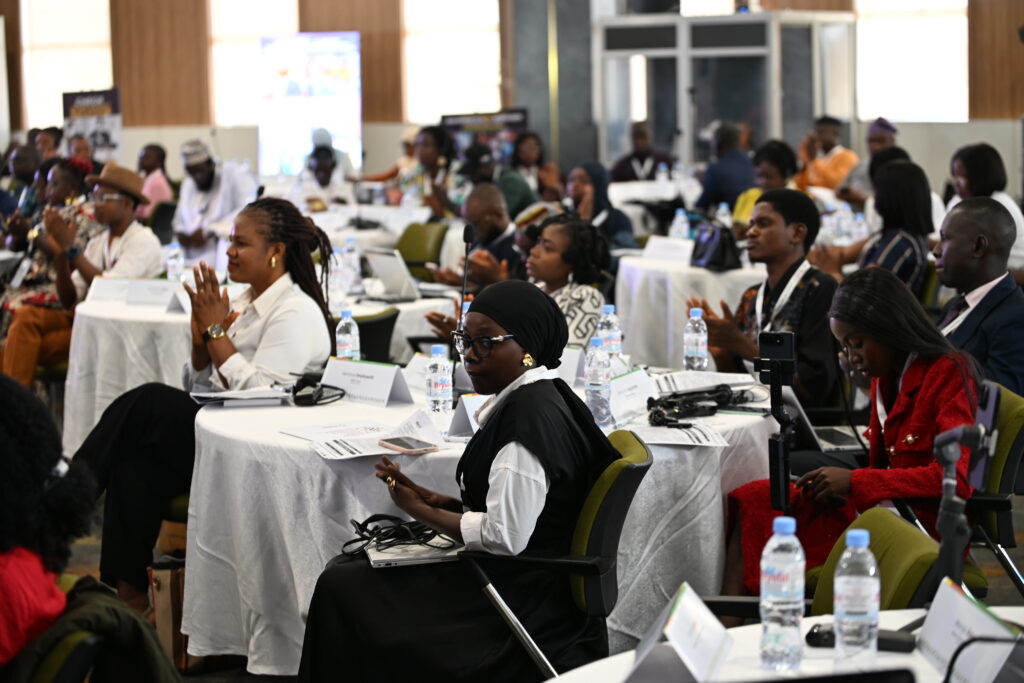
The recommendations and discussions were raised at a two-day International Multi-Stakeholder Forum on Disinformation in Electoral Contexts in West Africa, organised by the Fundación para la Internacionalización de las Administraciones Públicas (FIAP), in collaboration with FactCheck Africa, in Abuja.
Discussions at the forum focused on the growing influence of misinformation, artificial intelligence, hate speech and coordinated information manipulation on electoral processes, with participants examining ways to strengthen public trust ahead of the polls.
INEC Outlines Measures to Protect Electoral Integrity
The Chief Press Secretary to the Independent National Electoral Commission (INEC), Dayo Oketola, said the commission had established verification mechanisms to prevent disinformation from undermining the credibility of the 2027 elections.
Speaking on behalf of the INEC Chairman, Prof. Joash Ojo Amupitan, Oketola said the commission had introduced an automated verification system and was strengthening collaboration with the National Orientation Agency (NOA), civil society organisations and fact-checking groups.
He noted that engagements with relevant stakeholders remained important to ensuring that accurate information reaches voters and that misleading claims are addressed.
Similarly, the Project Coordinator of the European Union Support to ECOWAS in Peace, Security and Governance (EPSG), María Belén Álvaro Sánchez, said tackling disinformation required collective responsibility, warning that citizens could become victims of misleading information circulated by influential individuals and political actors.
She explained that although ordinary citizens were sometimes responsible for amplifying false information, the campaigns could originate from people seeking or already holding positions of power.
Local Languages, Gendered Disinformation Raise Concerns
The Founder of FactCheck Africa, Abideen Olasupo, drew attention to the growing use of local languages to manipulate public opinion, particularly through misleading information designed to appeal to specific communities.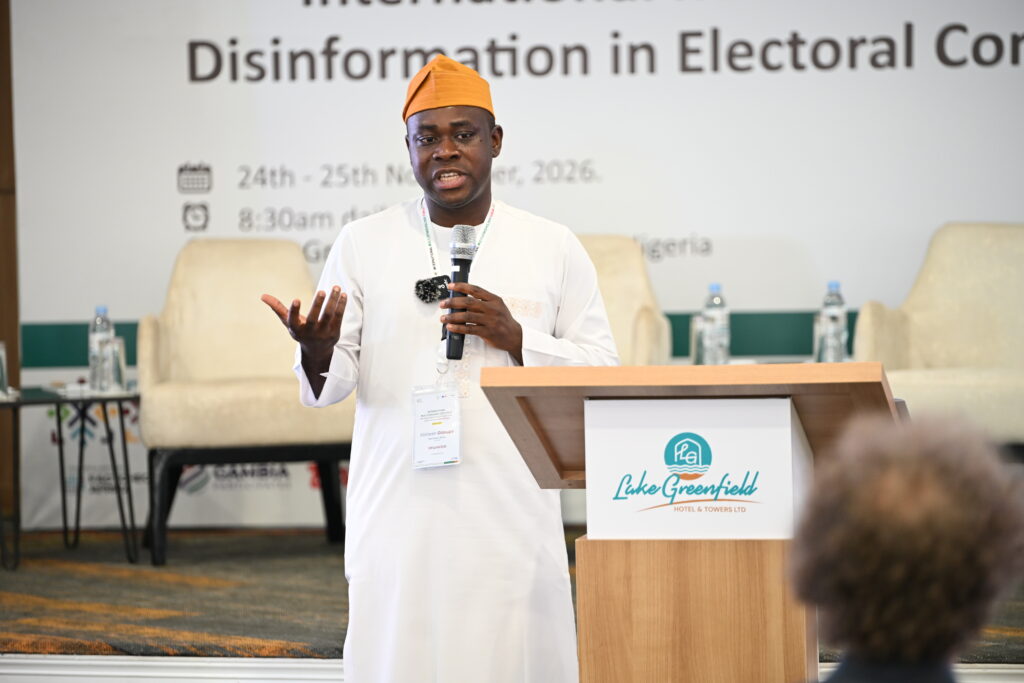
He said FactCheck Africa had implemented programmes to address what he described as “hyper-local manipulation”, where local languages are exploited to spread disinformation and influence public perception.
The Ambassador of Spain to Nigeria, Mr Félix Costales, also encouraged organisations to sustain efforts towards improving the information environment.
However, he cautioned that “the fight against misinformation shouldn’t be a weapon against legitimate political debates.”
The discussion also examined how disinformation affects individuals differently, particularly women participating in political and public life.
Delivering a keynote address, the Director of the International Media and Information Literacy Institute, Dr Sharon Omotoso, shared her experience with online misinformation, revealing that an online publication had wrongly identified someone as her husband.
She explained that such incidents demonstrate how false information can affect people’s private lives, reputations and public identities.
According to Omotoso, gendered disinformation can produce what she described as the politics of retention or succession, where coordinated attacks against women discourage them from pursuing political ambitions, creating opportunities for men to replace them.
She also highlighted the need for more fact-checking organisations across West Africa to address the spread of false information on social media.
Omotoso further raised concerns about the possibility of fact-checking becoming politicised, cautioning media organisations against becoming instruments of political interests.
She encouraged journalists and media platforms to verify personal details before publishing information about individuals, noting that incorrect spelling of names could also result in misidentification.
Regional Cooperation Seen as Key to Combating Disinformation
The need for cross-border collaboration also featured prominently in discussions, with diplomatic representatives stressing that information disorder could undermine democratic processes beyond national boundaries.
The Head of Cooperation at the European Union Delegation to Nigeria and ECOWAS, Mr Massimo De Luca, described disinformation as dangerous and emphasised the importance of verifying information before publishing or sharing it.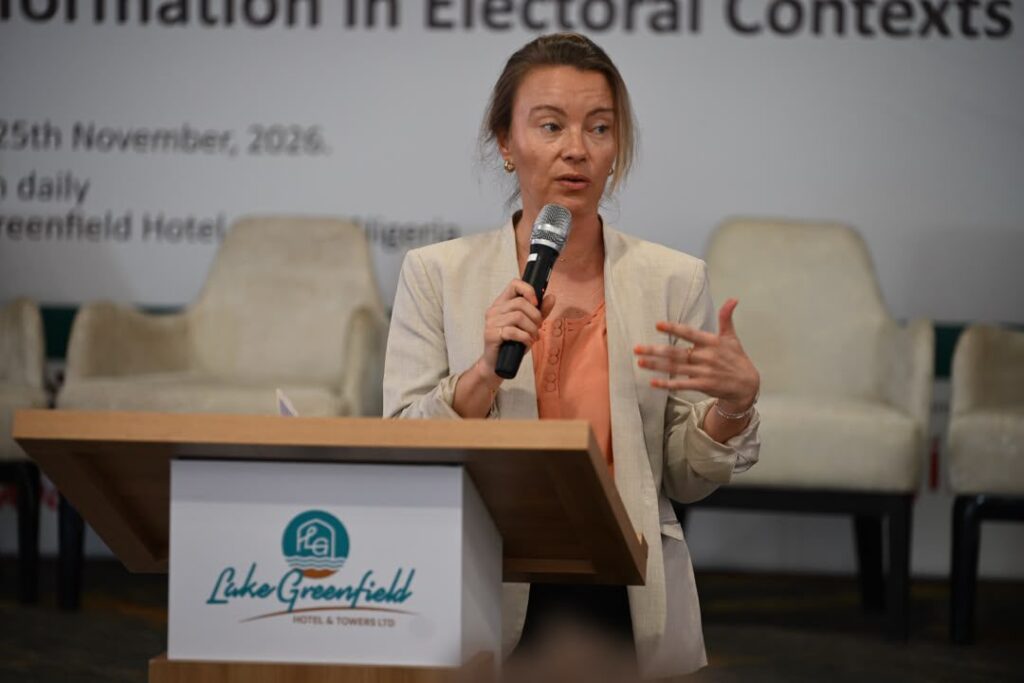
Similarly, the Head of Cooperation at the Embassy of Germany to ECOWAS, Mrs Jella-Charlotte Lamken, stressed the importance of information integrity as elections approach.
She said, “protecting information ahead of the next election is important. The habits of verification, critical thinking and responsible sharing will matter more, not less, as elections draw closer.”
Lamken reaffirmed Germany’s commitment, through EPSG and its partnerships with ECOWAS and other stakeholders, to supporting efforts towards a more informed and peaceful democratic environment in West Africa.
The Deputy Head of Mission at the Embassy of Denmark, Mrs Julie Resenkilde Hannibal, also identified artificial intelligence, disinformation and hate speech as growing threats to public trust and democratic participation.
She noted that “these challenges do not respect national borders, making regional cooperation essential in addressing them.”
Youth Participation and Media Literacy Take Centre Stage
Participants also examined the vulnerability of young people to political manipulation, particularly through social media trends, memes and other forms of digital content.
In her keynote address, Omotoso said young people were frequently targeted through political memes, manipulation and trend hijacking.
She noted that young people were often criticised rather than meaningfully included in political conversations, stressing the importance of recognising them as stakeholders in democratic participation.
She called attention to the need to strengthen their ability to identify misleading content and respond to attempts to manipulate public opinion.
The two-day forum brought together fact-checkers, journalists, social media influencers, civil society organisations, electoral management bodies, academics and international partners from Nigeria, The Gambia and Benin Republic.
Discussions also covered journalist protection, responsible information sharing, media and information literacy, and stronger partnerships among stakeholders working to address election-related disinformation.
Participants developed a Regional Action Plan to counter election-related disinformation in West Africa, as part of efforts to strengthen information integrity ahead of upcoming elections in the region.
Share this