
By Peter Emmanuel |
More than two decades after Nigeria’s return to civilian rule, a new nationwide democracy assessment is forcing a difficult but necessary conversation: Has democracy in Nigeria moved beyond elections to truly deliver accountable governance, inclusion and public trust?
At exactly 10:00 a.m. on Tuesday, May 5, 2026, civic actors, academics, journalists, governance experts and policy stakeholders gathered at the Abuja Continental Hotel, Wuse Zone 4, for the unveiling of the State of Democracy in Nigeria Report 2025 by the Kimpact Development Initiative (KDI), a report that would spark fresh debate on the state of democratic governance across the country.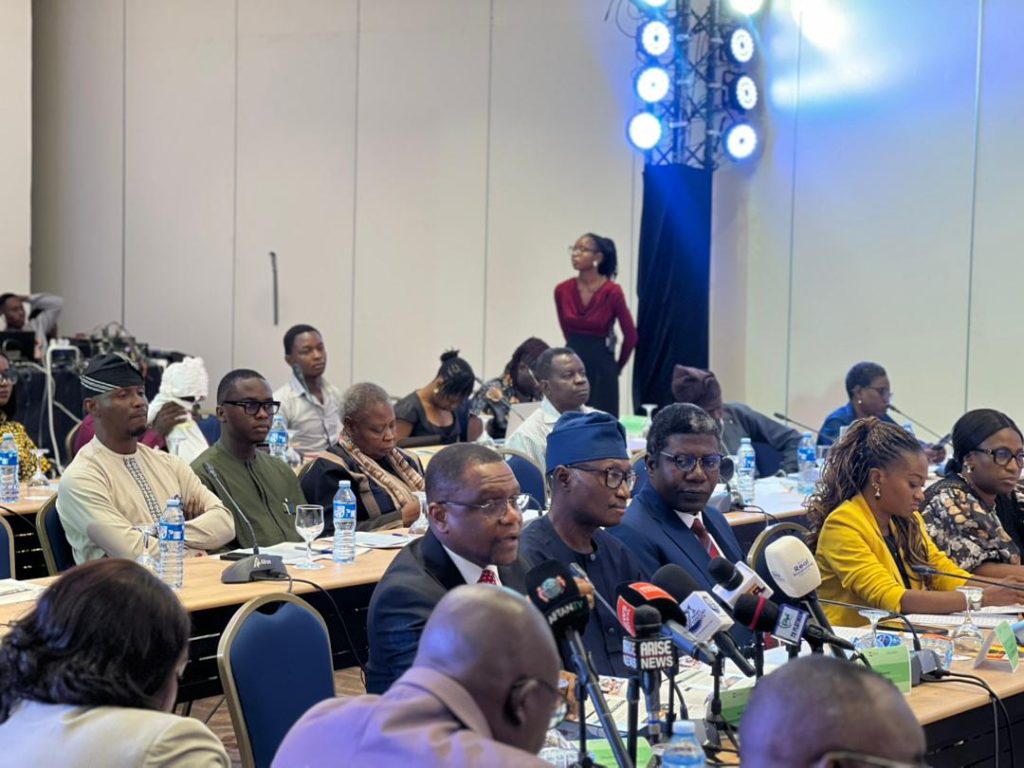
Using a newly developed Democracy Performance Index (DPI), the report found that no state in Nigeria achieved what it classified as “High Democratic Performance,” despite more than 25 years of uninterrupted civilian rule since the country’s return to democracy in 1999.
Instead, only six states Oyo, Yobe, Ekiti, Nasarawa, Ondo and Osun were ranked under the “Moderate Performance” category, while 28 states fell within the “Low Performance” bracket. Rivers and Jigawa states emerged in the “Weak Performance” category.
Beyond the rankings, the report raised deeper concerns about accountability, inclusion, institutional weakness and the widening gap between governance and citizens across the federation.
For many participants at the event, the findings reflected a growing contradiction in Nigeria’s democratic journey: elections continue to be held regularly, political offices are filled through constitutional processes, and democratic institutions formally exist, yet public trust in governance continues to decline.
Moving Beyond Election Day Democracy
One of the most significant contributions of the Kimpact Development Initiative (KDI) report is its attempt to redefine how democracy is measured and understood in Nigeria.
Traditionally, democratic assessment in the country has focused heavily on elections, voter turnout, election-day logistics, violence, vote-buying, court disputes and final results. In many cases, democracy is assumed to be functioning once elections are concluded and winners are declared.
But the State of Democracy in Nigeria Report 2025 challenges that assumption. It argues that democracy should not end at the ballot box.
Instead, KDI’s Democracy Performance Index (DPI) assesses whether democratic systems are actually delivering accountable governance, responsive institutions, citizen participation and protection of civic freedoms in everyday life.
The report examined all 36 states using four key indicators: Electoral Participation, Political Inclusion, Democratic Institutional Effectiveness, and Civil Liberties and Civic Space.
To arrive at its findings, KDI relied on a mixed-methods approach conducted between September and December 2025, drawing from 216 institutional checklists, 7,128 citizen and stakeholder responses, and official records from the Independent National Electoral Commission (INEC), state legislatures, court rulings and budget documents.
The outcome, according to the report, is a democracy that functions procedurally but struggles substantively.
Across many states, institutions exist and elections are conducted, but citizens continue to experience weak accountability systems, exclusion from governance, limited civic participation and declining trust in public institutions.
A Democracy That Fails Citizens
Opening the event in Abuja, Bukola Idowu set a reflective tone for the presentation, drawing attention to what he described as a growing disconnect between democratic activity and governance outcomes across Nigeria.
He noted that while democratic processes remain active across states, including regular elections and functioning institutions, these do not automatically translate into accountable governance that citizens can feel in their daily lives.
“Democracy is active across states but does not necessarily translate into accountable governance,” he said, capturing a central tension highlighted throughout the report.
His remarks pointed to one of the key arguments of the State of Democracy in Nigeria Report 2025, which suggests that the existence of democratic structures alone is not enough to guarantee responsiveness, inclusion, or public trust.
He explained that the Democracy Performance Index (DPI) was developed precisely to interrogate this gap, by assessing how democracy functions beyond elections and whether it delivers meaningful outcomes in governance, inclusion, and civic freedoms.
Idowu urged participants not to interpret the report as a final judgement on states or democratic performance, but rather as a diagnostic tool designed to inform reform, deepen reflection, and guide more meaningful conversations about the future of democracy in Nigeria.
A Democracy Struggling With Inclusion
Ene Ede described the situation as a national emergency, warning that Nigerians can no longer remain passive in the face of worsening governance challenges.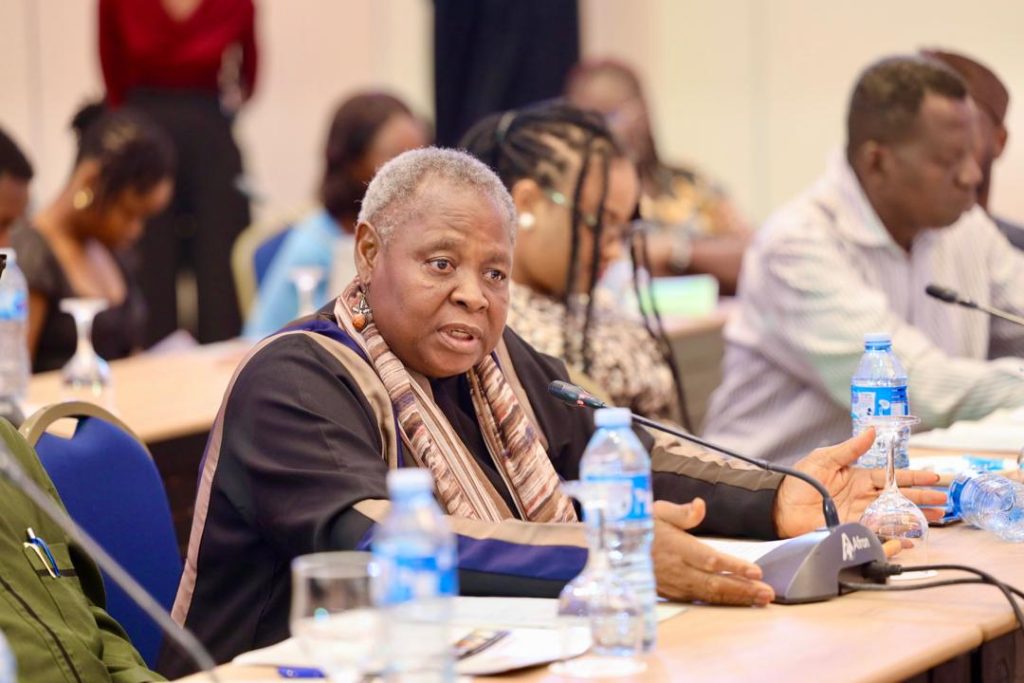
“Nobody can sit on the fence at this time. We are facing existential problems in Nigeria,” she said.
She further argued that accountability must go beyond rhetoric, stressing that citizens must begin to demand enforcement of obligations owed to them by leaders and institutions.
“What can we do? We are being owed, and we need to enforce the repayment,” she added.
Her intervention reflects one of the key findings of the Kimpact Development Initiative (KDI) report, which highlights a deep crisis of political inclusion across Nigeria.
According to the report, no state achieved acceptable levels of inclusion for women, youths, and persons with disabilities, despite years of advocacy for more inclusive governance.
This points to a structural imbalance in political participation, where large segments of society remain underrepresented in decision-making processes at both state and national levels.
Why Elections Are Not Producing Accountability
Earnest Ereke warned that institutional capture is becoming a growing challenge at the subnational level in Nigeria, weakening the ability of public institutions to function independently.
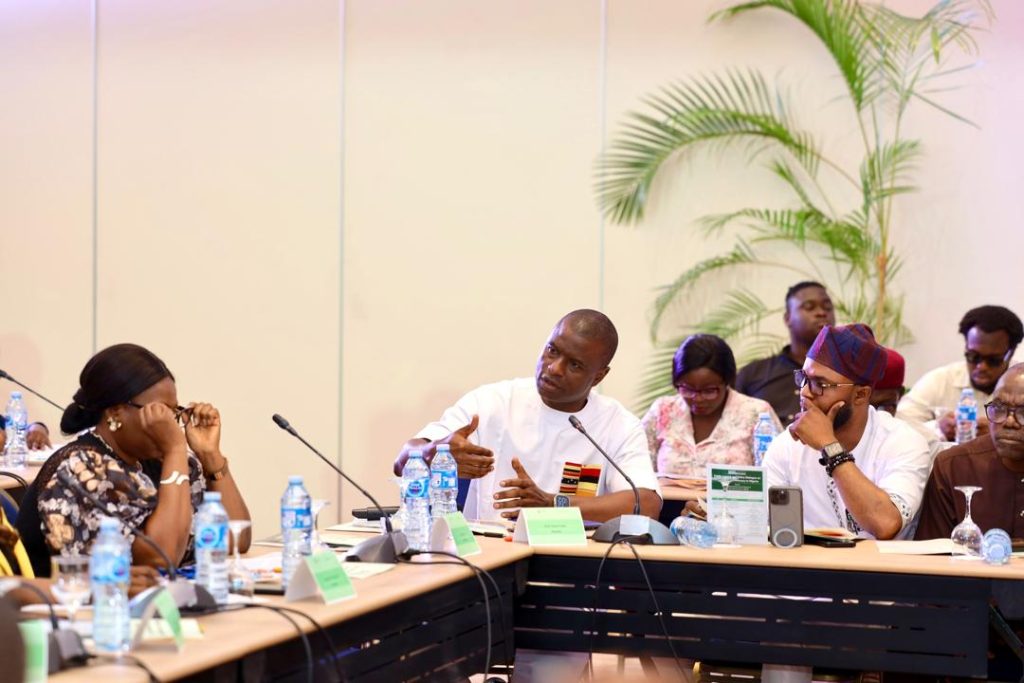
“When institutions are pocketed, it becomes dangerous, especially where scrutiny is limited,” he said.
He also questioned the usefulness of rigid classifications of democracy, arguing that such labels often fail to address deeper governance failures that affect how institutions actually perform.
His remarks speak directly to one of the central concerns raised in the Kimpact Development Initiative (KDI) report: why electoral participation has not translated into stronger accountability after elections.
Although Nigeria continues to hold regular elections, governance outcomes in many states remain weak, with citizens reporting limited access to decision-making processes and poor institutional responsiveness.
The report suggests that the gap is largely driven by institutional weakness, where democratic structures exist formally but often lack independence, transparency, and effective oversight to enforce accountability.
Nigeria Democracy Running Against Time and Pressure
Achike Chude said Nigeria’s democratic journey is unfolding under intense pressure, shaped by economic strain, political uncertainty, and rising expectations from citizens.
He described the transition period in any nation as the most sensitive stage of democratic development, where institutions are still being tested and public trust is still forming.
“The most vulnerable and critical period in any nation is the time of transition,” he said.
He warned that unlike older democracies that evolved gradually over centuries, Nigeria is operating under a compressed democratic timeline while also managing growing governance challenges.
“We do not have that time,” he added.
His remarks reflect wider concerns about rising public dissatisfaction, insecurity, and a steady decline in confidence in political institutions across the country.
Democracy Beyond Definitions
Delivering the keynote address, Adetunji Ogunyemi argued that democracy remains both contested in definition and uneven in practice, stressing that its meaning cannot be reduced to a single global standard.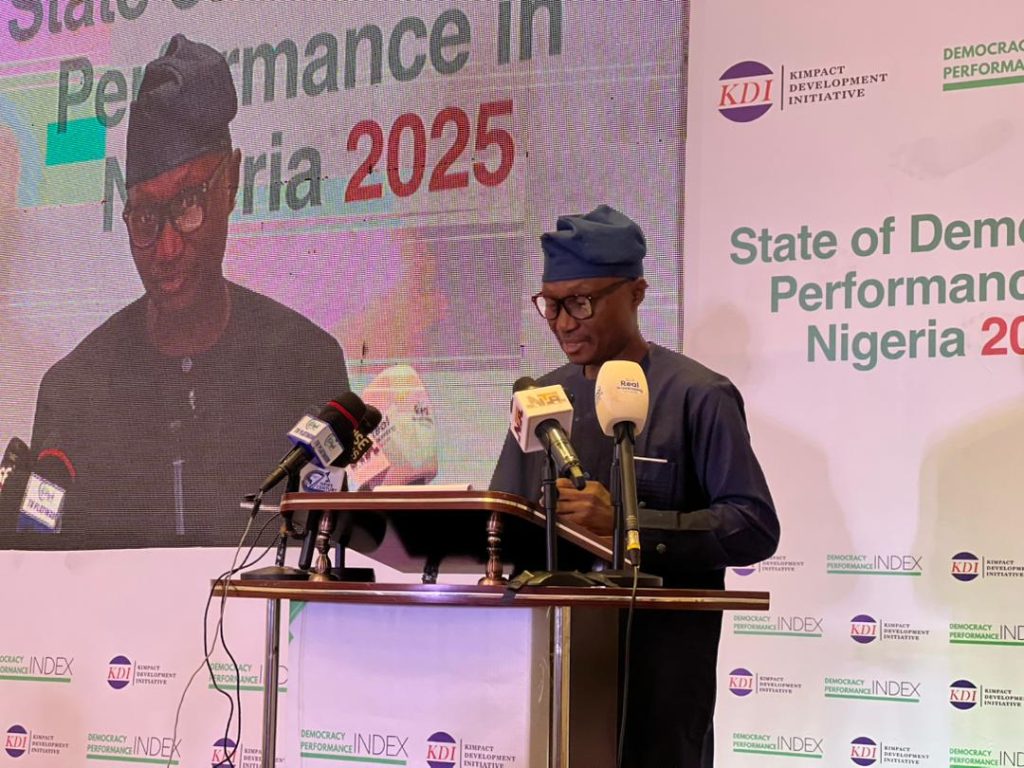
He said much of the public debate around democracy is often trapped in labels such as “liberal” or “illiberal,” which, in his view, do not fully capture how governance actually functions in different societies.
Instead, he urged a shift in focus toward outcomes, arguing that the real test of any political system lies in what it delivers to citizens rather than how it is classified.
To reinforce his point, he referenced the English poet Alexander Pope, who emphasized performance over theoretical debate in governance.
“For forms of government let fools contest; Whate’er is best administered is best,” he quoted, using the line to underline the importance of effective administration over political labels.
Ogunyemi concluded that democracy must be understood as a system that varies across contexts, and its credibility should ultimately be judged by how well it delivers fairness, accountability and responsive governance to the people it serves.
Cultural Foundations of Governance
Amaechi Anakwe added a different dimension to the discussion by arguing that Nigeria’s governance challenges cannot be fully understood through institutions alone, but must also be examined through the lens of culture and societal values.
He said the country’s democratic struggles go beyond political structures and processes, pointing instead to deeper behavioural and cultural patterns that shape how power is exercised and authority is understood.
“Our problem goes beyond democracy in Nigeria. It includes our cultural values and inclinations,” he said.
To illustrate his point, he referenced pre-colonial governance systems such as the Oyo Empire, where leadership was more decentralised and authority was shared across different structures rather than concentrated in a single centre of power.
According to him, this historical context shows that governance in the region once operated in a more distributed manner, with checks and balances embedded in traditional systems.
He suggested that modern Nigeria’s highly centralised governance structure may be contributing to some of the accountability and participation challenges being experienced today.
Moving Beyond Rankings to Understand the Real State of Democracy in Nigeria
Oluwafemi John said the State of Democracy in Nigeria Report 2025 should not be interpreted as a ranking of states, but as a diagnostic framework designed to guide democratic reform across the country.
He explained that the value of the report lies less in categorising states as strong or weak, and more in what the data reveals about systemic gaps in governance, inclusion, and institutional performance.
According to him, the findings should be read as instructional, offering insights into where democratic systems are working and where they are breaking down.
He pointed to the consistency of the results across states, noting that no state achieved high levels of participation, while all states fell below acceptable inclusion standards.
He added that more than half of the states also operate below functional institutional benchmarks, suggesting widespread structural challenges rather than isolated failures.
“There is much to learn, and even more to act on,” he said, framing the report as a call for evidence-based reform rather than political judgment.
What the Findings Mean for Nigeria
The State of Democracy in Nigeria Report 2025 comes at a time when the country is grappling with rising economic pressure, persistent governance challenges, and a steady decline in public trust in key institutions.
Against this backdrop, the report argues that Nigeria’s democratic challenge is no longer limited to the conduct of elections, but increasingly about whether governance systems are delivering accountability, inclusion, and meaningful outcomes for citizens.
It suggests that while elections remain a central feature of democratic life, they are not sufficient on their own to guarantee effective governance or restore public confidence in the system.
For many citizens, democracy is now judged less by how elections are conducted and more by everyday realities such as access to services, fairness in decision-making, responsiveness of institutions, and the level of trust in public leadership.
This shift in perception points to a widening gap between democratic processes and democratic experience, where formal structures exist but their impact on daily life remains limited.
Ultimately, the Kimpact Development Initiative (KDI) report does not claim to provide all the answers, but it firmly places one issue at the centre of national debate: democracy in Nigeria must now be assessed not only by elections, but by what it delivers beyond them.
For more information on the report and related resources:
Full Report:
https://kimpact.org.ng/publications/92/details#gsc.tab=0
Abridged Version:
https://kimpact.org.ng/publications/93/details#gsc.tab=0
DPI Dashboard:
https://dpi.kimpact.org.ng/


