

The African Union has launched a decisive call to action for a fundamental shift in how water and sanitation are valued, funded, and managed across the continent. Speaking at a high-level side event during the 61st African Development Bank (AfDB) Annual Meeting, AU Commissioner for Agriculture, Rural Development, Blue Economy, and Sustainable Environment, Moses Vilakati, declared that traditional financing models are failing to meet the continent’s growing needs.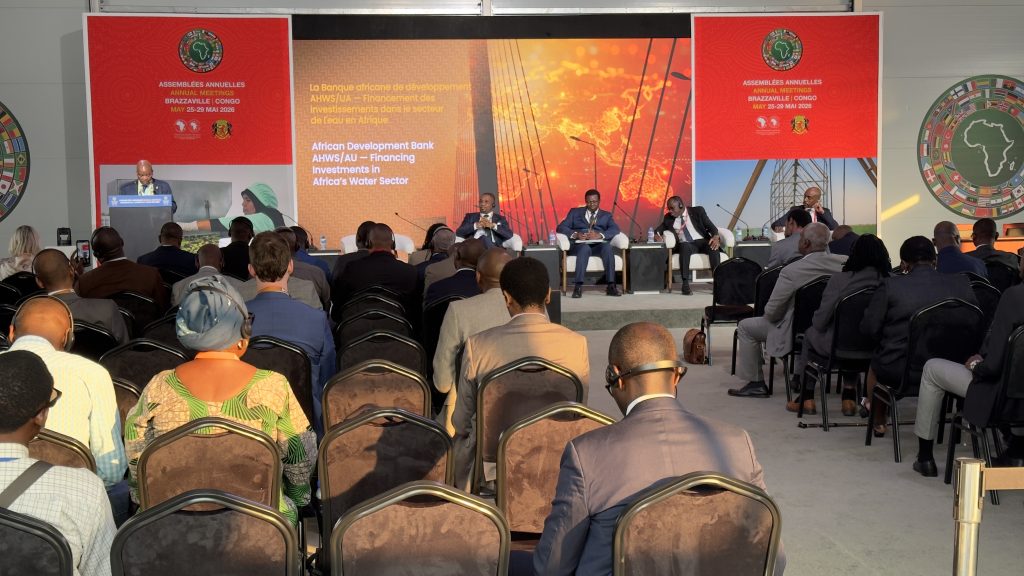
The high-level event, centered on Financing the Africa Water Policy and Vision, served as a critical platform to address the continent’s widening water, sanitation, and hygiene (WASH) gap. Leadership emphasized that continental progress hinges directly on treating water infrastructure not as a secondary charity project, but as a primary economic engine.
Redefining Bankability for Continental Growth
In his address, Commissioner Vilakati challenged international investors and African governments to look beyond narrow, short-term profit margins when evaluating water projects. To attract the necessary capital, the African Union is advocating for strengthened governance, de-risked investments, and scaled financing mechanisms capable of bridging the infrastructure deficit.
The push comes as Africa elevates WASH initiatives to its highest political level under the AU Theme for 2026: “Assuring Sustainable Water Availability & Safe Sanitation Systems to Achieve Agenda 2063″. By reframing water and sanitation as strategic economic assets, the AU aims to unlock innovative funding streams that have historically sidelined environmental and social infrastructure.
A Critical Asset for Dignity and Development
The African Union leadership firmly rejected the notion that water management is strictly a social welfare concern. The lack of adequate sanitation continues to impact public health and economic output, making it an urgent priority for continental development.
“Water is not merely a social sector issue. It is a strategic economic asset,” Commissioner Vilakati stated during the summit. “Sanitation is not only about infrastructure; it is about dignity, public health, human capital, productivity, resilience, and sustainable development.”
Positioning WASH at the Center of Africa’s Future
The call to restructure development financing comes at a turning point for the continent’s industrial and agricultural ambitions. As climate change accelerates droughts and unpredictable weather patterns, the AU argues that secure water systems are the bedrock of food security and job creation.
“If Africa is to achieve Agenda 2063, industrialize sustainably, strengthen food systems, create jobs for its youth, and build resilience to climate change, then investment in water & sanitation can no longer be peripheral,” the Commissioner stressed. “It must become central to development financing architecture.”
Moving forward, the African Union intends to use the 2026 framework to hold member states and international financial institutions accountable, ensuring that water security remains a top-tier financial priority for the decade to come.
Share this


