The Ugandan Government, represented by Minister of Health Hon. Dr. Chris Baryomunsi, the Africa Centres for Disease Control and Prevention (Africa CDC), and the World Health Organization Regional Office for Africa (WHO AFRO), have officially launched the Joint Continental Incident Management Support Team (IMST).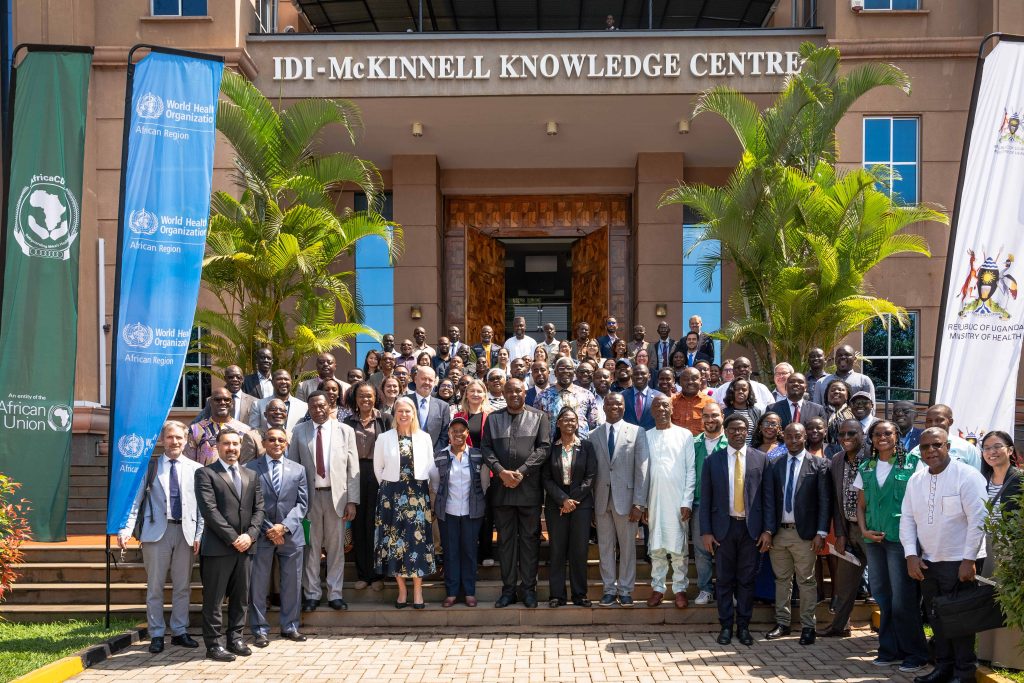
This landmark initiative establishes a unified operational platform designed to drastically improve Africa’s capacity to prepare for, coordinate, and respond to public health emergencies, while directly supporting the ongoing Bundibugyo Virus Disease (BVD) response.
The launch represents a monumental shift in Africa’s public health emergency architecture, signaling a deep commitment by Africa CDC, WHO AFRO, and African Union Member States to build faster, country-led responses to increasingly complex health threats. Hosted at the Infectious Diseases Institute (IDI) at Makerere University in Kampala, the co-located IMST will immediately support Uganda, the Democratic Republic of the Congo (DRC), and neighboring high-risk nations through integrated technical assistance and multidisciplinary expertise.
Delivering on Presidential Pledges in Record Time
The creation of the Joint Continental IMST is the realization of a shared vision that emerged during a solidarity visit by Africa CDC Director General, H.E. Dr. Jean Kaseya, to Ugandan President H.E. Yoweri Kaguta Museveni at the start of the BVD outbreak last month. During that pivotal meeting, President Museveni pledged Uganda’s support to host the continental team. In record time, partners have successfully established both the Joint IMST in Kampala and the Continental Ebola Supply Chain Coordination Mechanism at the National Medical Stores in Entebbe, creating two crucial, complementary health platforms.
Although officially inaugurated today, the Joint IMST has been quietly driving response operations since the early stages of the outbreak. The team relies on a strict framework of One Team, One Plan, One Budget, and One Monitoring and Evaluation Framework, bringing together top-tier specialists in surveillance, laboratory systems, case management, and Risk Communication and Community Engagement (RCCE) to secure Africa’s borders.
Leadership Commits to Regional Health Security
Speaking on behalf of Africa CDC Director General Dr. Jean Kaseya, Dr. Tolbert Nyenswah, Director of the Center for Public Health Emergencies Management, praised the transition toward localized emergency management.
“The Continental IMST represents Africa’s commitment to stronger institutions, coordinated action and country-led emergency response. On behalf of Africa CDC Director General Dr. Jean Kaseya, I reaffirm our commitment to continue supporting Member States through technical expertise, regional collaboration and partnerships that protect communities and strengthen Africa’s health security.”
Uganda’s Minister of Health, Hon. Dr. Chris Baryomunsi, echoed these sentiments, highlighting the power of cross-border solidarity in times of crisis.
“Uganda is proud to host the Continental IMST as a demonstration of what countries, regional institutions and partners can achieve by working together. This platform strengthens our response to the current BVD outbreak while reinforcing preparedness for future public health emergencies.”
Emphasizing the strategic alignment between global and regional entities, Dr. Marie-Roseline Belizaire, WHO Africa Regional Emergency Director and Incident Manager of the Continental IMST, noted the importance of localized ownership.
“The Joint Continental IMST reflects the strength of our partnership with Africa CDC and Member States. Through coordinated technical support and shared expertise, we are strengthening national leadership, improving cross-border collaboration and helping countries respond more effectively to public health emergencies.”
Community-Led Solutions and Global Backing
Recognizing that local populations are the first line of defense against disease, the IMST will deeply integrate social listening, behavioural intelligence, and RCCE into all operational pillars to build public trust and ensure interventions are community-driven. Furthermore, the initiative heavily reinforces cross-border collaboration between Uganda and the DRC through synchronized laboratory networks and emergency logistics, helping the continent detect outbreaks earlier and react faster.
The high-profile inauguration was well-attended by the international diplomatic and humanitarian community, including the United States Ambassador, the British High Commissioner, and delegations from affected regional countries. Key global health partners including UNICEF, UNFPA, US CDC, IFRC, FAO, MSF, UKHSA, JICA, and JHPIEGO were also present, solidifying a global coalition dedicated to building a safer, more resilient Africa.
Share this