

The Africa Centres for Disease Control and Prevention (Africa CDC), in collaboration with the African Society for Laboratory Medicine (ASLM), has officially convened the Advanced BioRisk Management Course in Dar es Salaam, Tanzania. Running from May 25–29, 2026, the critical training operates under the umbrella of the Regional Training and Certification Program for Biosafety and Biosecurity Professionals (RTCP-BBP).
Hosted at the prestigious Regional Centre of Excellence for Biosafety and Biosecurity (RCoEBB) for Eastern Africa, the five-day intensive program has drawn top-tier professionals from eight African nations, including Zambia, South Africa, Namibia, Eswatini, Burundi, Uganda, Kenya, and Ethiopia. The gathering aims to systematically strengthen advanced competencies in biorisk management while successfully guiding participants toward achieving their Level II professional certification.
Bridging the Capacity Gap in Laboratory Medicine
The training curriculum is rigorously designed to target foundational vulnerabilities within continental health infrastructure, focusing heavily on advanced risk analysis, mitigation strategy design, and international standards compliance. Additionally, participants are undergoing specialized modules in risk communication, leadership, and the implementation of targeted improvement projects designed to fortify national biosafety and biosecurity systems upon their return home.
Speaking at the high-profile opening ceremony, Dr. Talkmore Maruta, Director of Programs at ASLM, emphasized the absolute necessity of institutionalizing these advanced programs to secure long-term health sovereignty for the continent.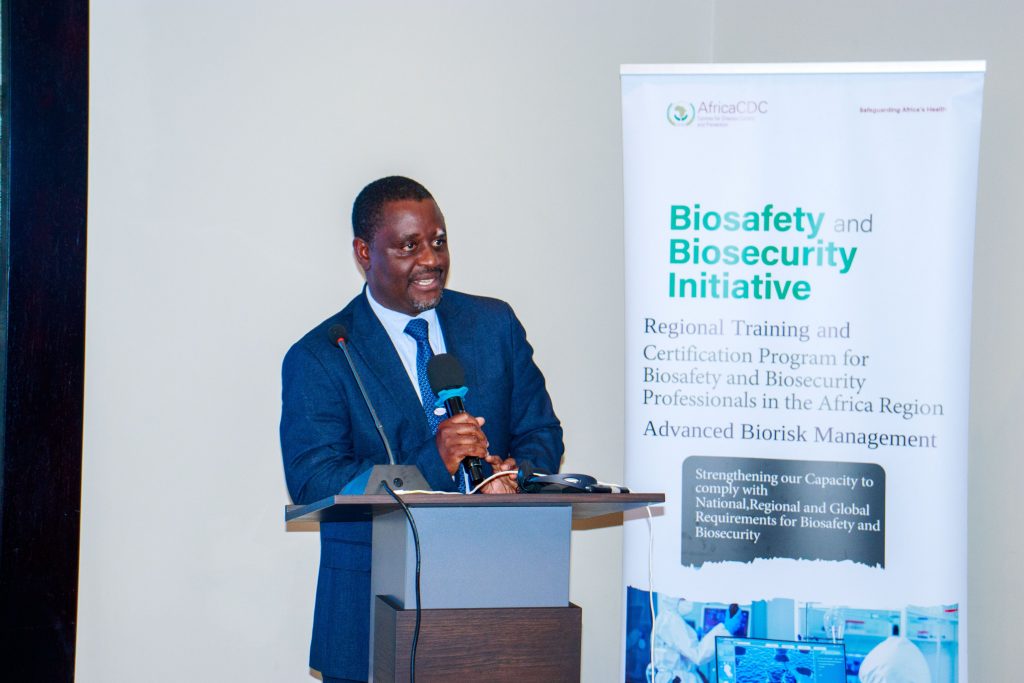
“The expertise you acquire during this training will play a critical role in strengthening national and regional capacities to maintain and sustain essential biosafety and biosecurity infrastructure,” Dr. Maruta stated. “Your skills will help reduce equipment downtime, improve laboratory safety and operational efficiency, reduce dependence on external service providers, and ultimately strengthen our preparedness and response capabilities.”
Dr. Maruta further highlighted that establishing robust mentorship systems, practical competency development, and advanced certification pathways are the most effective weapons Africa has to permanently close persistent biosafety and biosecurity capability gaps.
The Future of African Biosecurity, AI, and Cyber Defense
This cohort marks a pivotal moment in the evolution of continental health defense as public health threats become increasingly digitalized and complex. The current training serves as a baseline for a much grander, modernized framework being deployed across the region.
As the Africa CDC aggressively expands the scope of the Regional Training and Certification Program, upcoming phases are slated to integrate cutting-edge disciplines, including Cybersecurity and Artificial Intelligence (AI) in Biosafety and Biosecurity. Through these forward-thinking initiatives, Africa is rapidly accelerating its independent capacity to prevent, detect, and respond to biological threats, effectively safeguarding both regional and global health security.


