
Lagos has renewed its focus on cleaner, safer and more inclusive transportation, as urban development advocates, tourism stakeholders, transport authorities and private-sector operators highlighted the need to move beyond conventional vehicles towards sustainable mobility solutions.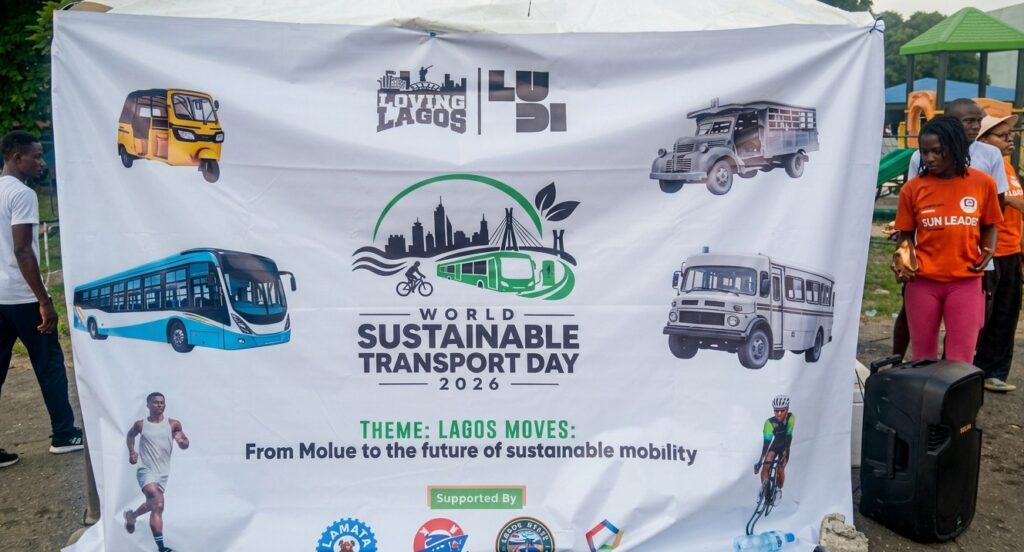
The discussions took place during the 2026 World Sustainable Transport Day celebration held on Thursday, November 26, at the National Museum, Onikan, Lagos, under the theme “Lagos Moves: From Molue to the Future of Sustainable Mobility.”
The Lagos Urban Development Initiative (LUDI) organised the event in partnership with Loving Lagos, the Lagos Metropolitan Area Transport Authority (LAMATA), and other important key stakeholders in the sector. It brought together government representatives, transport operators, tourism stakeholders, runners and cyclists to examine the evolution of transportation in Lagos and the need for cleaner alternatives.
The programme showcased different generations of transportation, including the traditional Molue and Danfo buses, alongside modern compressed natural gas (CNG) and electric buses. Participants also took part in running, cycling and a walking activity which took place moving from the National Museum to Falomo, an area on Lagos Island, before proceeding to LAMATA House for discussions on the future of urban mobility.
LUDI Advocates Inclusive Walking and Cycling Infrastructure
The Lagos Urban Development Initiative (LUDI) highlighted the importance of non-motorised transportation, particularly walking, cycling and running, as essential components of a sustainable urban transport system.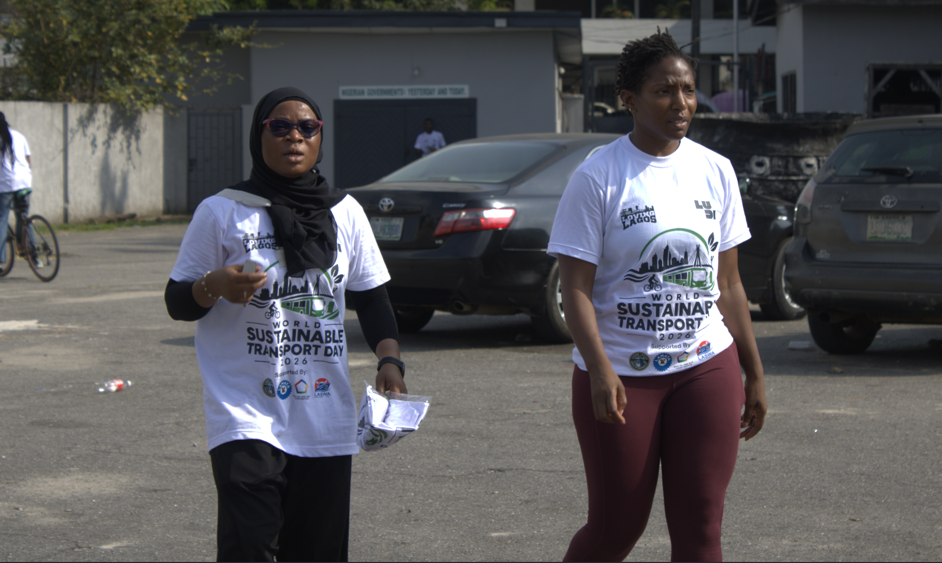
During the event, Olamide Ejorh, Executive Director of LUDI, explained that the celebration was designed to bring different forms of transportation together, from active mobility to cleaner motorised options.
The programme showcased how Lagos had moved from traditional transport systems such as Molue and Danfo to CNG and electric buses, while recognising that walking and cycling must remain part of the city’s mobility plans.
LUDI also raised concerns about gaps in pedestrian infrastructure and the difficulties faced by people trying to move safely between walkways and roads.
During the discussions, a LUDI representative said the organisation had observed challenges with connectivity during the running activity from the National Museum towards Palmgrove.
The representative said, “Our runners had to stop from the walkway, come to the main road, return back to the walkway, just to find connectivity and ease of movement.”
The organisation stressed that sustainable transportation must also accommodate persons with disabilities, particularly wheelchair users, and ensure that public infrastructure is accessible to everyone.
It noted that a transport system cannot be considered inclusive when people with disabilities are prevented from using designated routes or accessing public facilities.
The LUDI representative added, “We want to see it implemented. We want to see the infrastructure being available to the people that are being provided to.”
The organisation also expressed interest in continued collaboration with LAMATA to improve pedestrian and cycling facilities across Lagos.
Loving Lagos Highlights Transport’s Role in Lagos History and Tourism
Speaking on the inspiration behind the theme, Lawal Adams, Founder of Loving Lagos, said transportation remained central to the city’s history, culture and tourism development.
“Well, as you know, we are primarily a tourism company dedicated to the history and culture of Lagos. But in telling that story, there’s no way we can tell that story without talking about transportation. And even getting people around even for our business, transportation is key,” Adams said.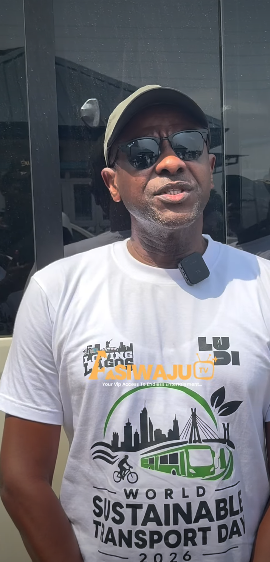
He explained that the partnership with LUDI provided an opportunity to promote cleaner energy and raise awareness about the importance of sustainable transportation.
He said, “And then we thought, you know, we have to move towards sustainable, greener, cleaner energy moving forward. And we thought, what better way to celebrate this, to advocate for this than to participate and celebrate this day, World Sustainable Transportation Day.”
Adams commended the progress made by the Lagos State Government and LAMATA, while stressing the need for more investment from both government and private-sector operators to expand cleaner and more affordable transport services.
“The good thing is that as you can see the buses that we have here, it already shows that the government is already doing something. It’s for them to do more and to let the private sector to do more,” he said.
He further highlighted the importance of preserving Lagos’ transport history while embracing modern technology and cleaner mobility solutions.
According to Adams, traditional transport systems such as Molue and Danfo were supported by local industries, including mechanics, metalworkers and other indigenous technicians who contributed to their operation and maintenance.
He said the transition to modern transportation should not mean abandoning the local knowledge and industrial capacity that supported the city’s earlier transport systems.
Adams said, “And I’m thinking, this can’t go to waste. And I’m thankful that you’re already doing that by incorporating NURTW and the rest of them. So that indigenous technology can’t go to waste.”
He stressed that local expertise should develop alongside international manufacturers as Lagos expands its modern transport infrastructure.
He also called for greater collaboration between government, private operators and commuters, noting that residents should have a voice in shaping the services they depend on.
LAMATA Highlights Progress in Cleaner Transport Systems
At LAMATA House, the Authority outlined its ongoing efforts to develop an integrated transport network that connects road, rail and water transportation while promoting cleaner energy and improved passenger experience.
Dr. Olukemi Amure, Head of Bus Services at LAMATA, said the Authority had been involved in sustainable transportation since its establishment, with its work evolving from conventional public transport to regulated bus services, electric mobility and digital infrastructure.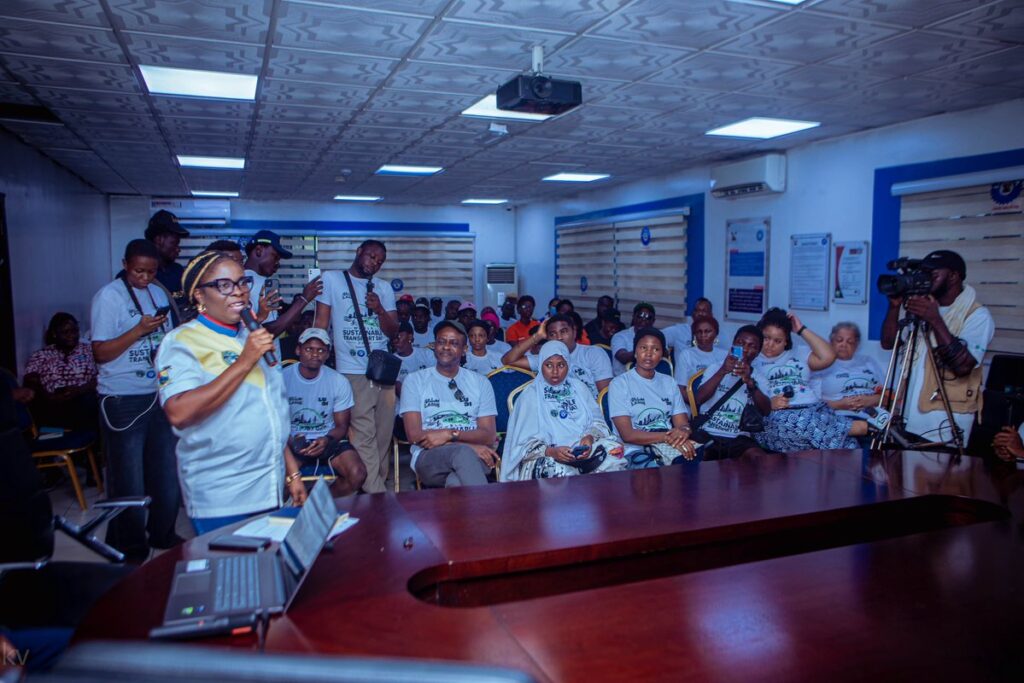
She said the state’s regulated transport system includes Bus Rapid Transit (BRT), standard bus routes and First and Last Mile services, with a gradual transition towards cleaner vehicles.
“All these buses are designed to be sustainable. So what we are doing right now is to ensure we have buses that are cleaner,” Amure said.
She disclosed that CNG buses were already operating across parts of the transport network, while electric buses had recently been deployed.
On rail transportation, she identified the Blue Line, which is fully electrified, and the Red Line as important components of the state’s integrated mobility system.
Amure also disclosed that work was ongoing to incorporate electric vessels into water transportation, alongside plans to improve digital payment systems through the Cowry card and e-ticketing infrastructure.
She said the Authority was also integrating solar energy into its depots and terminals to reduce dependence on conventional energy sources.
On the importance of walking infrastructure, Amure said LAMATA was incorporating pedestrian access into its transport facilities to make it easier for passengers to reach terminals and interchanges.
She also stressed the importance of public-private partnerships in delivering sustainable transport projects, noting that private operators provide investment and innovation needed to expand the system.
“The private partner, you know, they have the finance, they have the innovation. So those are the people that we are talking to to collaborate with the public sector to ensure that we deploy all of this,” she said.
Amure further disclosed that LAMATA had established a sustainability team responsible for developing policy objectives, monitoring transport emissions and assessing air quality.
She also highlighted the Authority’s gender-responsive transport initiatives under its SheCan project, which addresses harassment against women in public transportation and promotes safer access for women and girls.
The initiative includes measures to improve safety for female passengers, promote female participation in the transport workforce and strengthen gender-responsive transport policies.
Oando Clean Energy Highlights Electric Bus Expansion
The private sector’s contribution to cleaner mobility also featured prominently, with Comrade Adeleke of Oando Clean Energy highlighting the company’s electric vehicle operations and plans to expand its fleet in Lagos.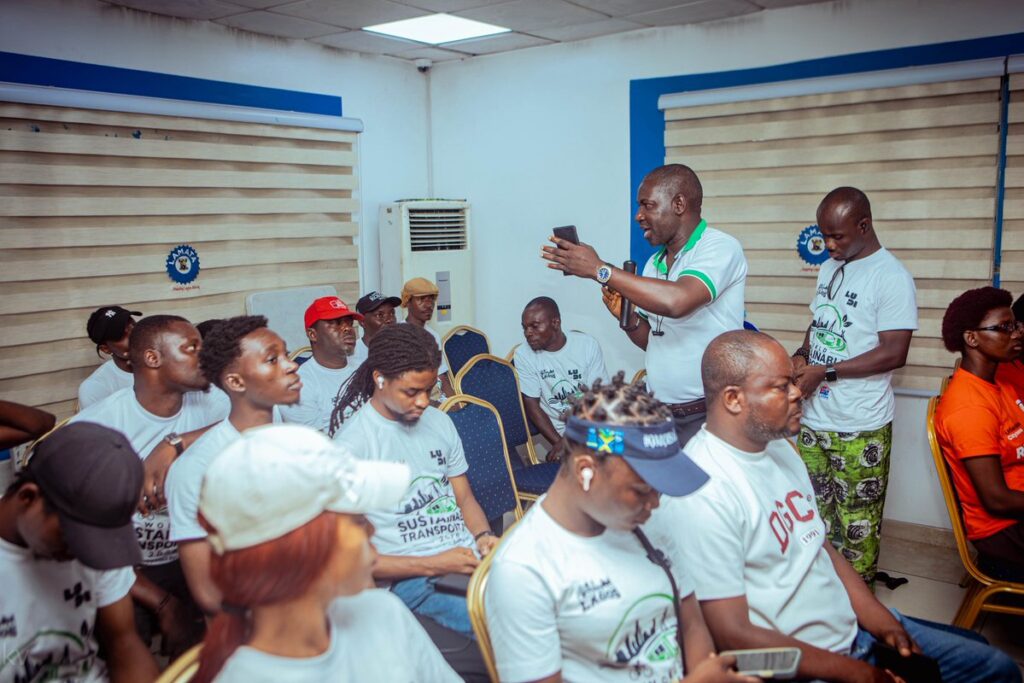
Adeleke said electric buses offered an opportunity to reduce transport-related emissions and improve air quality across the city.
He disclosed that the company planned to introduce more electric vehicles, with a target of bringing in more than 500 vehicles to support public transportation.
“We have a plan to bring at least over 500 electric vehicle that will carry if not one-quarter of Lagosians,” Adeleke said.
He also stated that the company’s existing electric vehicles had already averted more than 602 kilogrammes of carbon monoxide and carbon dioxide emissions, according to its assessment.
However, he identified electricity supply as a major challenge affecting electric vehicle operations, explaining that the company sometimes relied on generators to charge its buses when public electricity was unavailable.
Adeleke’s remarks came amid wider discussions on the need for investment in electric mobility infrastructure, reliable charging facilities and partnerships between government and private operators.
Aduke Gomez Highlights Transport’s Role in Tackling Climate Change
Speaking during the event, Aduke Gomez, a friend of Loving Lagos, said sustainable transportation deserved greater attention in Lagos because of the city’s growing population, traffic congestion and climate-related challenges.
She said cleaner transport options, particularly electric buses, could help reduce harmful emissions and make urban movement more comfortable for residents.
“I think that, especially like Lagos, needs to celebrate sustainable transport with the world facing climate change issues, with, with, with the cities becoming and the roads becoming overcrowded. Things like sustainable and transport reduces the fumes I mean like all these electric buses over here. So it just makes life in the city that little bit much easier,” Gomez said.
She added that the event could help create public awareness and support advocacy for changes in the state’s transportation system.
HotSteppers and UrbanBetter Link Active Mobility to Public Health
The celebration also featured perspectives from active mobility advocates, who highlighted the connection between transportation, public health and environmental protection.
Abiola Deborah Omoniyi, a run leader with HotSteppers, said walking, running, cycling and shared transportation could help reduce traffic congestion, improve public health and protect the environment for future generations.
She encouraged young people to become more involved in sustainable transportation, drawing from her personal experience as a runner.
Omoniyi explained that exposure to vehicle emissions had affected her ability to run comfortably, leading her to stop running for three months.
She said, “So in a situation whereby I’m running to keep myself healthy, it wouldn’t be wise for me to also have health issue because of that.”
She added that cleaner roads and safer environments would encourage more young people to embrace active mobility.
Also speaking, Waziri Mainasara, UrbanBetter’s Hub Liaison Officer, linked sustainable transportation to efforts to address air pollution and urban heat.
He explained that vehicle emissions and the heat generated by transportation contribute to discomfort in cities, making cleaner transport alternatives and active mobility important for improving urban health.
According to Mainasara, sustainable transportation is not only about reducing air pollution but also about lowering heat and improving the conditions in which people live and move around the city.
Building a More Connected and Sustainable Lagos
Beyond the deployment of cleaner vehicles, discussions at the event highlighted the need for an integrated transport system that connects different modes of movement and makes transportation accessible to all residents.
LAMATA said its long-term plans include improving rail connectivity, expanding regulated bus operations, developing electric water transportation, strengthening digital ticketing and investing in infrastructure that supports pedestrians.
The Authority also highlighted its work on air quality monitoring, transport emissions measurement and sustainability policies, stressing that progress must be supported by data and continuous assessment.
The event reinforced the importance of collaboration among government institutions, private-sector operators, civil society organisations and communities in shaping the future of mobility in Lagos.
As the city moves from the era of Molue and Danfo towards cleaner buses, electric vehicles and integrated transport systems, participants emphasised that sustainable mobility must go beyond the vehicles on the road to include safe walkways, cycling facilities, accessible infrastructure and affordable services.
Share this