

The World Health Organisation (WHO), the Federal Ministry of Health and Social Welfare and the TY Danjuma Foundation have trained 26 health workers in Enugu State on how to handle emergencies that can arise during childbirth.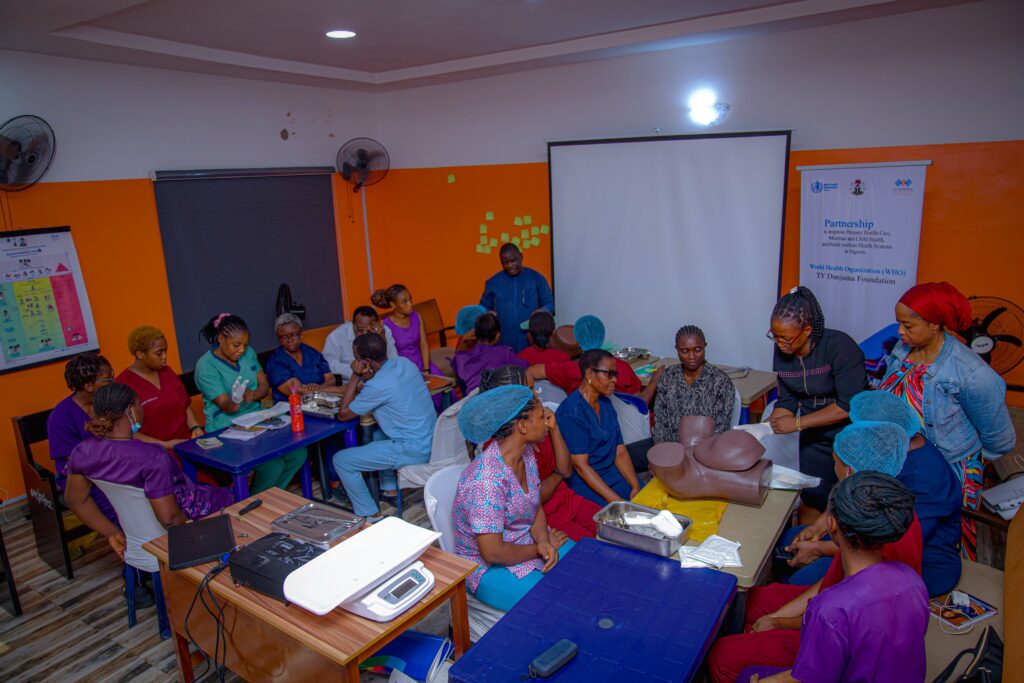
The two-week Comprehensive Emergency Obstetric and Neonatal Care training was held at Goodwill Medical Center Umuchigbo, a health facility supported by the TY Danjuma Foundation.
The trainees were made up of 22 women and four men and included frontline health workers who took part in both classroom sessions and practical exercises.
Focus on Common Birth Emergencies
The training covered some of the major complications health workers may encounter during childbirth, including postpartum haemorrhage, eclampsia, sepsis and birth asphyxia.
Participants also practised newborn resuscitation, essential newborn care, infection prevention and emergency preparedness.
The practical sessions were designed to help the health workers respond quickly when complications occur rather than relying only on what they had learnt in the classroom.
During one of the sessions, the trainees supported a mother, identified as Doris, through labour and the delivery of her baby.
Doris later described the experience, saying, “I felt safe throughout my delivery. I am grateful my baby arrived safely.”
‘It Has Deepened My Knowledge’
Mrs Nwogu, a matron at Goodwill Medical Center Umuchigbo in Enugu East Local Government Area, was one of the health workers who took part in the training.
She said the programme helped her update her knowledge and reinforced the need to follow standard procedures when caring for patients.
“This training has been incredible. It has deepened and updated my knowledge, particularly on the importance of following standard protocols and ensuring that patients are properly informed and engaged before medications are administered.”
Nwogu said she would apply what she learnt in her day-to-day work.
“I am taking away practical lessons that will strengthen the quality of care I provide,” she said.
Skills Matter When Emergencies Happen
For a woman in labour, knowing that a health worker can recognise a complication and respond quickly can make a significant difference.
But the ability to manage an emergency does not depend on training alone. Drugs, equipment, enough health workers and a working referral system are also important when a patient needs care beyond what a facility can provide.
That means the value of the training will ultimately be seen in how well the new skills are used in health facilities and whether workers have the resources to act when emergencies occur.
The WHO said the programme is part of efforts to strengthen frontline healthcare as Nigeria continues to face a high maternal mortality burden.
Part of Wider Maternal Health Partnership
The training is part of a partnership between WHO and the TY Danjuma Foundation, launched in June 2025 to improve maternal and newborn health outcomes and strengthen primary healthcare in Nigeria.
For the 26 health workers trained in Enugu, the next step is to take the skills learnt during the programme back to their respective workplaces.
The aim is straightforward: better prepared health workers, quicker responses to complications and safer care for mothers and newborns.
Share this


