
The World Health Organisation (WHO) and the Africa Centres for Disease Control and Prevention (Africa CDC) have welcomed the allocation of 70,000 doses of Ervebo vaccine to the Democratic Republic of the Congo (DRC) as the country responds to the ongoing Bundibugyo virus disease outbreak.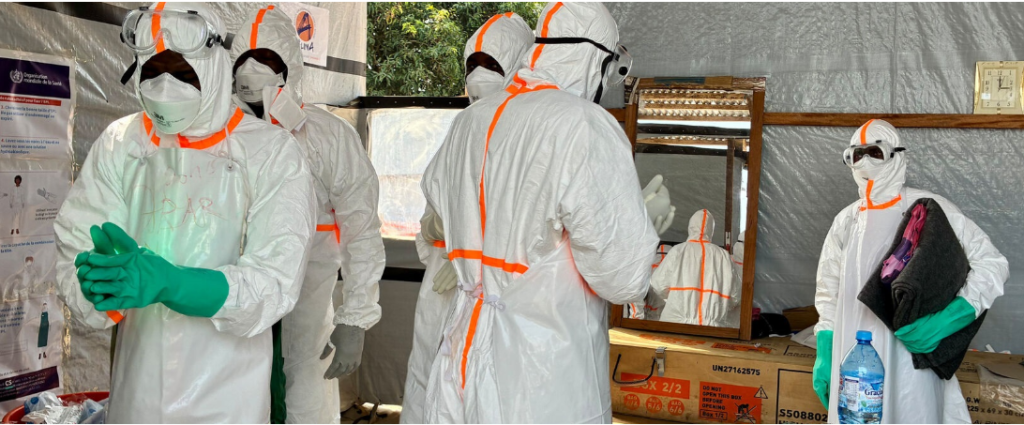
The DRC government last week requested the release of Ervebo vaccines from the global Ebola virus disease vaccine stockpile managed by the International Coordinating Group (ICG) on Vaccine Provision.
On Monday, the ICG informed the DRC government that an immediate initial allocation of 70,000 doses had been approved.
Ervebo is licensed and recommended for use during outbreaks of Ebola virus disease caused by the Zaire ebolavirus, previously referred to as Ebola virus disease.
20,000 Doses for Clinical Trial
The allocation includes 20,000 doses for a Phase 3 clinical trial to assess the impact of the vaccine against the Bundibugyo virus.
Another 50,000 doses will be used for frontline and health workers, in line with the current recommendations of the WHO Strategic Advisory Group of Experts on Immunization (SAGE).
However, it remains unknown whether Ervebo can protect humans against the Bundibugyo virus.
Early laboratory and animal studies suggest the vaccine may provide some protection, but evidence from human use is still needed.
The clinical trial is therefore expected to generate important evidence that could help policymakers determine whether Ervebo should be used against the Bundibugyo virus in future outbreaks.
WHO said people offered the vaccine, whether through the clinical trial or the wider outbreak response, must receive clear information about the potential risks, benefits and limitations of using the vaccine against Bundibugyo virus.
The organisation also stressed that those receiving the vaccine should be able to provide informed consent.
WHO, Africa CDC Support Community-Led Response
WHO and Africa CDC said they welcomed the vaccine allocation and backed the DRC government’s efforts to protect people affected by the outbreak.
Against the backdrop of the ongoing outbreak and based on available evidence, the two organisations said they support a response that puts communities at the centre.
WHO and Africa CDC said the approach should empower communities to play a central role in the response, rather than treating them only as recipients of public health interventions.
“Africa CDC and WHO are united in support of the Government of the DRC, to protect affected communities, save lives and bring the Bundibugyo Ebola outbreak to an end, while generating the scientific evidence needed to strengthen Africa’s preparedness for future outbreaks,” the organisations said.
The agencies said the response would focus on protecting affected communities, saving lives and bringing the outbreak to an end while also building evidence that could improve preparedness for future outbreaks across the continent.
ICG Partners Coordinate Vaccine Supply
The International Coordinating Group on Vaccine Provision was established in 1997 following major meningitis outbreaks in Africa.
It was created as a mechanism to manage and coordinate the provision of emergency vaccine supplies and antibiotics to countries facing major outbreaks.
The ICG partners are WHO, the International Federation of the Red Cross and Red Crescent Societies, Médecins Sans Frontières (MSF) and UNICEF.
Gavi, the Vaccine Alliance, provides funding for the stockpile.
The ICG’s core mandate is to make licensed vaccines available and ensure equitable access to them during outbreaks of cholera, meningitis, yellow fever and Ebola virus disease.
Over 56,000 Ebola Vaccine Doses Previously Allocated to DRC
The ICG has managed the emergency stockpile of Ebola vaccine since January 2021.
The stockpile was established as an additional tool for controlling outbreaks of Ebola virus disease, previously referred to as disease caused by Zaire ebolavirus.
From the establishment of the ICG Ebola vaccine mechanism in 2021 to July 2026, more than 56,000 doses of Ervebo had been allocated to respond to Ebola virus outbreaks in the DRC.
A further 167,000 doses have been used in preventive vaccination campaigns for health and frontline workers in the DRC, Guinea-Bissau, Kenya, Sierra Leone and Uganda.
The latest allocation will provide additional support for the DRC’s response while the clinical trial seeks to establish whether the vaccine can offer protection against the Bundibugyo virus.
Share this