
The Socio-Economic Rights and Accountability Project (SERAP) has issued a stern warning to the Leadership of the National Assembly, threatening legal action unless the proposed Nigeria Data Protection (Amendment) Bill, 2026, is immediately rejected and withdrawn.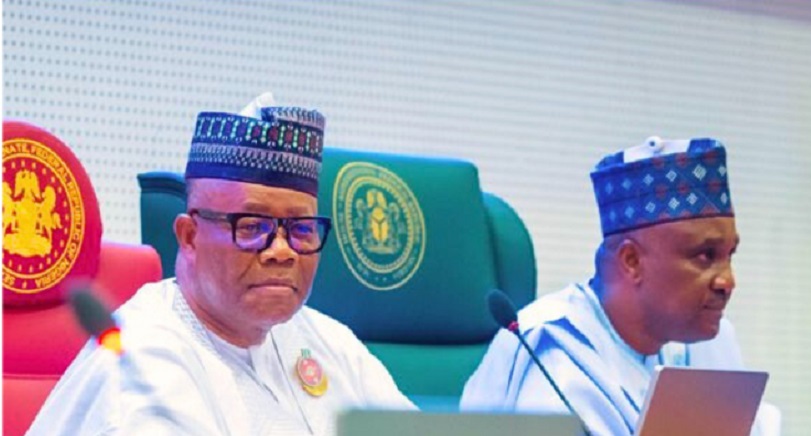
In a formal letter addressed to the Senate President, Senator Godswill Akpabio, and the Speaker of the House of Representatives, Tajudeen Abbas, the rights group characterized the legislative piece as a subtle, backdoor attempt to regulate social media platforms and clamp down on online expression across the country.
Threat to Digital Freedom and Platform Operations
Sponsored by Senator Ned Nwoko (APC, Delta North), the contentious bill mandates that all social media platforms, data controllers, and data processors operating in Nigeria establish local physical offices. Crucially, it empowers the Nigeria Data Protection Commission (NDPC) to shut down or ban any non-compliant entity within 30 days.
SERAP argues that forcing foreign tech giants to set up local offices grants the government undue leverage over digital platforms, exposing companies and their local workforce to political pressure and retaliatory threats.
In the letter dated 18 July 2026, signed by SERAP Deputy Director Kolawole Oluwadare, the organization cautioned that the bill poses severe threats to constitutional rights.
“Requirements compelling technology companies to establish local offices would increase government leverage over platforms, facilitate political pressure, make censorship demands easier, and expose local employees to retaliation,” the statement read.
“The Bill would create sweeping powers capable of shutting down or excluding social media platforms from the Nigerian market and expose millions of Nigerians to serious violations of their constitutionally and internationally guaranteed human rights.”
A Echo of Previous Social Media Censorship Attempts
SERAP stressed that the current proposal revives previously rejected legislative efforts to police the digital space, risking a repeat of historical human rights violations.
“The Bill follows earlier attempts by the National Assembly to regulate social media that generated widespread public opposition and serious human rights concerns,” Oluwadare stated. “The current Bill revives substantially similar proposals previously introduced by Senator Nwoko, raising renewed concerns that localisation requirements are being used as a vehicle for expanding governmental control over digital platforms and online expression.”
The advocacy group further highlighted that the legislation risks mirroring the controversial 2021 ban on Twitter, which was eventually declared unlawful by the ECOWAS Court of Justice.
“The Bill also risks recreating the very dangers previously condemned by the ECOWAS Court of Justice. In SERAP and Others v. Federal Republic of Nigeria, the Court held that the suspension of Twitter violated the rights to freedom of expression, access to information and media freedom protected under the African Charter,” the letter noted. “Although the present Bill differs from the Twitter suspension in form, it creates the possibility of achieving the same result indirectly by empowering regulators to prohibit digital platforms from operating in Nigeria.”
Lack of Judicial Oversight and Constitutional Breach
Critical of the bill’s enforcement mechanisms, SERAP argued that delegating platform-banning authority to an administrative body without court oversight violates basic constitutional guarantees, including Section 39 and Section 45 of the Nigerian Constitution, as well as international treaties like the African Charter on Human and Peoples’ Rights.
“The proposed section 5(p) in the Bill authorises the NDPC to prohibit entities from conducting operations in Nigeria without adequate procedural safeguards,” SERAP asserted. “The Bill contains no requirement for prior judicial authorisation, no obligation to consider less restrictive alternatives, no meaningful opportunity to remedy alleged non-compliance beyond the arbitrary 30-day period, and no requirement to consider the impact of any prohibition on the fundamental rights of millions of Nigerians.”
“The Bill cannot survive scrutiny under Section 45 of the Nigerian Constitution, which permits restrictions on fundamental rights only where they are prescribed by law, pursue a legitimate objective and are reasonably justifiable in a democratic society.”
Risk to Nigeria’s Tech Economy and Startups
Beyond human rights concerns, the civil society group cautioned that compulsory office localization would harm Nigeria’s growing tech industry, clashing directly with existing policies such as the Nigeria Startup Act 2022 and the National Digital Economy Policy and Strategy.
“The Bill would undermine the country’s digital economy, innovation ecosystem and international standing,” SERAP warned. “Mandatory localisation requirements substantially increase compliance costs, particularly for startups, open-source projects, educational institutions, research organisations, AI developers and smaller technology companies, while reducing Nigeria’s attractiveness as a destination for innovation and investment.”
Final Ultimatum to Lawmakers
Maintaining that no major democratic nation imposes blanket physical office requirements as a precondition for digital services, SERAP urged the leadership of the National Assembly to protect democratic values by scrapping the bill.
“Should the Bill be enacted into law in its current or substantially similar form, SERAP shall promptly take all appropriate legal actions to challenge its legality in the public interest and to ensure that Nigerians’ fundamental rights are fully protected,” the group concluded. “The National Assembly should seize this opportunity to demonstrate its commitment to constitutional democracy, the rule of law and Nigeria’s digital future by immediately withdrawing the Bill.”
Share this


