
Lagos State Governor, Babajide Olusola Sanwo-Olu, has lauded the newly unveiled Nigeria Industrial Policy (NIP) as a decisive step toward transforming the nation into a global production powerhouse.
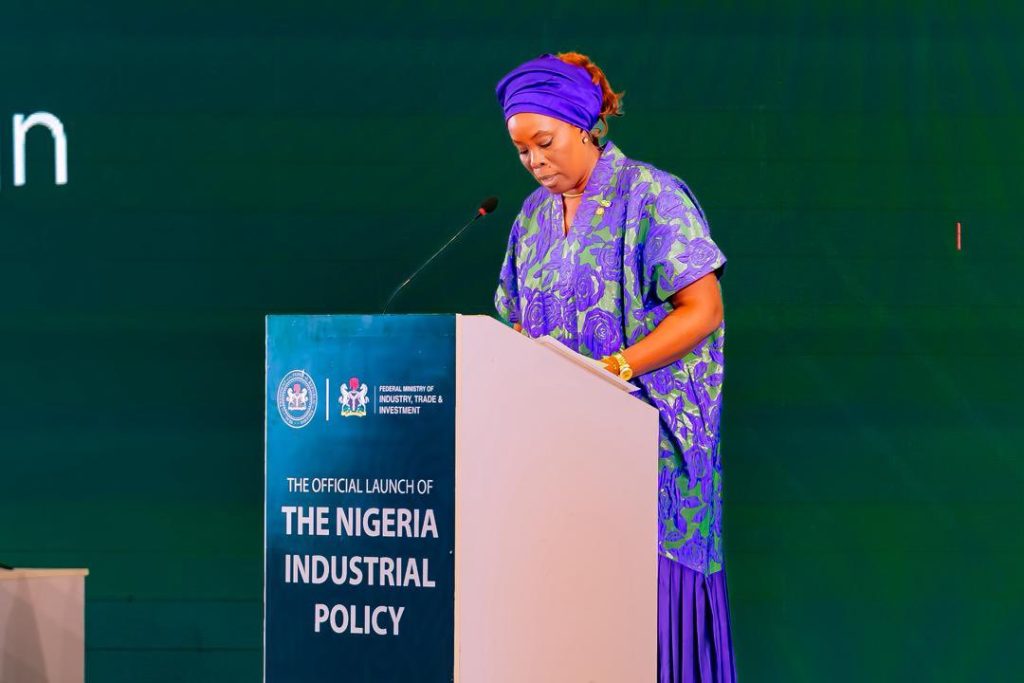
The Governor’s remarks were delivered on Tuesday during the official public presentation of the policy by Vice President Kashim Shettima at the State House Banquet Hall in Abuja. Represented by the Commissioner for Commerce, Cooperatives, Trade, and Investment, Mrs. Folashade Ambrose-Medebem, Sanwo-Olu emphasized that the policy marks a departure from Nigeria’s historical reliance on raw material exports.
A Shift from Consumption to Production
Governor Sanwo-Olu highlighted that the true strength of the Nigerian economy will now be measured by its ability to generate sustainable employment and domestic value. He noted that the policy is a core pillar of President Bola Ahmed Tinubu’s strategy to tackle structural economic bottlenecks.
“For too long, we exported raw materials and imported finished goods. That cycle must end, and it is ending,” Sanwo-Olu stated. “Under the leadership of President Bola Ahmed Tinubu, this administration has chosen to confront our structural economic challenges head-on. Through macroeconomic reforms and infrastructure development, the groundwork for real industrial growth is being laid.”
Beyond Strategy: A Focus on Action
The Governor pointed out that the NIP is unique because it is already being translated into tangible movement across various sectors. Following its initial soft launch earlier this year at the Nigerian Economic Summit Group’s 2026 Macroeconomic Outlook, the policy has moved into an implementation phase.
“Today’s official launch signals not just intent, but action,” the Governor added. “Across ministries, agencies, and the private sector, efforts are already underway to translate policy into factories, jobs, and exports.”
Lagos as the Industrial Anchor
As the head of Nigeria’s commercial nerve center, Sanwo-Olu pledged that Lagos State would remain at the forefront of this industrial revolution. He reaffirmed the state’s commitment to supporting manufacturers and upgrading infrastructure to help local businesses scale.
“Lagos remains Nigeria’s commercial heartbeat… We are ready to align fully with this national vision,” he said, concluding that the policy replaces years of fragmented efforts with coordination, purpose, and measurable progress.


