
By Michael Omotosho |
Despite being a preventable and treatable disease, malaria remains a leading cause of death in Nigeria, accounting for nearly a third of all global fatalities. At a high-level webinar hosted by the Punch Media Foundation to commemorate 2026 World Malaria Day, with the theme: ‘Malaria in Nigeria: A Shared Fight, A Collective Solution.’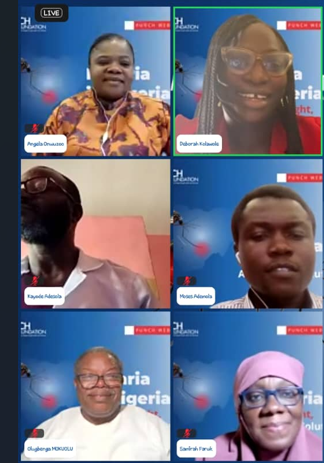
Health experts, activists, and media professionals warned that the country’s progress hinges on a community-to-clinic continuum and a shift in national behavior.
The Clinical Reality: Not Just an Ordinary Fever
Opening the panel discussions, Professor Olugbenga Mokuolu, a strategic advisor to the Minister of Health, clarified the biological high stakes of the disease. He noted that while five types of parasites exist, 98% of cases in Nigeria are caused by Plasmodium falciparum, the most deadly variant.
“Malaria is a killer disease,” Mokuolu emphasized, debunking common myths that the illness is caused by hard work, sunlight, or spiritual forces. “In 2024 alone, Nigeria saw 68 million cases and 199,000 deaths. That means every hour, approximately nine people die from malaria in this country.”
However, national prevalence has dropped from 22% in 2021 to 15.2% in 2025. While no state currently exceeds a 35% transmission rate, the burden remains heaviest on children under five and pregnant women.
Also, according to WHO in their report joined partners to launch the campaign:“Driven to End Malaria: Now We Can. Now We Must.” WHO recorded that 37 countries reported fewer than 1000 cases in 2024 world wide, while 47 countries has been certified maleria-free. In 2024, there were an estimated 282 million cases and 610,000 deaths—a slight increase from 2023.
The “Test, Treat, and Track” Mandate
Professor Wellington Oyibo, Director of the Center for Transdisciplinary Research in Malaria, challenged the Nigerian habit of self-diagnosis. He stressed that because malaria symptoms mimic many other infectious diseases, testing is non-negotiable.
“The malaria parasite is a machine calibrated to cause harm,” Oyibo stated. He advocated for the use of Rapid Diagnostic Tests (RDTs), noting they are as consistent as laboratory microscopy. “If you are not diagnosing based on testing, you are likely overdiagnosing and overtreating, which compromises quality of care.”
The Funding Crisis and Donor Dependency
Angela Onwuzoo, Editor of Punch Healthwise, highlighted a critical systemic failure: the gap between the national malaria burden and government commitment. She pointed out that despite the 2001 Abuja Declaration, where African heads of state pledged to allocate 15% of their national budgets to health, Nigeria has consistently failed to meet this target.
“Currently, our malaria elimination programming is dangerously donor-dependent,” Onwuzoo warned. “If international partners cut funding, the system collapses.” She further noted that 70% of drugs are imported, and the Japa syndrome (the mass exodus of medical professionals) has left primary healthcare centers (PHCs) ill-equipped to test or treat the over 230 million citizens.
Angela also noted that the media is also important, “the media remains a powerful tool, and it occupies a strategic position,” she note “raising awareness about various elimination strategies through investigations and in-depth reporting.”
With fewer than 30 million Nigerians covered by health insurance, out-of-pocket payments remain a massive barrier to survival.
Vaccine Rollout: A New Tool in the Fight
Responding to public inquiries about the malaria vaccine, Professor Mokuolu confirmed that Nigeria officially rolled out the R21 vaccine on December 4, 2024.
The rollout follows a targeted strategy:
-
Initial Doses: 1 million doses targeting 250,000 children.
-
Eligible Group: Children under two years old, starting at five months (4-dose schedule).
-
Current States: Initially launched in Kebbi and Bayelsa, the program expanded to Bauchi and Ondo in early 2026.
-
Success Rates: Coverage has been high, with Kebbi recording 135% of its target and Bayelsa reaching 95% by February 2026.
Ending the Unholy Marriage of Malaria and Typhoid
Dr. Kayode Adesola, immediate past president of the Association of Nigerian Private Medical Practitioners, addressed the cultural myths hindering treatment. He specifically pointed to the unholy marriage between malaria and typhoid in the Nigerian psyche.
“Typhoid diagnosis based on the Widal test is often of little to no value,” Adesola explained. He lamented that patients often walk out of clinics if doctors refuse to treat imaginary typhoid with antibiotics. This misconception fuels dangerous antibiotic resistance and delays the treatment of actual malaria, leading to preventable complications.
Grassroots Realities: From Evil Spirits to Citronella
Chief Executive Officer of Serendipity Healthcare Foundation, Samirah Faruk, brought attention to invisible rural communities. She shared a harrowing story of a young boy in convulsion whose parents believed he was possessed by Aljanu (evil spirits), when he was actually suffering from severe malaria.
Farouk noted that in many rural areas, chemists outnumber clinics, leading to widespread mismanagement. To combat this, her foundation uses pictorial books in local languages and encourages integrated prevention, such as planting mosquito-repellent plants like citronella and lemongrass around homes.
Future Innovations: Sterilizing Mosquitoes?
The forum also touched on cutting-edge research. Professor Mokuolu confirmed that Nigeria is in conversations regarding the sterile insect technique, a strategy to genetically modify or sterilize male mosquitoes to crash the population. While studies have been conducted in regions like Burkina Faso, Mokuolu noted that public concerns regarding “sterility” require high-level stakeholder engagement before pilot programs can begin in Nigeria.
A Call for Action
The forum concluded with a unanimous call for action over talk. Experts agreed that elimination requires:
-
Domestic Resource Mobilization: Moving away from donor dependency toward government-funded healthcare.
-
Adherence: Completing the full 3-day course of ACTs.
-
Community Buy-in: Engaging traditional, religious, and youth leaders to drive behavioral change.
“The most important strategy is a community-to-clinic continuum,” Dr. Adesola concluded. “Where awareness, access, affordability, and accountability align.”
Share this


