

The Federal Government of Nigeria has declared war on tsetse-borne diseases, launching a high-stakes, multi-state coordinated offensive to safeguard the nation’s multi-billion naira livestock industry and bolster public health.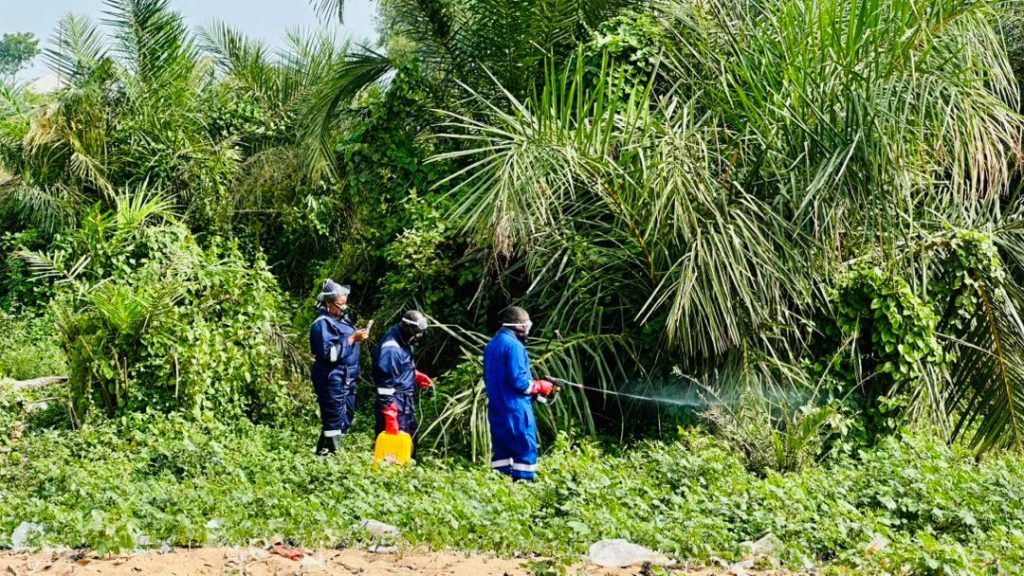
This strategic intervention, spearheaded by the Federal Ministry of Livestock Development, unfolded simultaneously between April 20 and April 24, 2026. The operations targeted high-risk grazing reserves and rural settlements across the Federal Capital Territory (FCT), Kogi, and Ogun States, marking a decisive shift toward a science-driven, unified national framework for disease control.
Precision Surveillance in the FCT
At the Paikon Kore Grazing Reserve in the FCT a hub for over 15,000 cattle federal teams deployed an integrated strategy of epidemiological assessment and vector control. Field officers utilized biconical traps placed at precise 500-meter intervals to map fly density and determine the exact scale of the infestation.
Dr. Ozoemena Uche, Deputy Director and FCT Coordinator of the Federal Epidemiology Unit, underscored the gravity of the mission, noting that the stakes extend far beyond the ranch.
“Tsetse flies transmit trypanosomiasis, which affects both animals and humans. Our goal is to reduce its impact on livestock productivity and prevent associated public health risks,” Dr. Uche stated.
While the tsetse fly remains the primary target, local managers like Mohammed Abubakar Bala of the Paikon Kore Reserve noted that the mission provides a gateway to addressing other terminal threats, including Foot-and-Mouth Disease and Contagious Bovine Pleuropneumonia.
Kogi State: The Strategic Buffer Zone
In Kogi State, the offensive spanned six critical Local Government Areas: Adavi, Lokoja, Koton Karfe, Ajaokuta, Ofu, and Idah. Because of its central geographical location, Kogi is viewed as a “ripple-effect” state; success here is expected to block the migration of disease vectors across the country.
Hon. Olufemi Bolarin, the State Commissioner for Livestock Development, emphasized that Kogi’s role is pivotal to national agricultural security. Supporting this, Team Lead Abdulkadiri Adaji warned that the intervention is a race against time for rural livelihoods.
“This exercise is critical to generating data and implementing control measures that will reverse the trend of declining livestock production,” Adaji said. “Addressing this challenge is essential not just for agriculture, but for national health security.”
Strengthening the Southern Corridor
The campaign further extended into Ogun State, focusing on the Owowo, Alamutu, and Alabata RUGA settlements. In these regions, the Federal Government partnered with state authorities to combine vector control with broader veterinary services.
Dr. Taiwo Jolaoso, representing the Ogun State Commissioner for Agriculture, reaffirmed the state’s commitment to supporting the federal initiative through free vaccination programs and enhanced veterinary surveillance. This collaboration aims to ensure that once the tsetse fly population is suppressed, the livestock population remains resilient against secondary infections.
A Unified Science-Driven Response
Across all three regions, the Federal Ministry has employed a “One Health” approach, recognizing that animal health is inextricably linked to human well-being. The operations include:
-
Strategic Fumigation: Targeted spraying of high-risk breeding zones.
-
Insecticide Application: Direct treatment of livestock to act as “live bait” for flies.
-
Community Sensitization: Educating pastoralists on early detection and reporting.
State Coordinator Dr. Toyin Ayo-Ajayi emphasized that the alignment of federal and state resources is the only way to ensure the long-term eradication of the tsetse fly, urging continued grassroots cooperation to maintain the gains of this five-day intensive sweep.
Share this


