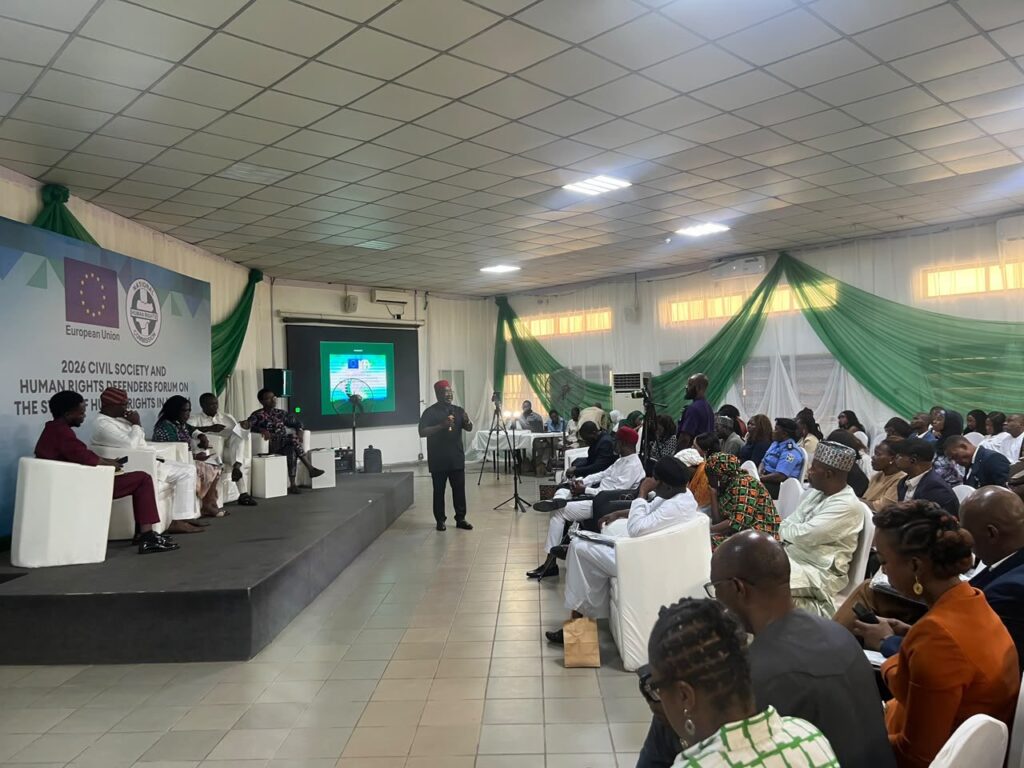
 The National Human Rights Commission (NHRC), in collaboration with the European Union (EU), has called for collective efforts to protect civic and political freedoms as Nigeria prepares for the 2027 general elections.
The call was made at the 2026 Civil Society and Human Rights Defenders Forum on the State of Human Rights, held on November 11 at the Buhari Bello Auditorium, NHRC Headquarters, Abuja.
The forum, themed “Protecting Human Rights in Civic and Political Spaces in the 2027 Elections,” brought together civil society organisations (CSOs), human rights defenders, media practitioners, development partners and other stakeholders to examine challenges affecting the exercise of fundamental rights and democratic participation.
Discussions focused on the need to create an environment where citizens can freely express their opinions, participate in political activities, organise peaceful gatherings and hold public institutions accountable without intimidation or unlawful restrictions.
NHRC, EU Bring Stakeholders Together Ahead of 2027 Elections
The forum provided a platform for stakeholders to examine the state of human rights in Nigeria and identify measures to safeguard civic and political spaces before, during and after the 2027 general elections.
The opening plenary featured goodwill messages and a keynote address by representatives of the Independent National Electoral Commission (INEC), who highlighted the importance of protecting democratic freedoms and strengthening citizens’ participation in the electoral process.
Participants also discussed the responsibilities of government institutions, electoral bodies, civil society organisations and other stakeholders in ensuring that fundamental rights are respected throughout the electoral period.
The engagement underscored the importance of collaboration among relevant institutions and non-state actors in addressing human rights concerns that could undermine citizens’ participation in democratic processes.
Through the discussions, stakeholders shared perspectives on existing challenges and explored practical approaches to ensuring that individuals and organisations can exercise their civic rights without fear of intimidation or reprisals.
Forum Examines Threats to Civic and Political Freedoms
One of the major thematic sessions examined civic and political freedoms, with particular attention to restrictions affecting freedom of expression, association, peaceful assembly and political participation.
Discussions explored how limitations on these freedoms could affect citizens’ ability to engage in public affairs, express political opinions and participate meaningfully in the electoral process.
Participants also considered the need to protect individuals and groups who speak out on governance issues, organise public engagements or advocate for accountability, particularly as political activities increase ahead of the 2027 elections.
The session highlighted the importance of ensuring that citizens can exercise their constitutional rights without facing intimidation, harassment or arbitrary restrictions.
Stakeholders stressed the need for stronger institutional commitment to protecting civic freedoms and ensuring that democratic participation remains open and accessible to all.
Media Freedom, Digital Rights and Electoral Violence Take Centre Stage
Another thematic session examined media freedom and digital rights, focusing on emerging challenges such as online surveillance, censorship, digital intimidation and threats against journalists and human rights defenders.
Participants discussed the growing importance of protecting digital spaces as platforms for public debate, information sharing and political engagement, particularly during election periods.
The session also examined the need to safeguard journalists and human rights defenders from threats and intimidation while carrying out their professional and advocacy responsibilities.
A separate discussion focused on electoral violence and political intimidation, examining early warning mechanisms, prevention strategies, accountability and institutional responses to election-related human rights violations.
Participants explored practical measures for identifying potential threats, preventing violence and strengthening responses to violations that could discourage citizens from participating in the electoral process.
Stakeholders Adopt Roadmap to Strengthen Human Rights Protection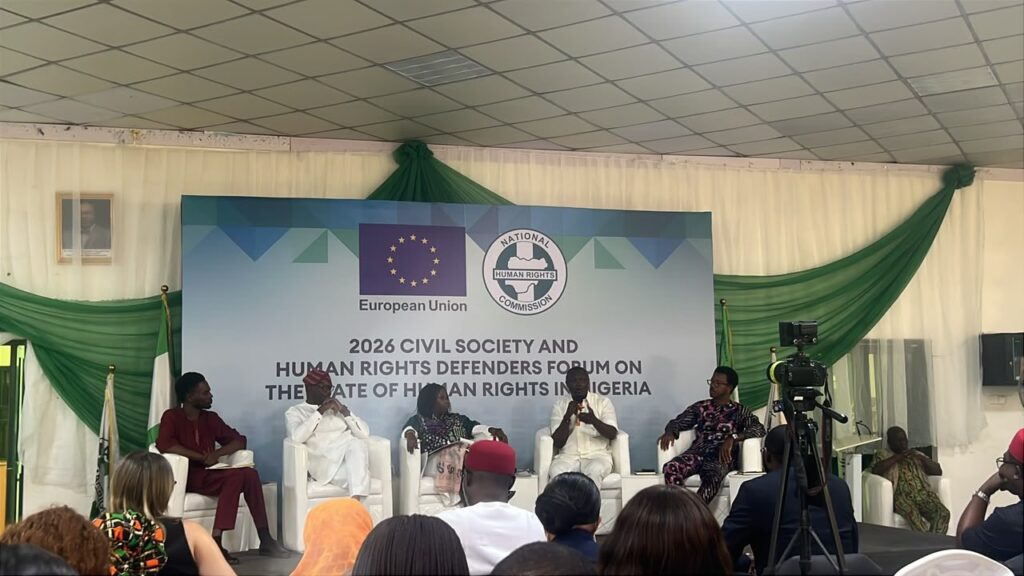
A major outcome of the forum was the adoption of recommendations and an outcome roadmap to guide efforts towards protecting human rights before, during and after the 2027 general elections.
The roadmap is expected to provide direction for stakeholders working to safeguard civic and political freedoms, strengthen institutional accountability and address human rights violations associated with the electoral process.
The forum also featured an award presentation recognising participants and acknowledging their contributions to the engagement.
In their discussions, stakeholders reinforced the importance of collective responsibility and sustained collaboration among government institutions, civil society organisations, the media and development partners in protecting democratic freedoms.
The engagement concluded with a renewed emphasis on ensuring that civic and political spaces remain open, safe and inclusive as Nigeria approaches the 2027 elections, with participants recognising that the protection of human rights remains essential to meaningful democratic participation.