The National Economic Council (NEC) has endorsed a 90-day economic action plan aimed at easing the cost of living, improving food affordability, attracting investment and accelerating projects that directly benefit Nigerians.
The plan, proposed by the Federal Ministry of Finance, was endorsed during the Council’s 161st meeting on Thursday, October 22, 2026, chaired virtually by Vice President Kashim Shettima.
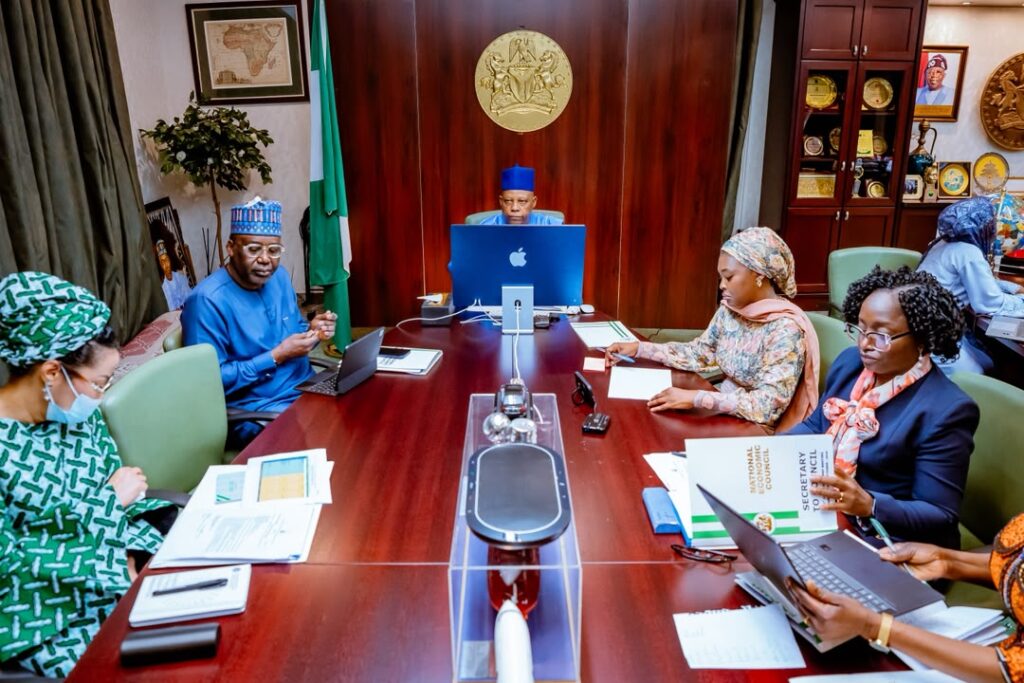
The development comes as Nigerians continue to face economic pressures, with the Federal Government seeking to translate the gains of its economic reforms into improved living conditions, affordable essential services and greater financial security.
The Minister of Finance and Coordinating Minister of the Economy, Taiwo Oyedele, presented the plan to the Council, outlining priority areas for the next phase of the administration’s economic programme.
According to the State House press release issued by Stanley Nkwocha, Senior Special Assistant to the President on Media and Communications in the Office of the Vice President, the plan identifies five priority areas: food affordability, tax harmonisation, completion of high-impact projects, resolution of investment bottlenecks and regulated household support.
NEC also approved the establishment of a national dashboard to monitor ongoing projects across the federation, with particular emphasis on transparency, accountability and accurate reporting on the utilisation of proceeds from fuel subsidy removal.
Shettima Tasks Governors on Jobs, Healthcare, Transportation
Addressing members of the Council, Shettima said governments at all levels must ensure that the benefits of economic reforms translate into tangible improvements in the daily lives of Nigerians.
He charged state governors and relevant institutions to prioritise affordable transportation, better healthcare, employment opportunities and financial security.
“The first dividend of prosperity should be the confidence to plan a life. Our task is to make such confidence less dependent on fortune,” he said.
According to the Vice President, the Council’s deliberations on transportation, healthcare, police reform and livestock development represent important decisions about the quality of life Nigerians should expect from economic progress.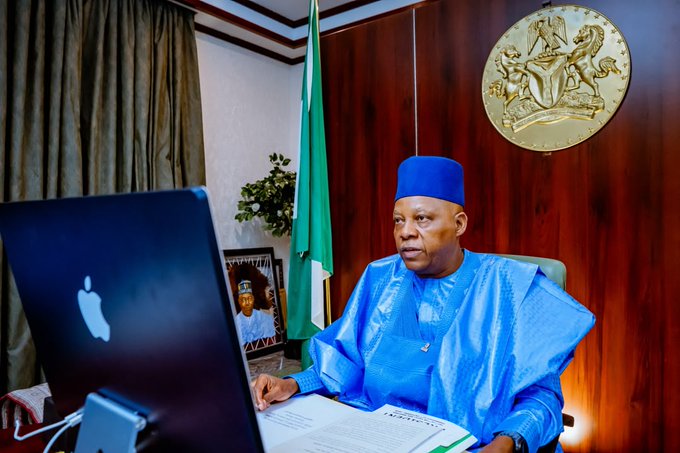
“Our separate jurisdictions must serve a common public interest,” Shettima said, emphasising that cooperation between the Federal and State Governments is necessary to improve public service delivery.
He also urged governors to incorporate local realities into national policy decisions, noting that effective implementation depends on clear responsibilities and practical agreements among the different tiers of government.
“Our separate mandates must not become competing excuses. Each Governor carries knowledge that no federal document can supply,” he said.
The Vice President maintained that the success of economic policies should be measured by their ability to reduce uncertainty, create opportunities and strengthen public confidence in government.
“Nigerians deserve institutions on which they can organise their lives. Providing that assurance is among the most consequential uses of public authority. That is the assurance we owe them,” he said.
NEC Prioritises Affordable Transportation
The Council also considered measures to improve access to affordable transportation through the National Compressed Natural Gas (CNG) Bus Initiative.
Shettima said the programme should be assessed by how much it reduces the financial burden on commuters, rather than the number of vehicles deployed.
“The cost of reaching a livelihood should never consume the livelihood itself. The passenger’s experience must guide our ambition, because the value of public transport resides in the journeys it makes possible. We should assess success through affordability and access, rather than fleet size alone,” he said.
In a related development, NEC received a presentation on the National Affordable Compressed Natural Gas Transit Programme from the Chairman of the Presidential Initiative on Compressed Natural Gas and Electric Vehicles, Ismaeel Ahmed.
The Council resolved to establish a joint financing framework between the Federal and State Governments to accelerate the deployment of CNG and electric vehicles across the country.
It also directed relevant authorities to engage transport unions and operators to ensure that savings from the use of alternative-energy vehicles are passed on to commuters through lower fares.
A committee will be constituted to coordinate the financing arrangement, engage stakeholders and develop measures to make transportation more affordable, accessible and sustainable.
NEC Reviews Ebola Response, Tasks States on Preparedness
Meanwhile, the Council received an update on the reported Ebola outbreak in the Federal Capital Territory from the Minister of Health and Social Welfare, Professor Muhammad Ali Pate.
The Minister allayed fears of a major public health crisis, assuring members that Nigeria has the institutional capacity to contain the situation.
He briefed the Council on efforts by the ministry and relevant stakeholders to strengthen the national response system, identifying coordination and governance, detection at points of entry, laboratory testing, logistics for essential kits and personal protective equipment, and effective strategic communication as key components.
Pate disclosed that 21 state governments had updated their response plans and called on the remaining 15 states to expedite the establishment of appropriate preparedness and response mechanisms.
The update places renewed attention on the need for states to maintain functional public health systems, strengthen disease surveillance and prepare for possible outbreaks.
NEC Directs States to Strengthen Polio Eradication
The Council also reviewed the report of the NEC Ad Hoc Committee on Polio Eradication, chaired by Gombe State Governor Muhammadu Inuwa Yahaya.
It resolved that states should conduct post-campaign reviews, particularly in areas where children were missed during immunisation exercises and in communities affected by insecurity.
NEC emphasised the need for timely release of counterpart funds, stronger routine immunisation, improved coordination with security agencies and closer cooperation among states to increase vaccination coverage.
It further highlighted the importance of sustained political commitment from governors, traditional rulers and security agencies in achieving the complete eradication of polio in Nigeria.
NEC Moves to Unlock Livestock Sector’s Economic Potential
On livestock development, the Council considered a report from its Ad Hoc Committee on Livestock Development, chaired by Kebbi State Governor Nasir Idris.
NEC acknowledged the sector’s potential to stimulate economic growth, create jobs and improve livelihoods across the country.
It noted that all states had indicated interest in supporting the Federal Government’s livestock development initiatives and resolved to strengthen collaboration between federal and state authorities to accelerate reforms and unlock the sector’s economic potential.
Nigeria’s Malaria Burden and Government Control Efforts
Beyond the immediate health concerns discussed at the meeting, malaria remains a major public health challenge in Nigeria, highlighting the importance of sustained government investment in prevention, diagnosis and treatment.
Historical data show that Nigeria has made progress in reducing malaria prevalence, although the disease continues to account for a substantial share of cases and deaths worldwide.
According to the Federal Ministry of Health and Social Welfare, findings from the 2025 Nigeria Malaria Indicator Survey showed that malaria prevalence among children aged six to 59 months declined from 42 per cent in 2010 to 15 per cent in 2025. The 2021 survey had recorded a prevalence rate of 22 per cent, down from 23 per cent in 2018.
The figures indicate a gradual reduction in childhood malaria prevalence over the past 15 years, following years of government-led interventions and collaboration with international health partners. However, prevalence among children is only one measure of the country’s overall malaria burden.
The World Health Organization’s World Malaria Report 2024 identified Nigeria as the country with the largest share of the global malaria burden. The report estimated that Nigeria accounted for approximately 27 per cent of global malaria cases and 31 per cent of malaria deaths, based on the data available at the time.
Children under five and pregnant women remain particularly vulnerable to the disease.
Government Expands Prevention and Treatment
Over the years, the Federal Government, through the National Malaria Elimination Programme, has pursued several interventions to reduce malaria transmission and deaths.
These measures include the distribution of long-lasting insecticide-treated mosquito nets, seasonal malaria chemoprevention for eligible children in high-transmission areas, improved access to testing and effective treatment, and preventive treatment for pregnant women.
A World Health Organization report on malaria in Nigeria documented that approximately 220 million insecticide-treated nets were distributed across 37 states between 2009 and 2021. The report also recorded an expansion of seasonal malaria chemoprevention, from about 209,000 children reached in one state in 2013 to approximately 24 million children in 18 states by 2021.
In October 2024, Nigeria received its first malaria vaccine doses, marking another step in the government’s efforts to protect children against the disease. The initial rollout was planned for Kebbi and Bayelsa states, with support from Gavi, UNICEF and WHO.
In April 2025, the Federal Government reiterated its ambition to achieve a malaria-free Nigeria by 2030, with plans to expand mosquito-net distribution and preventive treatment programmes.
The government subsequently developed the National Malaria Strategic Plan 2026–2030, targeting a 50 per cent reduction in malaria parasite prevalence and mortality from 2025 levels by 2030.
Despite the reported progress, the continued high burden of malaria means that prevention campaigns, access to timely diagnosis, appropriate treatment and sustained funding remain essential to achieving the national elimination target.
Economic Reforms Must Deliver Measurable Results
Presenting the economic outlook to NEC, Oyedele expressed optimism about progress under the Tinubu administration’s reform programme and the prospects for further economic recovery.
He identified reducing headline inflation and interest rates to single digits by 2027 as key policy objectives, stressing that the next phase would require coordinated implementation across federal and state institutions.
The presentation also highlighted the need to translate macroeconomic improvements into measurable benefits for households and businesses through targeted interventions, improved fiscal coordination and the removal of barriers to investment.
Shettima maintained that President Bola Ahmed Tinubu’s economic reforms were intended to achieve broader national prosperity, with governments at all levels responsible for ensuring that Nigerians experience the benefits.
“His Excellency, President Bola Ahmed Tinubu, GCFR, has made economic reform the instrument of a larger national ambition. Our contribution must give that ambition social depth and productive strength,” he stated.
The Vice President added that public policies must provide Nigerians with the confidence to plan their lives and access essential services.
The decisions reached at the 161st NEC meeting will require cooperation between federal and state governments to turn the 90-day economic plan and other sectoral commitments into practical results for citizens.
The meeting’s central challenge remains implementation: ensuring that economic reforms, public health interventions and development programmes translate into lower living costs, better services and improved livelihoods for Nigerians.
Share this