

In a decisive move to reshape Nigeria’s automotive landscape, the National Automotive Design and Development Council (NADDC) has convened a critical stakeholders’ meeting to kickstart the implementation of its Import Deletion Programme for motorcycle and tricycle component parts.
The initiative marks a significant policy shift aimed at drastically reducing the country’s reliance on imported parts and catalysing local manufacturing.
The sensitization meeting, held on Thursday in Lagos, brought together key players from the automotive value chain to deliberate on the roadmap for identifying and locally producing components that are currently imported.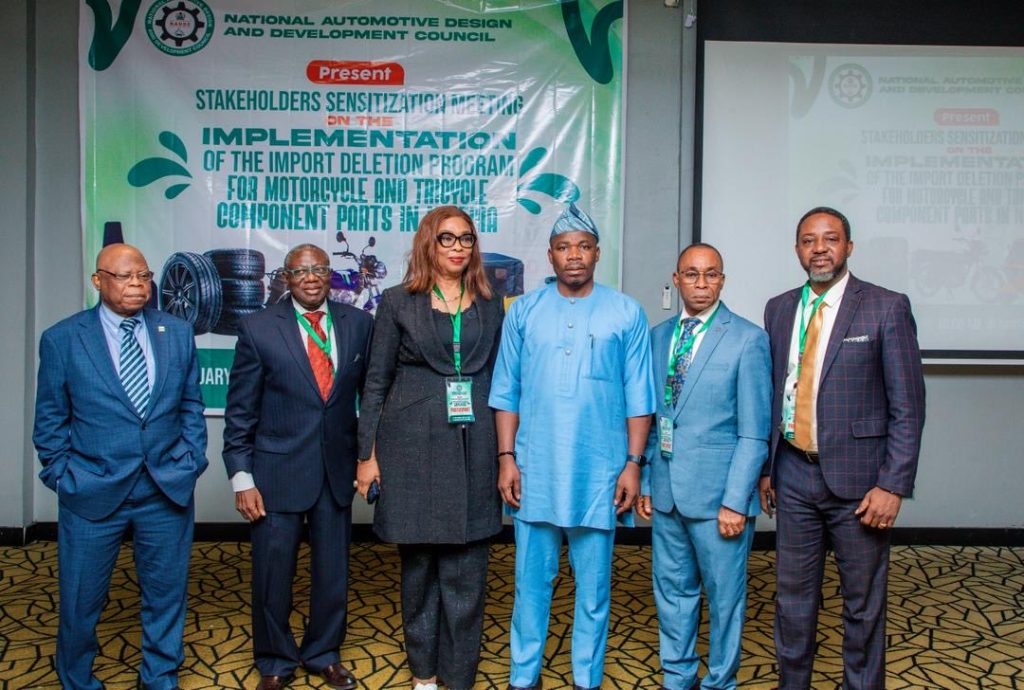
The programme is designed to compel the industry to harness local capacity, thereby deepening industrialization and creating sustainable economic opportunities.
A Mandate to Localise the Value Chain
Addressing the gathering, the Director-General of NADDC, Otunba Oluwemimo Joseph Osanipin, underscored that the recommendation of parts for deletion is a core mandate of the Council. He explained that the initiative is a direct outcome of a strategic policy direction aimed at strengthening local production capacity.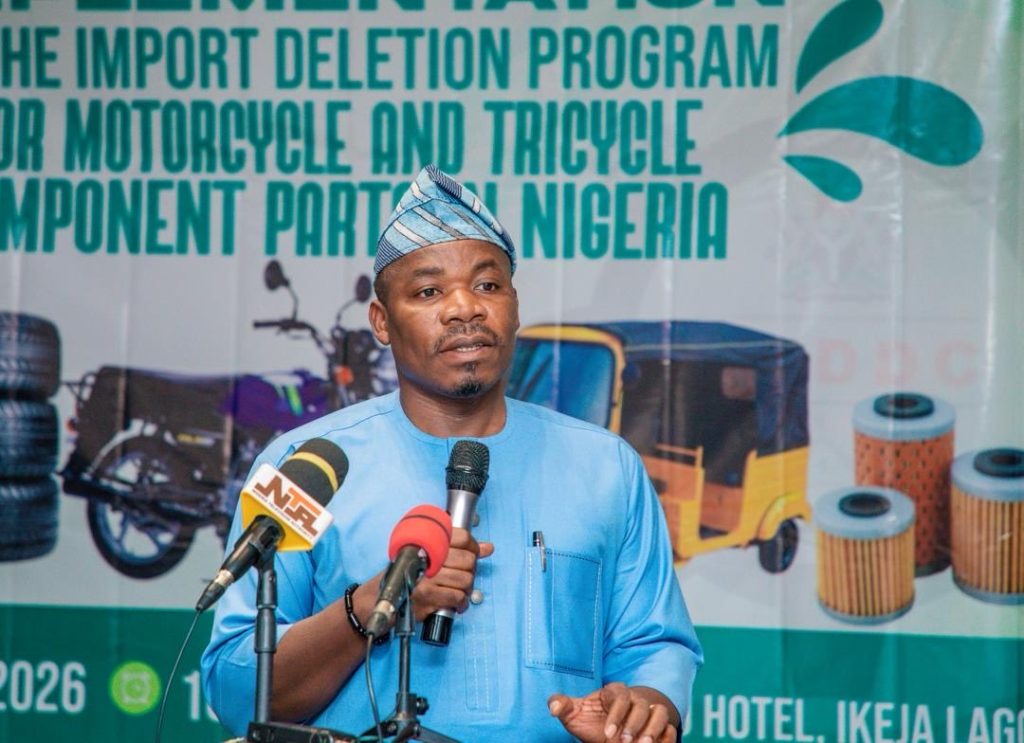
“The Council is mandated to periodically review parts and components used in the manufacturing of motorcycles, tricycles, bicycles, and motor vehicles, and to recommend specific components for deletion where local production capacity exists or can be developed,” Otunba Osanipin stated.
He emphasised that the industry has reached a decisive moment where critical decisions must be taken. According to him, this policy shift is driven by the urgent need to increase local content development and strengthen the entire automotive value chain.
He further noted that the National Automotive Industry Development Plan (NAIDP) clearly acknowledges the necessity of developing local components, making this programme a pivotal step toward its actualisation.
“This policy shift is driven by the need to increase local content development, deepen industrialization, and strengthen the automotive value chain,” he added.
Industry Voices Support for Local Production
The proposed policy has garnered significant support from industry associations, who see it as a vital tool for building a resilient domestic industry. They, however, stressed that its success hinges on creating an enabling environment that makes local production competitive.
The Executive Director of the Motorcycle Manufacturers Association of Nigeria (MOMAN), Rev. Lambert Ekewuba, articulated the collective goal of the sector. He stated that the mission is clear: to prioritise local content development, promote value addition, and eliminate avoidable imports.
Rev. Ekewuba emphasised that reducing dependency on imported components is essential to building a resilient and competitive domestic industry.
Offering a strategic perspective, the Chairman of the Nigeria Automotive Manufacturers Association (NAMA), Mr. Bawo Omagbitse, advised that for the policy to be truly sensible and justified, stakeholders must work collaboratively.
He stressed the need to address existing production challenges, such as infrastructure and access to finance, to create an environment where manufacturing locally is more viable than importing. “Stakeholders must create conditions that make local production more viable and competitive than importing parts,” he advised.
A Defining Moment for Nigerian Manufacturers
The potential of the Import Deletion Programme to transform the sector was further highlighted by the representative of the Director-General of the Manufacturers Association of Nigeria (MAN), Oluchi Odimuko. She described the engagement as coming at a defining moment for Nigerian manufacturers within the automotive value chain.
Ms. Odimuko reiterated that the programme holds immense promise for the nation’s economy. She noted that if successfully implemented, it has the potential to catalyse local content development, deepen industrial capabilities, and create sustainable jobs for Nigerians.
“The Import Deletion Programme has the potential to catalyze local content development, deepen industrial capabilities, and create sustainable jobs for Nigerians,” she said.
The Path Forward
The NADDC’s Import Deletion Programme represents a bold step toward industrial self-sufficiency. Through continued collaboration between the Council, manufacturers, and industry associations, Nigeria’s automotive sector is positioning itself to significantly reduce import dependence.
Together, through collaboration, strategic investment, and firm policy implementation, Nigeria’s automotive sector can reduce import dependence, stimulate industrial growth, and contribute significantly to national economic development. The outcomes of this sensitization meeting are expected to form the blueprint for the gradual phase-out of imported components in favour of robust, locally manufactured alternatives.
Share this


