
By Mayowa Adeniran |
The Network Against Child Trafficking, Abuse and Labour (NACTAL) is a network of Civil Society Organizations working in the area of protecting the rights of children and women, and addressing the menace of Trafficking in Persons (TIP) and Smuggling of Migrants (SOM) which have become endemic in Nigeria.
 The inaugural event featured discussions on the SCALE project, TIP basic concepts, root causes, emerging trends and effects of TIP; victims, potential victims, and traffickers’ identification, and legal institutional and policy framework against trafficking in persons.
NACTAL, with a member organization spread across 36 states and the Federal Capital Territory in Nigeria, work assiduously to engage relevant stakeholders to tackle TIPSOM.
As part of one of its approaches to addressing TIPSOM in Nigeria, NACTAL, with funding support from the USAID-SCALE Project has been implementing Countering Trafficking in Persons (CTIP) in Nigeria.
The project has adopted a holistic approach whereby relevant stakeholders that can play a major role to reduce TIP are being strategically engaged, through training and capacity-building workshops.
The project is countering TIP through 5 major components which include: improving the capacity of CSOs to be able to address TIP in Nigeria; Enhance the capacity of CSOs to advocate, collaborate and tackle TIP in Nigeria; Creating a positive environment for CSOs to operate without threat; Capacity strengthening, policy reforms, generating evidence on CTIP; and Sector strengthening and advocacy.
Through the project, NACTAL has trained almost 150 participants between May and September 2022; including women, youths and persons with disabilities.
This training has built the capacity of CSOs to design evidence-based strategies for CTIP in Nigeria; data collection and management; ensuring the protection of victims and prevention of TIP in Nigeria.
The project is also currently being implemented in FCT-Abuja and Benue, Cross River, Edo, Enugu, Lagos, Ondo, Sokoto, Taraba States.
Trafficking Issues in Nigeria
Speaking at a recently concluded training for media practitioners organized by NACTAL, the Zonal Commander of the National Agency for Prohibition Trafficking in Persons (NAPTIP), Mr. Nduka Nwanwanne, decried the growing incidence of human trafficking in Nigeria as the country retains the status of a source, transit and destination country for trafficking in human beings.
Nwanwanne disclosed that “as of May 2022, the Agency has rescued and sheltered 17,753 victims; 13,026 females and 4727 males.
“In Mali, no fewer than 25,000 Nigerian Women and girls are trapped living in shanties in the mining areas where they are sexually exploited.”
The NAPTIP Zonal Commander also raised alarm over the unsuspecting ways through which people are being trafficked, especially with the use of social media.
He said “recruitment through social media platforms. “Fishing and hunting” has been a common feature. People are now connected without geographic barriers and they have used the space to perpetuate human trafficking.”
He also noted that human traffickers are expanding their destination to other countries in the Middle East including Qatar, Oman, Saudi Arabia and others like India and South Africa.
Warning Nigerians against being victims of trafficking, Nwanwanne explained that the purpose of trafficking includes but is not limited to; Sexual exploitation; Labour exploitation; Forced labour; Organ harvesting; Begging; and Forceful conscription of children as child soldiers.
Nwanwanne identified poverty, illiteracy/ignorance, economic hardship, lack of opportunities at home, and parental pressures among others, as root causes of TIP, adding that the risk includes; loss of life, health risks, emotional and psychological breakdown, unwanted pregnancy, among others.
He noted that NAPTIP is working with relevant bodies to ensure that TIP is nipped in its bud in Nigeria.
He thereafter charged stakeholders in the media industry to intensify awareness and sensitization of the public against trafficking in persons lamenting that despite the huge sensitization and awareness created by government and media agencies against human trafficking, the majority of young people are still not informed about the risks and dangers involved.
CTIP Training for Media Practitioners and for Religious, Traditional and Community Leaders
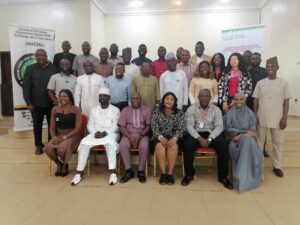 As part of its effort to intensify public awareness campaigns against TIP in Nigeria, NACTAL trained media practitioners from broadcast, print, and online news platforms across Nigeria.
The training has an overarching goal which sought to “foster synergy among media practitioners through investigative reporting and documentaries on actions against TIP in Nigeria.”
The training objectives are also set to “Increase the knowledge of media practitioners on the menace of trafficking in person; Intensify public awareness campaigns against TIP among media practitioners in Nigeria;
“Strengthen the capacity of media practitioners on reportage of TIP stories in the country; and Improve the knowledge of the participants on developing relevant media contents against TIP.”
The National President NACTAL, Abdulganiyu Abubakar in his remarks at the training held in Benin, Edo State, said some countries discriminate against Nigeria when they intend to travel out as a result of the endemic nature of human trafficking in Nigeria.
Abubakar noted that TIP has brought about stigma and discrimination in Nigeria at large, adding that “a large number of persons like the survivors, family members, friends, spouses, slaves, drug users, migrant population, street kids, CSOs, counsellors and many others are affected.”
He charged the media to step up the campaign through publications and programmes in their various media houses and help reduce issues of trafficking through their write-ups and programmes.
To further expand its interventions, NACTAL also trained traditional rulers and religious leaders, with the aim of tackling TIP at the grassroots.
Abubakar while speaking about the purpose of the training explained that NACTAL considered it appropriate to bring relevant stakeholders together to share knowledge and best approaches on how to take the message against Child Trafficking to the grassroots to complement the response on Trafficking against humans by International development organizations and the government of Nigeria to proffer a lasting working solution.
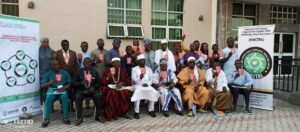
He urged the traditional, religious leaders to go back to their various communities and raise the awareness of their followers and lend a resounding voice against the activities of traffickers as well as ensure that victims are given adequate support while perpetrators are punished.
Speaking at the training, a traditional ruler from Benue State, HRH Christopher Adutu Ijale (Ada) commended NACTAL for the training and pledged to replicate the training with his Chiefs and also collaborate with NATIP to ensure the menace of trafficking is reduced to the barest minimum in Benue State.
Ijale buttressed that, “the training has broadened my knowledge on who a trafficker and a survivor is. Traffickers have always lookout for children who are vulnerable to take advantage of their situation, but with this training, I would ensure that my community members become aware of their activities and whenever they come across them, they would alert us.”
Also, HRH Dr. John Ochanyi, Chairman, Ohimini Traditional Council, Benue State described the training as timely and apt as it has helped to broadened the understanding of participants x-raying the diverse angles to human trafficking.
He further charged the organizers to sustain the collaboration and ensure that all relevant stakeholders are carried along in the fight against Child Trafficking.
Share this


