

By Abiodun Busari |
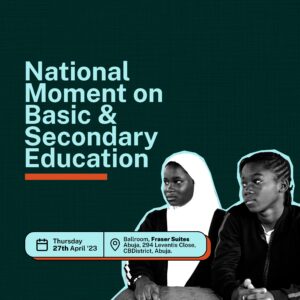 Leading global organisation that advocates for girl’s education, Malala Fund in collaboration with other civil society organisations has advised the incoming administration on how to overhaul Nigeria’s education.
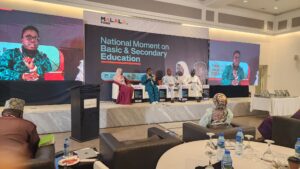
Co-Founder, Malala Fund, Malala Yousafzai and former First Lady of Kwara State, Toyin Saraki were in attendance at the National Moment on Basic and Secondary Education held on Thursday in Abuja, the nation’s capital to proffer solutions to address the country’s education system.
They advised there should be safe learning environments without the threat of conflict, violence and other crises for Nigerian students, and also stressed that governments are to uphold every child’s right to free, safe and quality education.
They said there are still more than 20 million children in Nigeria who remain out of school; in which over 60 per cent of them are girls. They also stated amend legislation to make senior secondary education mandatory and adopt a progressive gradual approach to implementation.
According to the CSOs, effort should be put behind increasing education funding to achieve Nigeria’s commitment to spend 4% of GDP for education by 2025.
It was developed by the Malala Fund Education Champion Network (ECN) in Nigeria in collaboration with development partners, the National Working Group on Basic and Secondary Education – a coalition of local and international CSOs – including Save The Children, Plan International, Civil Society Action Coalition on Education For All (CSACEFA).
The 12-page document titled “Reimagining Education in Nigeria: A Civil Society Manifesto” offers insight into gaps and opportunities in Nigeria’s education sector. The CSOs noted that despite being the second richest country on the continent, Nigeria spends less in percentage terms on education than all but one (Somalia) of the 10 poorest countries in Africa.
Malala stated, “You [education stakeholders] have an opportunity to work collectively to transform Nigeria’s education sector and uphold every child’s right to free, safe and quality education,” Yousafzai said, via virtual means.
It noted that the country has been slow to fully recognise and address the gendered barriers to education. This problem has been compounded by a poor understanding of how to make education gender transformative.
It revealed that gender-responsive education sector planning and budgeting are not mainstream practices, and where they do exist, there are often failures in implementation.
According to the United Nations, basic and secondary education is the bedrock of formal learning that transforms lives, eradicates poverty and drives sustainable development.
 However, a recent UNESCO Global Education Monitoring Report estimated that 20 million children and youth are excluded from education in Nigeria. This figure increased from 13 million in 2010, and implies that the country has the third largest out-of-school population in the world after India and Pakistan.
To ensure that Nigeria achieves Goal 4 of the United Nations Sustainable Development Goals (SDGs) by 2030, Yousafzai, in line with the three major advocacy “asks” in the manifesto, called on the next government to:
“First, make secondary education free – by amending legislation to make secondary education mandatory and adopt a progressive gradual approach to implementation.
“Secondly, fund more, and fund better – effort should be put behind increasing education funding to achieve Nigeria’s commitment to spend 4% of GDP for education by 2025.
“And lastly, make schools safe for all children and ensure that Nigerian children have access to safe learning environments without the threat of conflict, violence and other crises.
“Highlighting the benefits of basic education to Nigeria, the manifesto estimates a Gross Domestic Product (GDP) growth of up to $243 billion if every girl completes a full 12-year cycle of education. It further notes that equitable access to quality education, particularly for girls, can reduce conflict and security across the country by up to 37 per cent.”
“Education is the most powerful investment in our future, and this moment is an opportunity for us to encourage our new government to reimagine education for the country and find better ways to provide 12 years of safe, free, quality education for all,” Saraki, who is the founder of the Wellbeing Foundation Africa, said.
“Through amending legislation to make education free and compulsory up to senior secondary level, thus guaranteeing 12 years of uninterrupted education for Nigerian children, and by adopting a progressive universalisation approach to the implementation of 12 years of education, which prioritises support those at greatest risk of not learning; the poor, the discriminated against, girls, children with disabilities and those facing multiple disadvantages, Nigeria will be on track to achieving SDG 4”.
In her remarks, the Malala Fund Programme Director for Nigeria, Fatima Askira, noted that insecurity, socio-economic barriers and the Covid-19 pandemic are additional barriers that hinder girls’ access to education and retention in school up to senior secondary level.
Askira said, “Malala Fund’s work in Nigeria will continue to respond to these socio-economic and policy realities and build on learnings from our work to date in the country”.
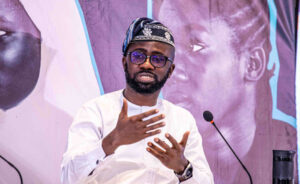 Also speaking, a Malala Fund Education Champion, Rotimi Olawale, called on the incoming administration at the federal and state levels to take urgent action in ensuring that no Nigerian child is denied their right to education.
“Nigeria is the giant of Africa, we need to lead better, we need to match our words with action”, Olawale, who is the Executive Director of YouthHub Africa, said during a panel session at the event.
“What we have seen is that funding is not well utilised, so we want to see better value for money at various levels – at the federal level and state level – gender responsiveness in the budgeting process; we want to see citizens’ participation in the budgeting process and we want government to increase their budgeting and financing”.
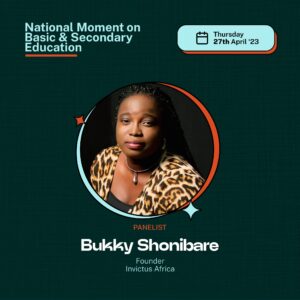 For another Malala Fund Education Champion, Bukky Shonibare, she urged incoming state governors to increase budgetary allocation for education to at least 20–22.5 per cent in their states.
“You are doing that not just as a responsibility that you have but to guarantee the future of every girl-child to have access to free, quality and safe education in Nigeria”, the Executive Director of Invictus Africa said.
Share this


