The Lagos State Blood Transfusion Service (LSBTS) has reached a significant milestone in its mission to guarantee safe blood for all residents, announcing that 72 per cent of participating blood banks scored above the 80th percentile in the newly concluded 2026 External Quality Assessment (EQA) Proficiency Testing.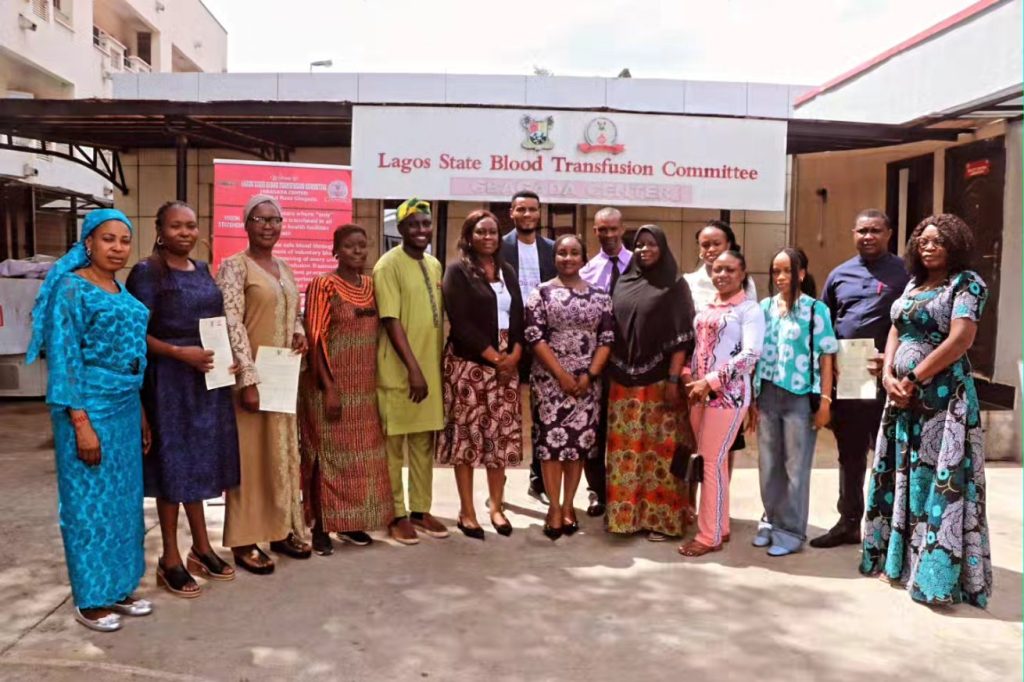
The results, presented on Friday, April 17, 2026, at the LSBTS Headquarters in Gbagada, signal a marked improvement in laboratory standards and clinical decision-making across both public and private health sectors in the state.
A Benchmark for Excellence
Speaking during the presentation ceremony, the Executive Secretary of LSBTS, Dr. Bodunrin Osikomaiya, highlighted that the EQA programme has become a critical benchmark for evaluating the competence of medical laboratory scientists and the operational integrity of blood banks.
“The 2026 exercise recorded notable improvements compared to the 2025 cycle,” Dr. Osikomaiya disclosed. She attributed this progress to a strategic combination of sustained training, rigorous regulatory enforcement, and sector-wide collaboration. Following gaps identified in the previous year, the Service implemented targeted hands-on practical sessions and continuous medical education to ensure practitioners could meet global standards.
High Compliance and Participation
The 2026 cycle saw an impressive turnout, with over 170 facilities enrolled. Dr. Osikomaiya praised the high submission rate, noting that both public and private operators demonstrated improved compliance by returning results within stipulated timelines.
“Participation in the 2026 cycle was impressive, reflecting improved compliance among both public and private sector operators,” she stated. “The outcomes are encouraging… it is evidence that investments in training and supervision are yielding measurable improvements in service quality.”
Zero Tolerance for Underperformance
While celebrating the success of the majority, the Lagos State Government issued a stern warning to facilities that failed to meet the required safety benchmarks. Dr. Osikomaiya emphasized that underperforming centres would face mandatory paid retraining and repeat assessments.
“Any facility operating below required benchmarks would not be allowed to function as a blood bank in 2026 without proper registration and demonstrated competence,” she warned, adding that persistent failure to comply would result in immediate closure to protect patient safety.
Technical Rigor and Documentation
The Quality Manager of LSBTS, Mr. Taiwo Oloko, provided further insight into the assessment, explaining that the evaluation went beyond technical accuracy. It included simulated scenarios to test reagent usage, blood group selection, and clinical decision-making.
Mr. Oloko also stressed the importance of administrative precision in saving lives. “Report documentation formed a critical part of the evaluation,” he noted. “Proper patient identification, labeling, signatures, and complete reporting are essential components of safe laboratory practice, just as much as analytical accuracy.”
Collaboration and Institutional Support
Recipients of the proficiency notifications credited their success to the state’s supportive framework. A representative from the Lagos State University Teaching Hospital (LASUTH) Blood Bank admitted that their improved performance was the result of deliberate retraining efforts following a poor showing the previous year.
Similarly, Mrs. Olutope Mofikoya, a Medical Laboratory Scientist from Options Medical Diagnostics, described the EQA as a vital tool that helped align their internal processes with global standards.
Dr. Osikomaiya concluded by appreciating Governor Babajide Olusola Sanwo-Olu and the state’s health leadership for funding the programme, ensuring that participating facilities bore no financial burden, thereby removing barriers to quality healthcare delivery in Lagos.
Share this