

The Lagos State Government has trained auditors in the Office of the State Auditor-General on Artificial Intelligence (AI), intelligent auditing and sustainability reporting to strengthen public sector accountability and improve the management of public resources.
The two-day capacity-building programme, themed “Future-Ready AI Auditor: From Manual Work to Intelligent Audit and Sustainability Disclosures,” commenced on Tuesday, November 10, 2026, at the Lagos Chamber of Commerce and Industry (LCCI) Conference and Exhibition Centre, Alausa, Ikeja.
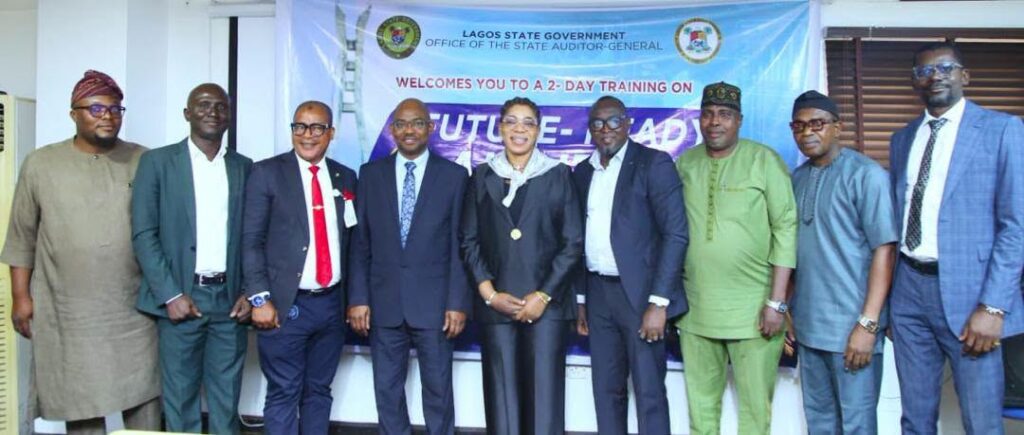
The training was organised to strengthen the professional competencies of state auditors and equip them with emerging skills and modern technological approaches needed to meet evolving demands in the auditing profession.
Auditor-General Urges Adoption of Emerging Technologies in Public Auditing
Declaring the training open, the State Auditor-General, Dr Olufunke Omolara Tayo-Makanjuola, emphasised the importance of continuous professional development and the adoption of emerging technologies in modern auditing.
She described sustainability reporting as an important accountability tool for assessing not only how public resources are utilised but also their contributions to sustainable development outcomes.
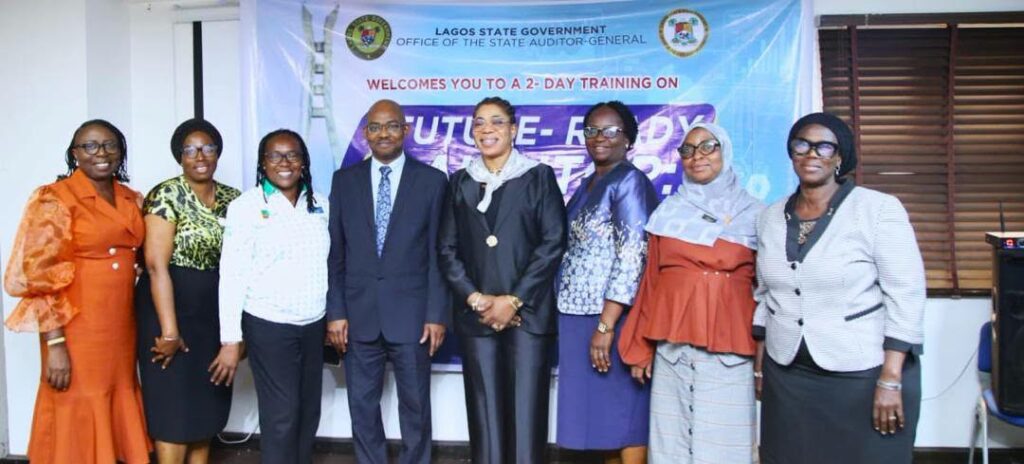
Tayo-Makanjuola urged auditors to familiarise themselves with evolving reporting standards and develop the professional capacity to assess sustainability-related information presented by organisations.
She also encouraged them to ask relevant questions and independently verify information presented by auditees to ensure transparency and accountability in public resource management.
The Auditor-General solicited the support and cooperation of the participants, emphasising her expectations of dedication, innovation and improved performance in their respective responsibilities to enhance effective service delivery.
ICAN Former President Trains Auditors on Sustainability Reporting Standards
A major highlight of the programme was a session on sustainability disclosure facilitated by Dr Innocent Okwuosa, former President of the Institute of Chartered Accountants of Nigeria (ICAN).
Okwuosa examined the International Financial Reporting Standards (IFRS) S1 and S2, which provide a framework for disclosing sustainability-related risks and opportunities, as well as their implications for organisational performance.
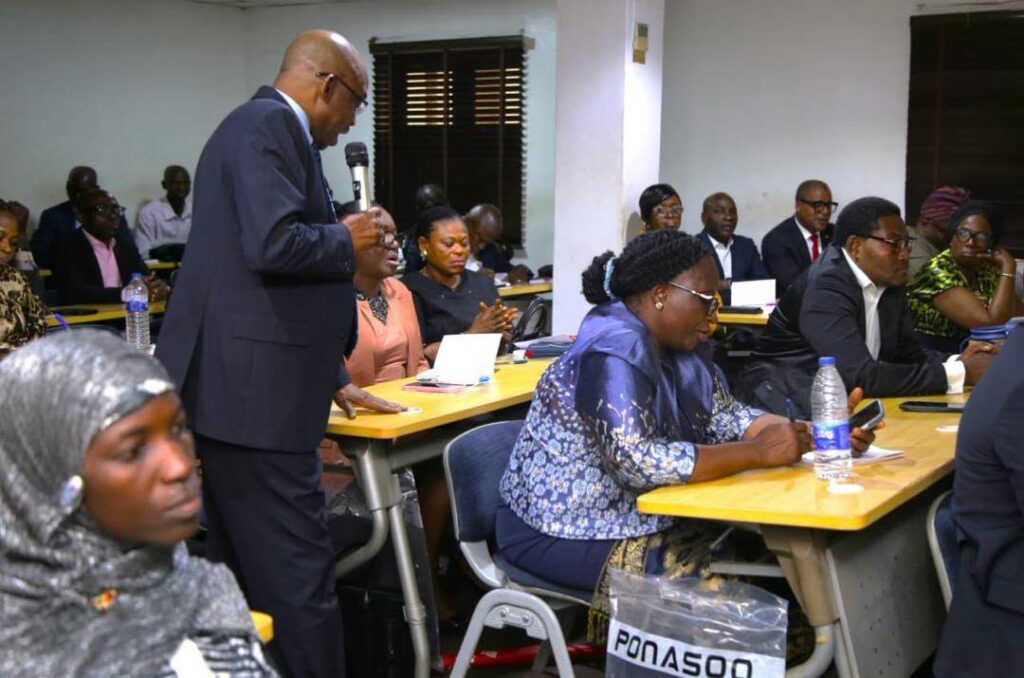
He explained the relevance of the standards in helping organisations communicate information about sustainability-related issues that could influence their operations and long-term prospects.
The former ICAN president also discussed the Environmental, Social and Governance (ESG) framework, highlighting environmental responsibility, social impact and corporate governance as important considerations in sustainability reporting.
The session featured practical case studies and interactive discussions designed to deepen participants’ understanding of the reporting standards and their application in assessing organisational performance and accountability.
Training Highlights AI’s Role in Audit Planning, Risk Detection
The programme also explored the transformative role of Artificial Intelligence and intelligent auditing in modern audit processes, particularly in audit planning, data analysis, risk identification and evidence-based decision-making.
Participants were exposed to technology-driven approaches capable of improving audit efficiency, strengthening the detection of irregularities and enhancing the quality and timeliness of audit reports.
The training further highlighted how the adoption of intelligent auditing practices could help auditors move beyond manual processes and deploy more effective methods in examining financial records and identifying potential risks.
The initiative forms part of the Lagos State Government’s commitment to strengthening public sector institutions, promoting accountability and ensuring the effective management of public resources.
Through continuous investment in the professional development of its audit workforce, the Office of the State Auditor-General is positioning its auditors to meet evolving professional demands and deploy contemporary auditing practices in support of transparency, good governance and sustained public confidence.
Share this


