In a decisive move to solidify its status as Nigeria’s leader in educational innovation, the Lagos State Government on Thursday launched a massive distribution of Hope-Edu Textbooks and Digital Learning Tablets to public secondary school students across the state.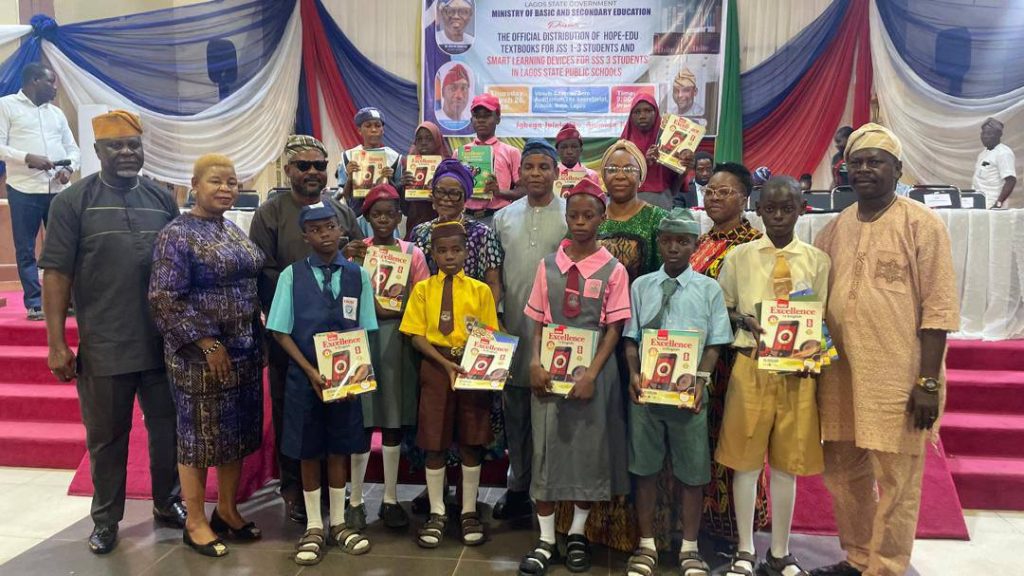
The initiative marks a transition from emergency pandemic-era responses to a structured, statewide digital reform, aiming to equip every student with the tools necessary to compete in a global economy.
Bridging the Digital Divide
The distribution is a core pillar of Governor Babajide Sanwo-Olu’s T.H.E.M.E.S Plus Agenda, which integrates education and technology as primary drivers for development. By providing smart learning devices to senior secondary students, the government is effectively blending traditional curriculum needs with 21st-century digital literacy.
Mrs. Abisola Dokunmu-Adegbite, Permanent Secretary of the Ministry of Basic and Secondary Education, emphasized that the rollout is more than a logistics exercise.
“This initiative is a deliberate step towards bridging the digital divide and aligning with the State’s agenda for social inclusion. We are equipping our learners with the tools required to thrive in a rapidly evolving global environment,” she stated.
A Strategic Investment in Meritocracy
During the ceremonial handover to the six Tutor-Generals and Permanent Secretaries of the various education districts, the Commissioner for Basic and Secondary Education, Mr. Jamiu Alli-Balogun, described the program as a milestone for social equity.
He noted that the provision of these materials is designed to reduce the financial burden on parents while fostering a culture of excellence within the classroom.
“The provision of these essential learning materials is a deliberate and strategic investment in the future of our children. We are fostering a culture of meritocracy and nurturing a generation of leaders who will drive innovation and prosperity,” Alli-Balogun emphasized.
Future-Proofing Lagos Students
The Ministry confirmed that the government has ensured a one-to-one ratio for smart tablets for every SS3 student in state public schools, alongside a comprehensive supply of textbooks for Junior Secondary learners.
By prioritizing high-quality, accessible resources, the state expects to see improved academic performance and increased motivation among both teachers and students. The Commissioner concluded by noting that the ultimate goal is to produce graduates who are not only academically sound but digitally competent and globally competitive.
Share this