
The Independent National Electoral Commission (INEC), the Office of the National Security Adviser (ONSA) and the Nigeria Police Force have pledged stronger collaboration to prevent election violence and ensure peaceful, credible and secure conduct of Nigeria’s 2027 General Elections.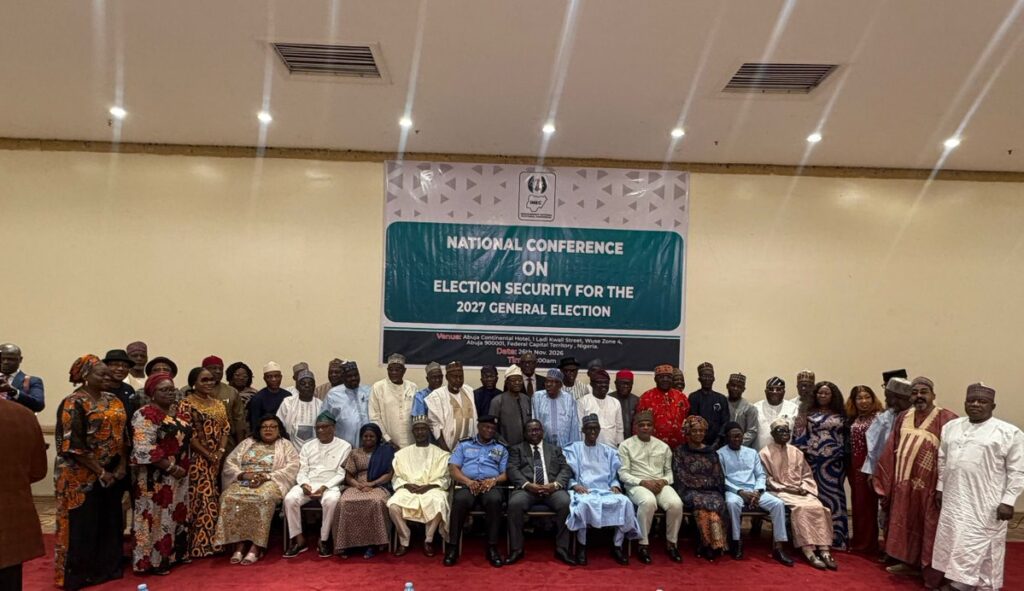
The commitment was made on Thursday, November 26, 2026, in Abuja, during the INEC–ONSA Strategic Election Security Conference, attended by INEC Chairman, Prof. Joash Amupitan, National Security Adviser, Mallam Nuhu Ribadu, and Inspector-General of Police, Tunji Disu.
The conference brought together heads of the armed forces, intelligence, paramilitary and law enforcement agencies, as well as INEC National Commissioners and Resident Electoral Commissioners from the 36 states and the Federal Capital Territory (FCT).
The meeting comes amid growing concerns over political violence, attacks on campaign convoys and party supporters, and other security threats ahead of the elections.
INEC Raises Concerns Over Campaign Violence
Speaking at the conference, Amupitan described the meeting as an operational platform for assessing emerging threats and improving coordination among security agencies ahead of the polls.
He said the gathering was intended to be “an operational war-room” and “not a ceremonial gathering”, stressing the need for practical measures to address security challenges before election day.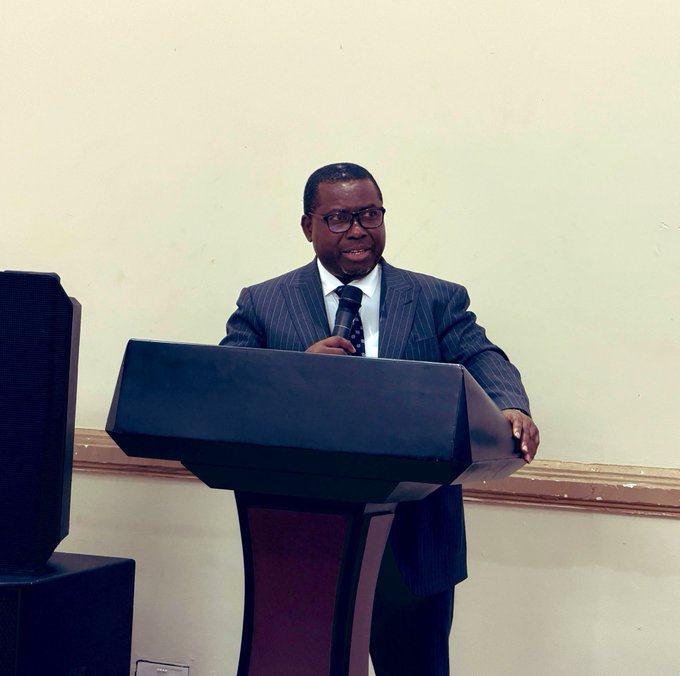
The INEC Chairman disclosed that 51 days remained before the Presidential and National Assembly elections scheduled for January 16, 2027, while Governorship and State Houses of Assembly elections would hold on February 6, 2027.
He emphasised the connection between electoral administration and national security, stating that “INEC manages the ballot; security agencies secure the environment that makes the ballot possible.”
Amupitan condemned the increasing cases of political intolerance and physical attacks on campaign convoys, party offices and supporters since the commencement of political campaigns in August 2026.
He identified Lagos, Edo, Ekiti, Enugu, Ebonyi, Delta, Cross River, Oyo and Benue among the states affected by the incidents.
“No political ambition is worth the blood of a single Nigerian,” he said.
He also condemned the harassment and attacks on INEC officials, including members of the Commission’s leadership, regular staff and ad hoc personnel, describing them as “non-partisan public servants discharging a sacred constitutional mandate”.
The INEC Chairman maintained that the Commission would not compromise its neutrality under pressure, declaring that it would “neither be intimidated nor blackmailed into compromising our neutrality”.
He warned that attacks on INEC personnel, facilities and electoral materials would attract the full weight of the law.
Amupitan also placed responsibility on political party leaders to ensure that their candidates, campaign councils and youth groups conduct themselves peacefully.
He described the practice of signing peace agreements in Abuja while allowing political violence at the state level as “a contradiction our democracy can no longer afford”.
According to him, election-related violence could discourage voter participation, threaten the deployment of more than 1.41 million ad hoc election personnel and undermine stability after the elections, with possible implications for the wider West African sub-region.
INEC Identifies Digital Threats, Insurgency
Beyond political thuggery, the INEC Chairman identified insurgency, banditry, separatist agitation, cultism and digital threats as major security concerns for the 2027 elections.
He specifically highlighted the growing use of deepfakes, voice cloning and coordinated disinformation campaigns, noting that election security planning must also address threats to information integrity and digital systems.
He said cyber resilience and rapid responses to false information should form part of the security arrangements for the elections.
Amupitan further stressed the need to strengthen coordination between INEC and security agencies at the grassroots, noting that agreements reached at the national level would not automatically translate into effective operations across the states.
He urged Resident Electoral Commissioners and Commissioners of Police to work as co-pilots in their respective states.
He added that coordination under the Inter-Agency Consultative Committee on Election Security (ICCES) must extend to every Local Government Area and Registration Area.
According to him, Divisional Police Officers, local Department of State Services (DSS) commanders, Nigeria Security and Civil Defence Corps (NSCDC) officers and INEC Electoral Officers must “know one another by name” and maintain real-time communication channels.
Electoral Act 2026 Introduces Higher Penalties
On enforcement, Amupitan said the Electoral Act 2026 increased penalties for electoral offences five-fold, with individuals facing fines of up to ₦5 million or 12 months’ imprisonment, while political parties could be fined up to ₦10 million for initial breaches.
He explained that Section 148 of the Act empowers INEC legal officers to prosecute electoral offenders after receiving investigative case files from the police and other relevant agencies.
He urged Commissioners of Police to ensure that suspects, forensic exhibits, video evidence and witness statements are properly documented and promptly forwarded to the Commission.
The INEC Chairman also highlighted operational challenges affecting ICCES, including the absence of a statutory legal framework, weak inter-agency coordination, unclear responsibilities and communication gaps among security organisations.
He said the differences between the powers of INEC officials and security personnel on election day also needed to be addressed through a proposed legal framework and Code of Conduct for ICCES operations.
He called for ICCES to be formally recognised “as the statutory platform for coordination”.
INEC Announces Nationwide Mock Accreditation Exercise
As part of preparations for the elections, Amupitan announced that the Commission would conduct a nationwide mock accreditation and result transmission exercise on Saturday, November 28, 2026, across the 36 states and the FCT.
He directed Resident Electoral Commissioners and Commissioners of Police to treat the exercise as a full-scale operational rehearsal.
The exercise, he said, would test communication systems, assess emergency response times around mock polling centres and identify potential security gaps ahead of the elections.
Concluding his remarks, Amupitan reiterated that INEC and security agencies must remain independent of political interests.
“Our sole allegiance is to the Constitution of the Federal Republic of Nigeria, the Electoral Act 2026, and the sovereign right of every eligible citizen to vote in peace and have that vote counted accurately,” he said.
NSA Assures Nigerians of Government’s Commitment
In his remarks, Ribadu assured Nigerians that the Federal Government would provide the security required for peaceful, transparent and credible elections.
He said the administration of President Bola Ahmed Tinubu was “committed to providing the security necessary for peaceful, transparent, and credible elections”.
“The duty of government and the security agencies is to protect voters, electoral officials, and the wider population before, during, and after the election,” the NSA said.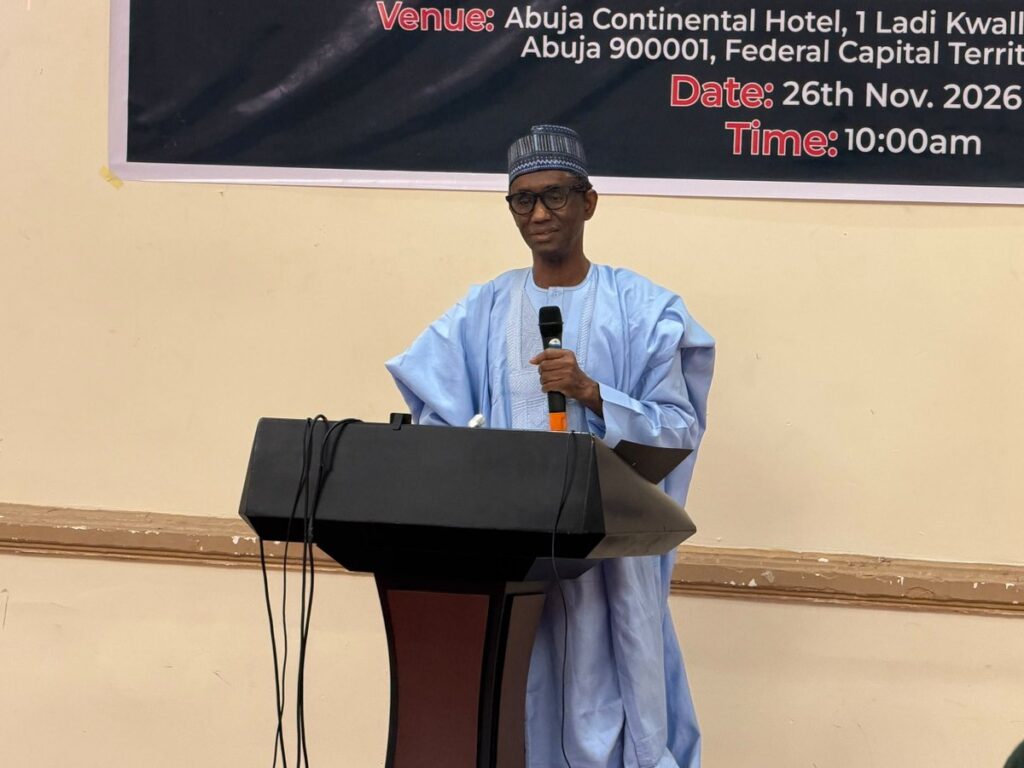
Ribadu stressed that INEC’s constitutional independence “must be protected and respected”, adding that security agencies “will discharge their responsibilities impartially and in accordance with the law”.
He said recent incidents of election-related violence demonstrated the need for early preparation, preventive action and stronger early warning systems to ensure equal protection for Nigerians regardless of their political affiliations.
The NSA also raised concerns about the spread of misinformation on social media, warning that false narratives could heighten tensions and trigger violence.
“Social media is a big problem, creating false narratives, exaggeration,” he said, adding that false claims could “trigger trouble” between people.
He appealed to political actors to reject violence and respect the rights of others, while urging the media, civil society organisations and election observers to promote accountability through fair and objective reporting.
Police Pledge Impartiality and Improved Security Coordination
Also speaking, Inspector-General of Police Tunji Disu reaffirmed the Nigeria Police Force’s responsibility to provide a safe environment for the conduct of the elections.
He said the Force remained committed to “professionalism, impartiality, discipline, and respect for the rights of all citizens”.
Disu described the conference as an important opportunity to strengthen collaboration between INEC, the police and other security agencies.
He identified intelligence sharing, coordinated security deployments, early threat detection and timely responses as key areas requiring improvement ahead of the elections.
“We can prevent violence and ensure that Nigerians exercise their democratic rights without fear or intimidation,” the Inspector-General said.
He urged participants to develop practical strategies for addressing emerging security challenges before, during and after the 2027 General Elections.
Share this