

The Federal Government has strongly reaffirmed its commitment to boosting investments in health, education, nutrition, and skills development, describing Nigeria’s population as its greatest asset and the ultimate driver of sustainable national development.
Speaking on Wednesday at the Human Capital Development Summit for Northern Nigeria in Abuja, the Coordinating Minister of Health and Social Welfare, Prof. Muhammad Ali Pate, CON, declared that unlocking the nation’s economic potential requires deliberate investments to build a healthier, better-educated, and highly productive population. He argued that nurturing the capabilities of citizens is just as vital to the nation’s future as building roads and bridges.
“Investment in human capital is as critical as investment in physical infrastructure. Improved health, quality education, and skills development are essential to increasing productivity, reducing poverty, and strengthening national competitiveness,” stated Prof. Muhammad Ali Pate, Coordinating Minister of Health and Social Welfare.
Driving Healthcare Reforms via the Renewed Hope Agenda
The Minister outlined several major transformations currently reshaping the country’s healthcare system under President Bola Ahmed Tinubu’s Renewed Hope Agenda. Key among these interventions is the expansion of Primary Health Care (PHC) services, targeted improvements in maternal and child health, and comprehensive workforce training to keep Nigerian medical professionals sharp and efficient.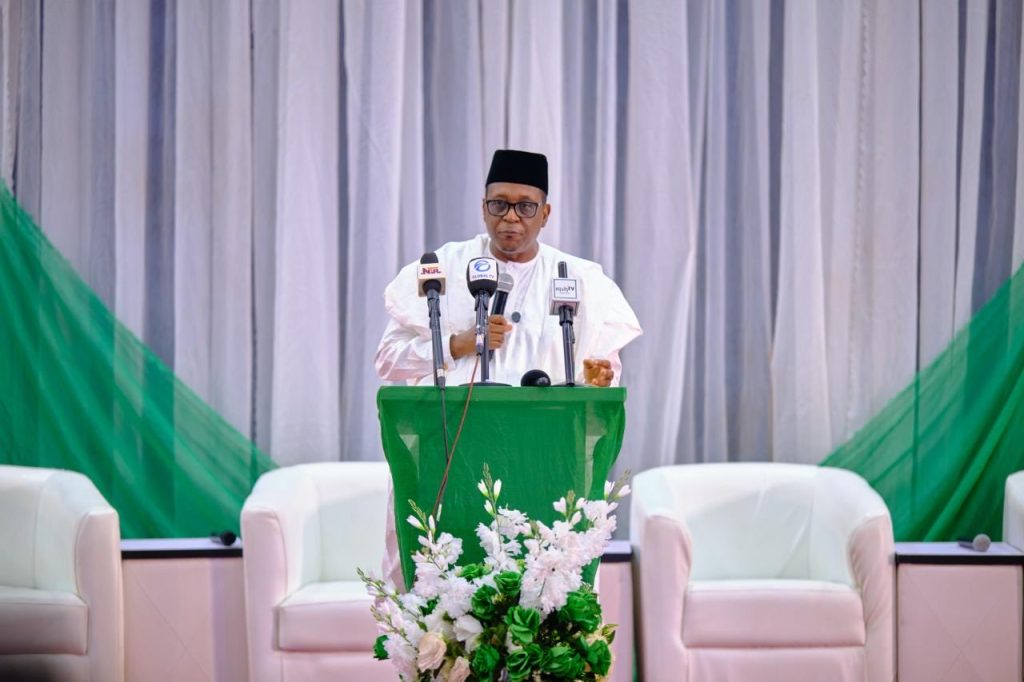
Furthermore, the government is actively upgrading tertiary healthcare infrastructure, promoting domestic pharmaceutical manufacturing to reduce reliance on imported medicines, and driving a sector-wide digital transformation. Prof. Pate noted that these initiatives are anchored by a Sector-Wide Approach (SWAp), which drastically strengthens overall governance and accountability within the health system.
A Call for Subnational Collaboration and Equity
While acknowledging that different regions face distinct socio-economic challenges, the Minister pointed out that eliminating regional disparities is mandatory for achieving truly balanced national growth. He made it clear that while the federal administration can design policies and launch sweeping reforms, the heavy lifting of execution rests heavily on local leadership.
To achieve lasting progress, Prof. Pate challenged subnational leaders to aggressively fund projects that improve classroom learning outcomes, shore up local health centers, and create economic opportunities for women and youth. The Federal Ministry of Health and Social Welfare remains steadfast in its mandate to advance strategies that save lives, reduce physical and financial pain, and guarantee quality health outcomes for every citizen across Nigeria.
Share this


