
The European Union has reaffirmed its commitment to strengthening its strategic partnership with Nigeria’s Economic and Financial Crimes Commission, aiming to step up joint efforts in anti-corruption, cybercrime prevention, specialized training, and the prosecution of financial crimes. 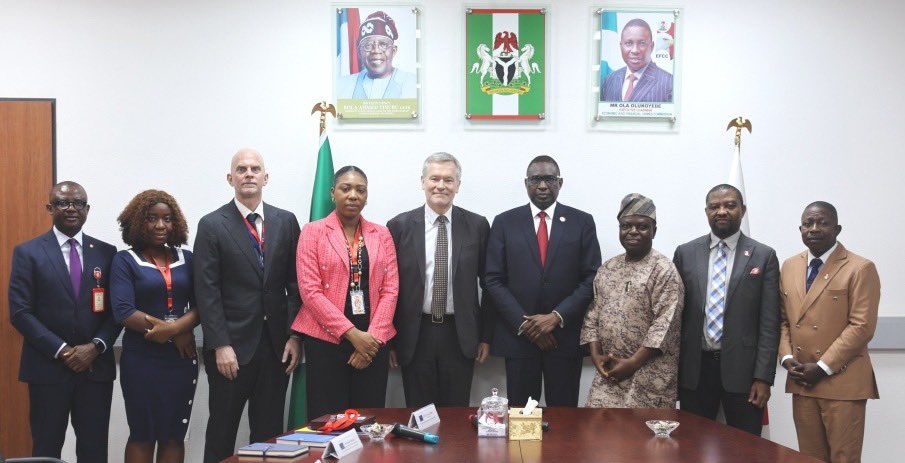
EU Ambassador to Nigeria, Gautier Mignot, pledged this support in Abuja on Tuesday, July 28, 2026, during an official courtesy visit with a high-level delegation to the EFCC corporate headquarters.
Building Trust for Foreign Investors
Speaking on the strategic importance of the commission to the nation’s economic health, Ambassador Mignot underscored that a strong anti-graft agency is vital for drawing international businesses to the country.
“The role of the EFCC is so important for us, both for the stability and prosperity of Nigeria and for our partnership, to be able to tell our potential investors: you can safely come to Nigeria,” Mignot stated. “There is a compliant business environment because you have strong institutions like the EFCC to make sure that this is the place.”
He noted that European firms pay strict attention to compliance and regulatory standards, adding that a transparent operational environment builds investor confidence and drives long-term economic growth.
Targeting Cybercrime and Capacity Building
Reflecting on the long-standing collaboration between both entities—largely facilitated through the Rule of Law and Anti-Corruption (RoLAC) programme—Mignot emphasized that the EU plans to step up technical support.
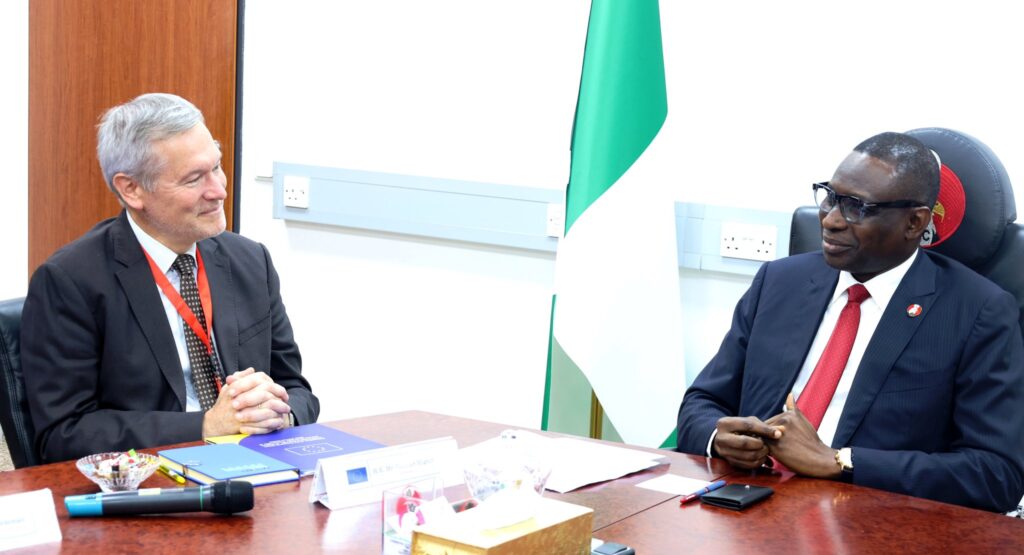
“We are very much committed to continuing this partnership, doing whatever we can do to strengthen the institution, improve investigative effectiveness and prosecution,” he assured.
Addressing the rising prevalence of digital fraud, the Ambassador revealed plans to train EFCC personnel through the Cybercrime Response Centre, with operational details currently being finalized. Additionally, the EU plans to reinforce its support for Anti-Money Laundering and Countering the Financing of Terrorism (AML/CFT) compliance.
Expanding Economic and Institutional Cooperation
Highlighting the broader scope of EU-Nigeria relations, Mignot mentioned that the EU and its 14 member nations remain major investment and trade allies for Nigeria. He explained that governance issues remain a priority enabler for mobilizing European private investments into Nigeria’s local manufacturing and agricultural sectors.
Responding to the delegation, the Executive Chairman of the EFCC, Ola Olukoyede, affirmed the commission’s position as Nigeria’s primary agency in leading the charge against financial fraud.
“Over the years, we have strived to ensure that the country is rid of economic and financial crimes,” Olukoyede stated, highlighting recent milestones the agency has recorded in curbing economic fraud, cybercrime, and terrorism financing.
Share this


