

The Economic Community of West African States (ECOWAS), in collaboration with the German Agency for International Cooperation (GIZ), Swiss Cooperation and civil society organisations, has called for stronger regional cooperation and gender-inclusive policies to address climate-induced migration in West Africa.
The organisations raised the call at a high-level side event held during the 31st United Nations Climate Change Conference (COP31), warning that up to 32 million people could be affected by climate-related human mobility in the region by 2050.
The session, themed “Strengthening the Evidence Base for Human Mobility in the Context of Climate Change in West Africa: Gender, Youth and Climate Mobility,” brought together representatives of youth and women’s groups, researchers, ECOWAS directors and development partners.
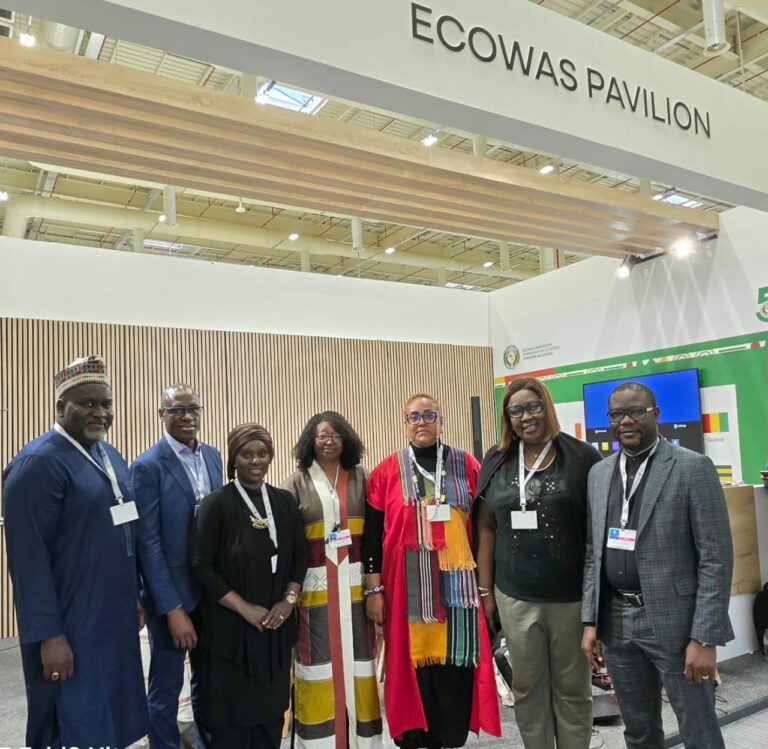
Participants examined the gender and generational dimensions of climate-related migration and explored practical approaches to addressing its emerging challenges.
They also stressed that climate-induced migration should not be treated solely as a humanitarian emergency or security concern but as an opportunity to strengthen resilience and promote proactive adaptation strategies across the region.
ECOWAS Warns 32 Million Could Be Affected by Climate Mobility by 2050
At the side event, participants highlighted the growing threat of climate-induced human mobility in West Africa, with projections indicating that up to 32 million people could be affected by 2050.
They noted that environmental degradation, climate shocks and other climate-related pressures could increasingly influence population movements across the region.
According to the participants, the scale of the projected impact requires governments to move beyond emergency responses and develop policies that anticipate migration patterns while addressing the underlying effects of climate change.
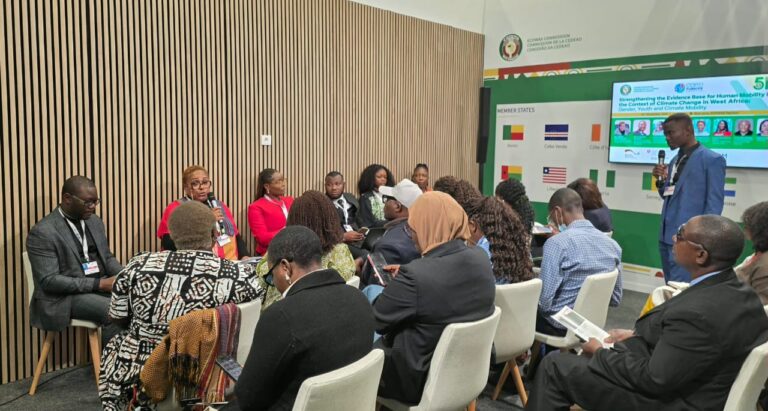
They called for stronger regional partnerships and sustained investment in adaptation measures to help communities withstand climate-related challenges and reduce the risks associated with displacement.
The discussions further emphasised that climate-related migration could present opportunities to strengthen resilience if governments adopt proactive and coordinated approaches.
Women and Young People Face Greater Risks from Climate-Induced Migration
Participants at the event highlighted the different ways women, girls and young people experience the effects of environmental degradation, climate shocks and population displacement.
They stressed that these groups often face specific vulnerabilities and challenges, making it necessary for governments to ensure that climate and migration policies reflect their experiences and needs.
The discussions also underscored the importance of reliable, gender-disaggregated and youth-sensitive data in understanding the impact of climate mobility on affected populations.
Participants maintained that stronger evidence would enable governments and development institutions to formulate effective policies, anticipate migration trends and design interventions that protect vulnerable communities.
The ECOWAS Gender Development Centre (EGDC) also highlighted its ongoing work on gender and climate mobility, providing insights into efforts to integrate gender considerations into regional climate and migration responses.
Regional Cooperation, Reliable Data Key to Tackling Climate Mobility
The event further highlighted the need for stronger regional coordination, noting that climate-related risks, population movements and migration corridors frequently extend beyond national boundaries.
Participants urged West African countries to deepen cooperation through existing ECOWAS frameworks to develop coordinated responses to the interconnected challenges of climate change, migration and human security.
They also emphasised that improving the availability and quality of data on climate mobility would help governments and development partners make informed decisions and develop more effective interventions.
During the session, the ECOWAS Gender Development Centre announced its forthcoming flagship programme, scheduled for launch on Saturday, November 14, at 1:00 p.m. at the Africa Pavilion.
The programme is expected to strengthen engagement on the intersection of gender, youth and climate mobility, with particular attention to the protection, inclusion and empowerment of women and young people affected by climate-related migration.
The COP31 side event reinforced calls for inclusive policymaking, stronger research, regional partnerships and sustained investment in climate adaptation, with participants stressing that placing women and young people at the centre of climate mobility policies would be critical to building a more resilient West African region.
Share this


