
By Peter Emmanuel |
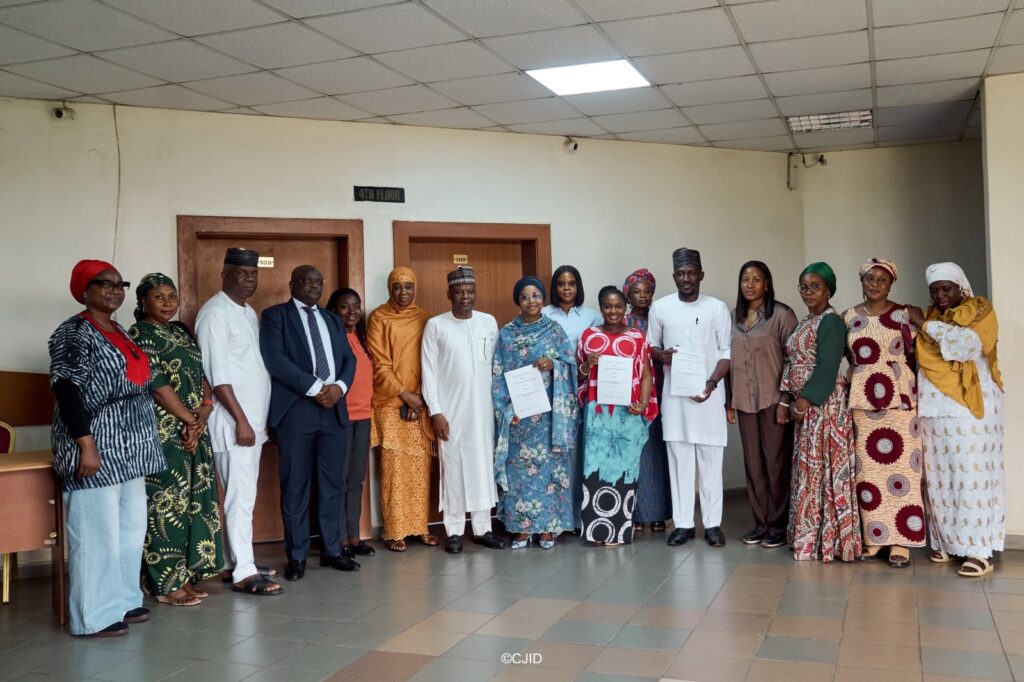
The Centre for Journalism Innovation and Development (CJID) and the National Human Rights Commission (NHRC) have signed a three-year Memorandum of Understanding (MoU) to strengthen press freedom monitoring and improve institutional responses to attacks against journalists in Nigeria.
The agreement, signed at the NHRC headquarters in Abuja on September 18, 2026, provides for the integration of verified data from CJID’s Press Attack Tracker into the Commission’s monthly human-rights dashboard.
The partnership also covers journalist safety, monitoring of press-freedom violations, joint advocacy, capacity building, public awareness and other initiatives aimed at promoting human rights and protecting the media.
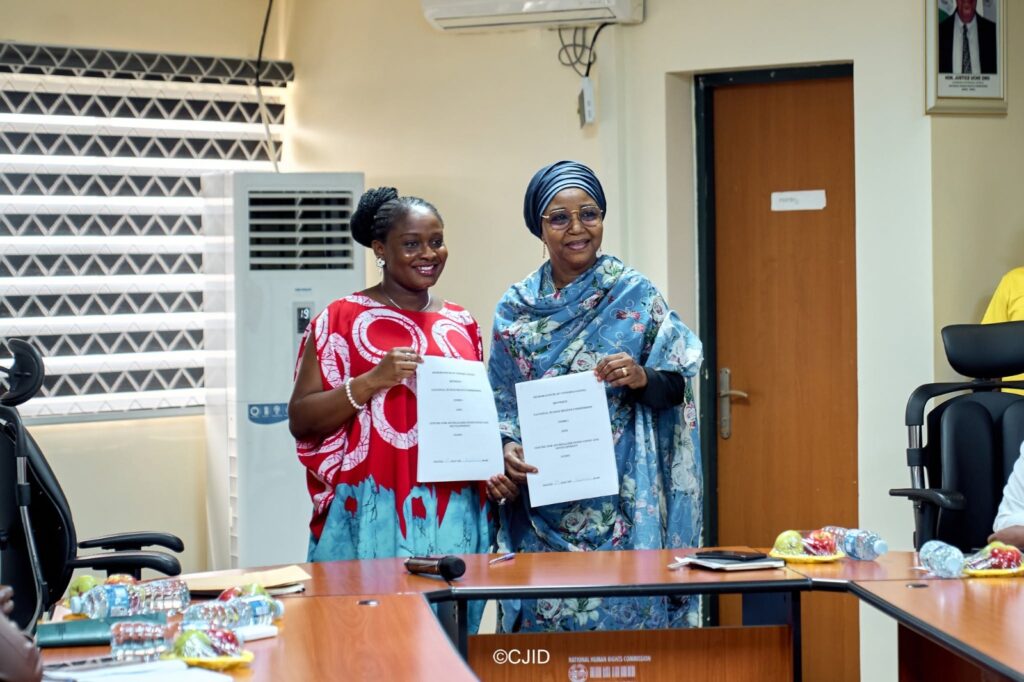
The Executive Secretary of the NHRC, Dr Tony Ojukwu, was represented at the signing by the Commission’s Director of Legal Services and Enforcement, Ms Rabi Auwalu Anwar, Esq., alongside other directors and senior officials.
Anwar said the partnership aligns with the statutory mandate of the Commission under the National Human Rights Commission Act 1995, as amended, stressing that the NHRC takes its responsibility to protect human rights seriously.
“The Commission is a primary agency of government established to ensure the rights of all Nigerian and non-Nigerian citizens within the Nigerian territory, and we take our mandate very seriously,” she said.
Partnership to Integrate Press Attack Data Into NHRC Dashboard
The MoU will enable verified information collected through CJID’s Press Attack Tracker to become part of the NHRC’s broader human-rights monitoring process.
Under the arrangement, CJID will periodically provide verified Press Attack Tracker data to the Commission, which will incorporate the information into its monthly human-rights dashboard.
The initiative is expected to provide the Commission with additional evidence on attacks against journalists and press-freedom violations, including information on the nature and patterns of such incidents.
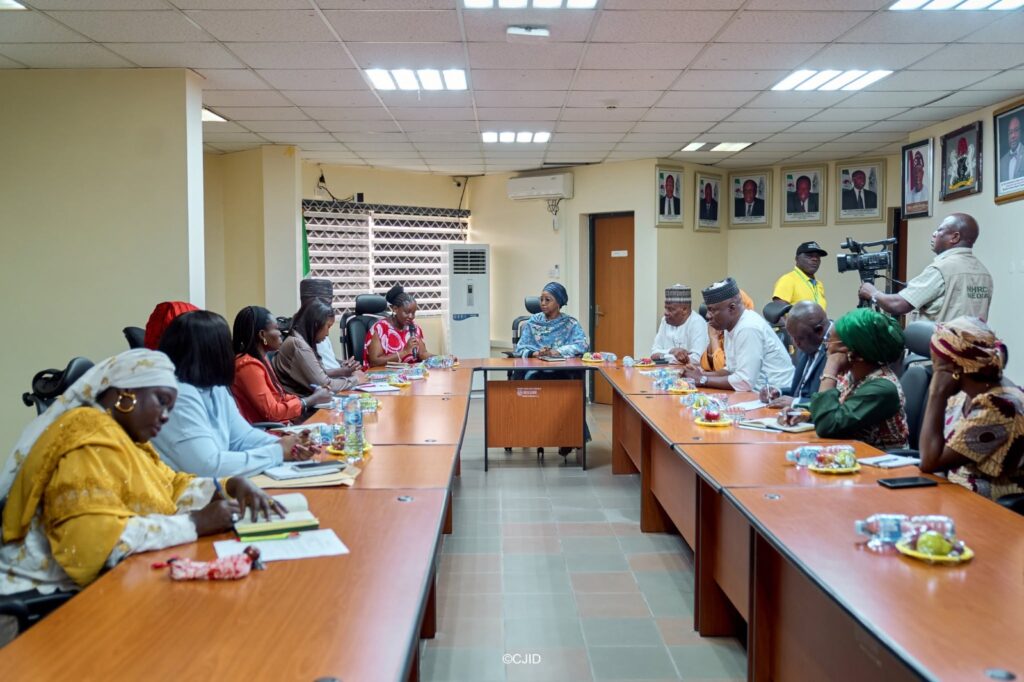
CJID’s delegation to the signing was led by its Director of Operations, Adebimpe Abodunde, alongside Bisan Habu, Deputy Director, Partnerships and Special Projects, and other members of the organisation.
Habu said the agreement builds on an existing relationship between the two organisations, including their collaboration during World Press Freedom Day in May 2026.
According to him, discussions following the earlier engagement centred on how both organisations could work more closely on journalist safety, press freedom and the use of evidence to support institutional responses to violations.
Abodunde said the partnership creates an opportunity to connect CJID’s documentation of press-freedom violations more directly with the NHRC’s human-rights mandate.
“For us, this is an important development. Attacks against journalists documented through PAT will become part of a broader national picture of the human rights situation in Nigeria,” she said.
She added that the arrangement could provide greater institutional attention to documented attacks and help inform appropriate responses where necessary.
CJID Records 1,899 Verified Attacks on Journalists
Abodunde said CJID has systematically documented attacks on journalists and press-freedom violations through its Press Attack Tracker, an initiative launched in 2017.
The tracker currently contains 1,899 verified attacks, with historical records dating as far back as 1986. The database covers five West African countries and provides information on the nature, location and patterns of attacks.
Abodunde said the figures represent individual journalists who have faced various forms of violations, including assault, detention, threats, harassment and restrictions on their ability to carry out their professional duties.
“Behind those numbers are journalists who have been assaulted, detained, threatened, harassed or prevented from doing their work,” she said.
She explained that documenting the incidents over time also makes it possible to identify patterns, including where attacks occur, who is responsible, the forms they take and changes in the environment in which journalists operate.
“Documentation is one part of that responsibility. We also need credible pathways for evidence to reach institutions with the mandate to respond,” Abodunde said.
She said an attack on a journalist should also be viewed within the broader context of human rights, noting that violations against journalists can affect the media’s ability to inform the public and citizens’ ability to participate meaningfully in democratic society.
MoU Covers Journalist Safety, Advocacy and Capacity Building
Beyond data integration, the three-year agreement provides for joint advocacy, capacity building and public awareness initiatives around press freedom and human rights.
The partnership is also expected to support broader efforts aimed at improving journalist safety and strengthening attention to violations affecting media practitioners.
CJID will further establish a dedicated press freedom and human rights reporting category at its annual CJID Excellence in Journalism Awards.
The new award category is expected to provide additional recognition for journalism that documents issues relating to press freedom and human rights.
Anwar said the Commission does not partner with every organisation that approaches it, noting that CJID had met the necessary criteria for the partnership.
“It is not every organisation that reaches out to the Commission for a partnership that we just roll out the red carpet and partner with them. You have met all the necessary criteria, and we are more than happy to work with you,” she said.
The partnership places verified evidence of attacks against journalists within a broader institutional human-rights monitoring framework, while creating a formal channel for collaboration between the NHRC and CJID on press freedom, journalist safety and accountability.
The two organisations are expected to implement the agreed areas of collaboration throughout the three-year period covered by the MoU.
Share this


