

By Michael Omotosho |
The Brain Builders Youth Development Initiative (BBYDI) has selected 20 young women in Kaduna State for a six-month artificial intelligence fellowship aimed at helping them gain skills and compete in Nigeria’s growing digital economy.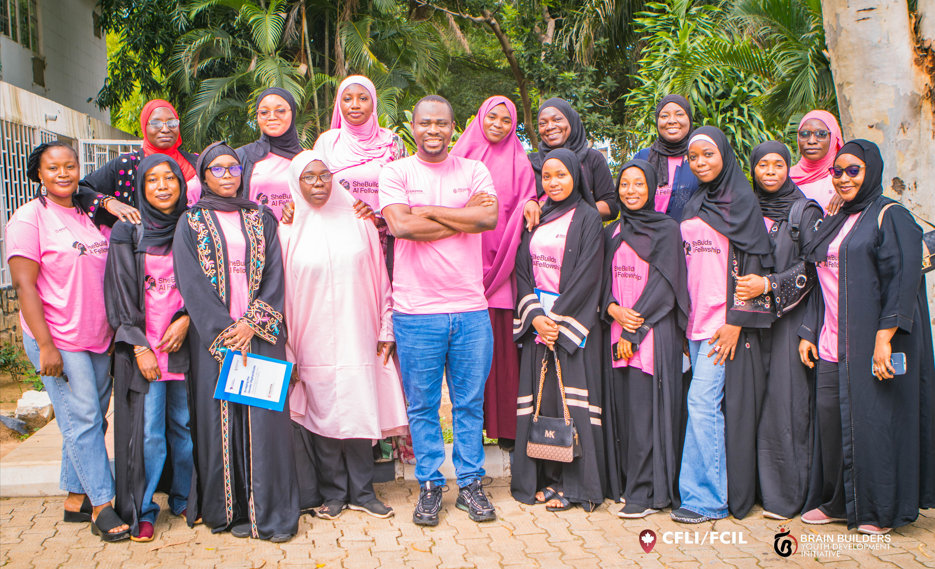
The SheBuilds AI Fellowship, supported by the Government of Canada through the Canada Fund for Local Initiatives (CFLI), was launched on Thursday in Kaduna.
The programme also aimed at tackling the gender digital divide, which BBYDI says continues to limit women’s access to technology, jobs and other opportunities in the digital space.
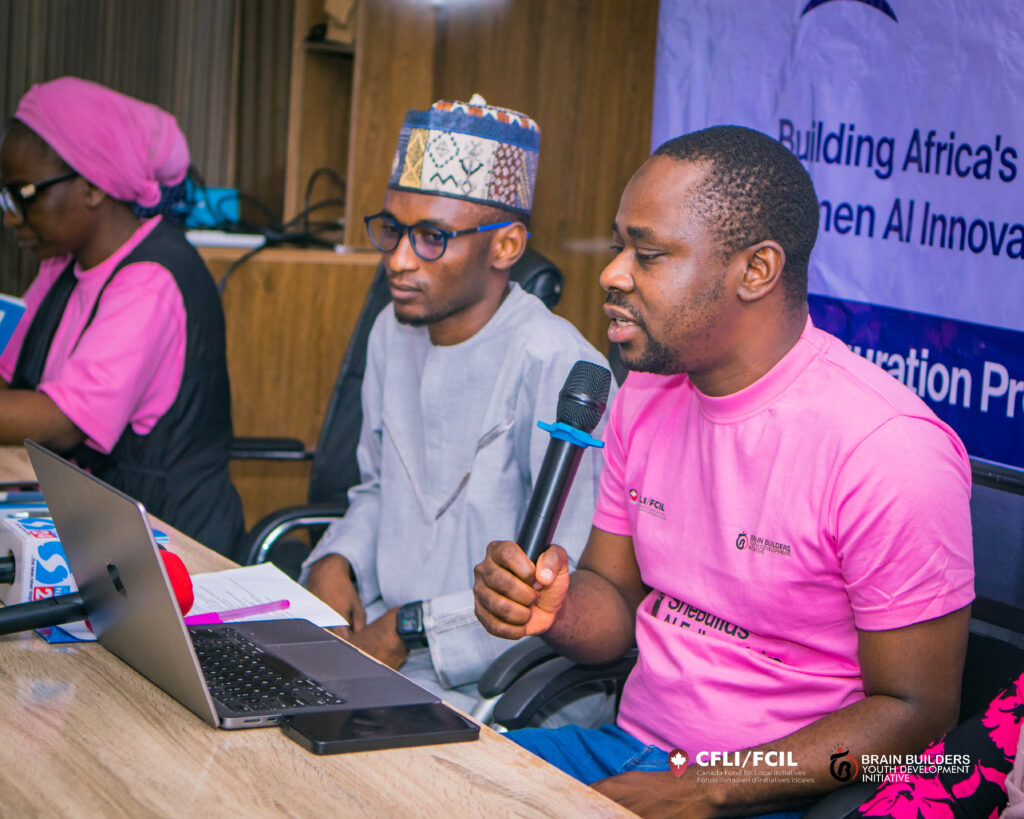
At the launch, BBYDI Global Director, Olasupo Abideen Opeyemi, disclosed that the organisation received 473 applications for the fellowship.
He said 52 applicants were shortlisted for interviews before 20 women were chosen for the first cohort. Another 20 women will be selected for the second cohort.
Abideen said the number of applications showed that women in northern Nigeria are interested in technology despite the barriers they face.
“This number alone is evidence that demolishes a dangerous myth — the myth that young women in northern Nigeria are not interested in technology. They are interested. What they lack is not ambition; it is access,” he said.
Women Still Lag Behind in Digital Access
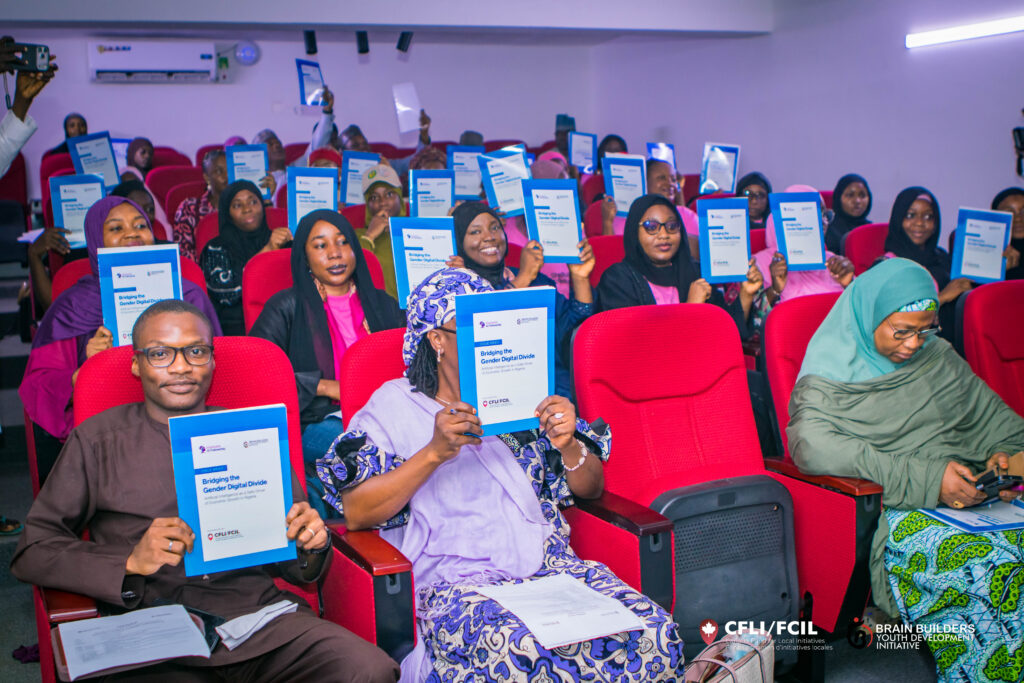
The fellowship was unveiled alongside a new BBYDI issue brief titled “Bridging the Gender Digital Divide: Artificial Intelligence as a Safe Driver of Economic Growth in Nigeria.”
The report draws attention to the gap between men and women in Nigeria’s digital economy.
According to the organisation, the ICT sector contributed 11.31 per cent to Nigeria’s real GDP in the first quarter of 2026. Yet women remain 26 per cent less likely than men to use mobile internet, while they occupy fewer than one in five technology jobs in the country.
Abideen warned that allowing the gap to continue could have consequences for Nigeria’s economic growth.
“Nigeria does not face a choice between growth and inclusion. It faces a choice between inclusive growth and diminished growth,” he said.
He also raised concerns about the growing risks women face online, particularly as artificial intelligence becomes more widely used.
BBYDI cited projections that up to 70 million Nigerian women and girls could be exposed to AI-facilitated online abuse every year by 2030 if current trends continue.
“Digital inclusion that is not safe is not sustainable,” Abideen said.
Fellows to Learn AI and Data Skills
The selected women will spend six months learning Python programming, data analysis, machine learning, deep learning and generative AI.
They will also be expected to develop and pitch AI solutions to real-life problems in areas such as health, agriculture, education and governance.
Abideen said the curriculum had been reviewed by AI practitioners and industry experts to ensure that the training is relevant to the needs of the industry.
The fellowship will not focus only on technical skills. Participants will also receive training in leadership, communication, personal branding and CV writing, alongside mental health support.
They will visit technology hubs and take part in a rotating “Class Governor” system designed to give each fellow an opportunity to take on leadership responsibilities.
Support to Continue After Training
BBYDI said its support for the participants will continue after they complete the fellowship.
According to Abideen, the organisation and its partners will help connect the fellows to internships, jobs and remote work opportunities in Nigeria and beyond.
They will also be supported to participate in technology conferences, hackathons and other national and international opportunities.
The organisation’s issue brief also contains recommendations for government, lawmakers and technology companies.
BBYDI called on the Federal and Kaduna State governments to include specific gender targets, budgets and sex-disaggregated data in the implementation of the National Artificial Intelligence Strategy and the Three Million Technical Talent programme.
It also urged the National Assembly to strengthen laws against technology-facilitated gender-based violence, while calling on technology companies to examine their systems for gender bias and set measurable targets for employing women.
The organisation further urged parents, community leaders and religious leaders to encourage girls to take part in the digital economy.
“Every girl kept offline is a national asset kept idle,” BBYDI said.
Canada, Partners Commended
Abideen thanked the Government of Canada and the High Commission of Canada in Nigeria for supporting the fellowship.
He also acknowledged the Yandytech Community and other technology stakeholders for their contribution to the initiative and the technology ecosystem in northern Nigeria.
The launch featured the unveiling of the 20 fellows, goodwill messages from government representatives and stakeholders, remarks from some of the selected participants and a question-and-answer session with journalists.
The fellows had earlier attended an orientation programme on Monday, where they met their facilitators and mentors ahead of the start of the training.
Share this