

In a powerful call to action during the 2026 International Women’s Day celebration, the Honourable Commissioner for the Ministry of Commerce, Cooperatives, Trade, and Investment (MCCTI), Mrs. Folashade Bada-Ambrose, challenged policymakers at both federal and state levels to dismantle the systemic hurdles currently impeding women.
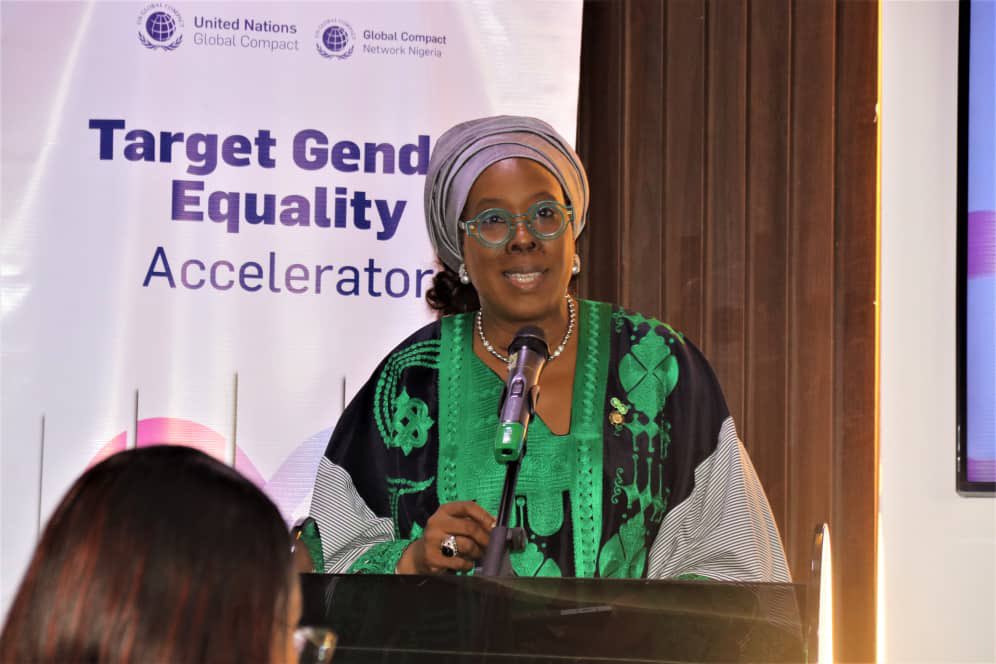
The Commissioner emphasized that the time for symbolic gestures has passed, urging the immediate implementation of gender affirmative strategies designed to break structural barriers across education, employment, business ownership, and political participation.
The Economic Imperative of Equality
Addressing a high-level audience at an event organized by the United Nations Global Compact Network Nigeria in partnership with the Danish International Development Agency, Bada-Ambrose underscored the profound economic consequences of gender disparity. She highlighted recent research indicating that closing the gender gap in leadership and employment is not merely a social goal but a macroeconomic necessity. According to the Commissioner, achieving parity is a proven catalyst for national productivity, enhanced global competitiveness, and a significant expansion of the Gross Domestic Product (GDP), creating a ripple effect of prosperity that sustains families and states alike.
A Mandate for Tangible Transformation
The Commissioner provided a stark data point to illustrate the potential of inclusivity, noting that equal participation in the workforce could boost GDP per capita by more than eight percent in certain economies. She insisted that the government’s focus must transition frombto enforceable equitable norms and the unlocking of specific economic corridors for women. By elevating women to pivotal leadership roles, she argued, their unique perspectives would begin to fundamentally reshape the landscape of policy, industry, and innovation within the country.
Moving Beyond Rhetoric
Reflecting on the 2026 theme, “Bridging the Gender Gap: Turning Intent into Action,” Bada-Ambrose issued a stern reminder that progress cannot be measured by pledges alone. She noted that the current climate demands a practical transformation that empowers every Nigerian woman and girl through strengthened policy frameworks and genuine accountability.
“Today, we recommit ourselves to turning intent into tangible action, to strengthen policies, enforce equitable norms, unlock economic opportunities, and elevate women to positions of leadership where their perspectives shape policy, industry, and innovation,” Bada-Ambrose stated. “This year’s theme challenges us to move beyond rhetoric, beyond pledges, and toward practical transformation that empowers every Nigerian woman and girl.”
Share this


